

From the new Israel policy to painful and heartwarming personal stories. What stuck with Delta’s editors in 2025? You can read all about it in this year in review.
2025 was another productive year for Delta. There is a lot going on: TU Delft is cutting costs, the board is leaving, there is a housing shortage among students, there are major issues surrounding war and complicity in genocide, and social safety and diversity are lagging behind.
How do you turn all that and more into an annual review? We want to answer that question differently every year, knowing that we will not be able to mention all the wonderful and important stories.
This time, we asked ourselves: what stands out for me from 2025?
Kim Bakker: TU Delft’s policy on Israel

Before the summer, my colleague Annebelle and I investigated the loopholes in TU Delft’s then-new ‘no, unless’ policy on Israel. In our article, we showed that the many individual collaborations remain unaffected.
This has remained unchanged since then. And that despite the fact that we found several examples of individual collaborations with Israeli institutions that may have given the Israeli army a helping hand.
Saskia Bonger: Social unsafety
Read the article
Since the Education Inspectorate found mismanagement at TU Delft in early 2024, I have been regularly approached by colleagues who are experiencing social insecurity first-hand. This continues to this day, with cases that are currently ongoing.
People do not come to Delta because they expect us to solve their problems. They come to us because they want others to be spared their fate. My colleagues and I cannot describe every case, but we do look for patterns of social insecurity and failing systems. We describe these in the hope that it will contribute to improvement.
That is why I wrote this story about someone who was accused of inappropriate behaviour. I had an expert review it and she gave many tips that the TU can easily adopt. Simon, the alleged perpetrator, has since asked me regularly whether that has happened. All I can say is: I hope so.
Annebelle de Bruijn: An immense swimming trip

An interview with long-distance swimmer Winnifred Noorlander narrowly beats the research I did with my colleague Kim Bakker into the gaps in the TU’s Israel policy. Why? It was just so much fun and impressive to meet Noorlander.
This summer, she swam from England to France to raise money for the Brain Foundation. What an achievement. I interviewed her while she was still training for the immense swim.
Edda Heinsman: Speech recognition
Read the article
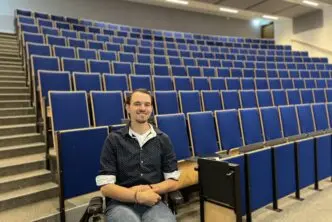
The most enjoyable part for me was reporting. I visited labs where exciting research is conducted. It was especially enjoyable when photographer Thijs van Reeuwijk came along. Testing chicken pieces at the Reactor Institute, making diamonds in the planet lab, testing chairs for sleeping comfort, or catching snowflakes with Nina Maherndl… it was difficult to choose!
But the conversation with Matthijs Valkering, a teaching assistant who wants to teach despite his speech impairment and is assisted in doing so by new speech recognition techniques developed by the Multimedia Computing Group, was the most inspiring encounter.
Marjolein van der Veldt: Food truck De Griekse Olijf
Read the article
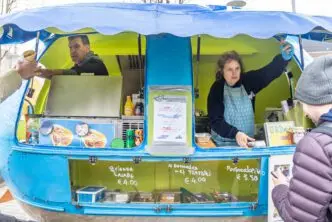
The Mekelpark food trucks have become an integral part of campus life. I regularly queue up there for lunch myself. While waiting for a pita, burger or burrito, I get a glimpse into the lives of the entrepreneurs who park their trucks on campus, rain or shine. That’s why this story stuck with me.
At the end of March, food truck De Griekse Olijf left campus. Owners Yannis and Esther did not agree with new rules introduced by caterer Appèl, which were partly commissioned by TU Delft.
In the years that De Griekse Olijf was located in the Mekelpark, Yannis and Esther built a close relationship with their customers. For many international students and staff, the truck was more than just a place to grab a quick bite to eat: it felt like a piece of home away from home.
Katja Wijnands: A participation employee speaks
Lees het artikel

I am delighted to have been able to write this important article, with thanks to Monique van Ewijck from the TU Delft participation team, department secretary Erik Schoorlemmer from the Human Centred Design department and, of course, all praise to Willemijn van Hagen, who was willing to share her story.
Willemijn van Hagen did not complete her Industrial Design Engineering studies after suffering from burnout. She was diagnosed with autism. Now she is back at Industrial Design Engineering, working as a support staff member. She is part of TU Delft’s participation programme for people who find it difficult to find regular employment.
The Delta editorial team wishes you happy holidays! We will be back on 5 January.

Do you have a question or comment about this article?
delta@tudelft.nl


Comments are closed.