
From 1 September, Ernst Kuipers will be the new Chair of TU Delft’s Supervisory Board. Delta spoke with the former Minister of Health, Welfare and Sport. How will he combine his position as Chair with his job in Singapore?
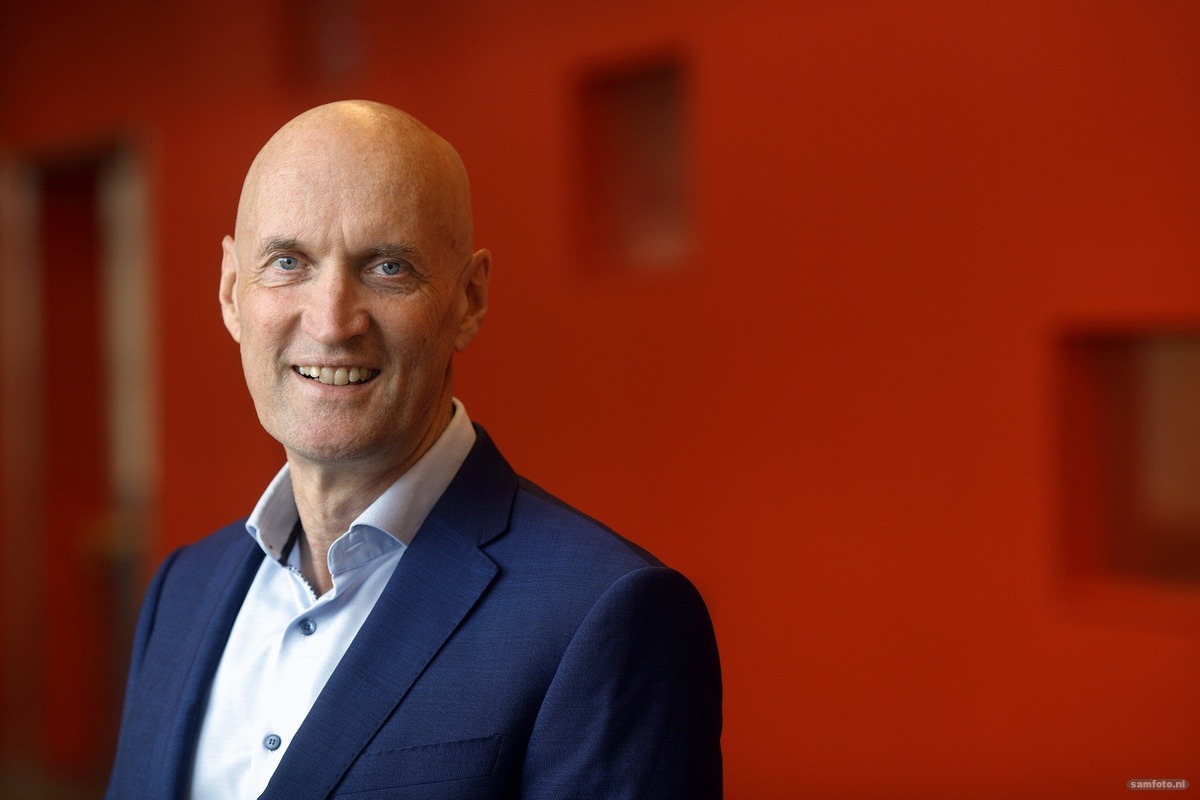
Ernst Kuipers. (Photo: Sam Rentmeester)
Congratulations on your appointment. Why do you think this position suits you?
“Let me look back at why I was approached. I worked as a researcher in the medical field. I was also a board member of the Erasmus Medical Centre. On top of this, I have political experience. I am also currently a board member of a technical university abroad.”
Why did you say yes?
“I have known TU Delft for 25 years and have attended a lot of meetings. I started working at the Erasmus MC in 2000 as a professor and head of the Gastroenterology and Hepatology department. This area of medicine uses a lot of technology. I came to TU Delft to see what could be done, for example in developing materials technology.
‘TU Delft is a wonderful institution where amazing things happen’
At the end of 2012, I became the Board Chair of Erasmus MC. We were already working with TU Delft in the Medical Delta. Later we worked even more closely. This is what we call convergence. I also had proton therapy and the proton therapy clinic in my portfolio. I am very happy to be able to make a contribution in this role as TU Delft is a wonderful institution where amazing things happen, both in terms of education and in research.
And apart from all that, one of our sons studied Aerospace Engineering here.”
After your time in Rotterdam, did you have any connection with TU Delft?
“During my period as Minister of Health, Welfare and Sport, my focus was on healthcare. But I was also involved in developments in medical technology. I graduated in 1986. In the almost 40 years after that, the medical world underwent extremely rapid change. Previously, these were mostly in the areas connecting medical practices, genetics, biology, pharmacology and new medicines. More recently the major developments are in data, AI, medical technology, materials, equipment and wearables. This is TU Delft’s world.”
Will TU Delft now become a medical university?
“Certainly not. TU Delft addresses big societal issues and is involved in many areas. But having said that, part of all those issues are health and welfare. Technologies have huge potential, but also bring dangers and risks. If TU Delft’s takes its role seriously, it needs to think whether it does want to be involved in that area or not. Both options are valid, but you need to think about them.”
Your predecessors were TU Delft alumni. [/cheerup_read_more] They were Tijo Collot d’Escury, Jeroen van der Veer and Gert-Jan Kramer. Over the past few months, Luc Soete was the interim Chair. He did not study at TU Delft, but had been a Supervisory Board member for almost eight years when Collot d’Escury suddenly left.[/cheerup_read_more] You are not. Do you compensate for this?
“The closest parallel is my current job in Singapore at the Nanyang Technological University, a direct sibling of TU Delft. They are doing really well, partly because of the strategic policy of the Government. Singapore makes a lot of funding available for education and research every year.”
You are Vice-President of Research in Singapore. What does that entail?
“I am a member of what we would call the Executive Board here. The management there is different. The supervisory and executive boards are actually one. In my daily work I am responsible for research.”
Are there any particular subjects that you want to immediately move on at TU Delft?
“I still have to start, so I cannot say much about this. But of course, the financial challenges in the next few years are very relevant. Further, a complete change of the Executive Board in a short space of time will need much attention, including from the Supervisory Board. And then there is the comprehensive discussion about social safety. I have read a lot about it, but cannot as yet draw any conclusions.”
‘I would like to avoid the word ‘crisis’ as much as possible’
You were the Minister in a period of crisis when the Covid pandemic struck. Are you now the Supervisory Board Chair in a period of crisis?
“I hope not. Speaking from the medical world, I would like to avoid the word crisis as much as possible. If something is labelled a crisis, you’ll handle it as a crisis while it can sometimes be useful to say ‘slow down, one step at a time’. From the outside you may think that a trauma centre in an emergency unit is permanently in a crisis. You can barely imagine greater stress. And yet, it is almost the most peaceful place in a hospital. Everything there runs according to protocols, for example there is no screaming or shouting. There is a lot of time pressure, but never a crisis.”
TU Delft has found a new Rector, Hester Bijl. In a couple of months you can first appoint a Chair and later a third Executive Board member. You can then put your stamp on the future of TU Delft. What is your vision behind this?
“TU Delft is a big organisation. You can almost compare it to an oil tanker that simply keeps steaming ahead. There are also a lot of external factors, such as the available funding, that will play a big part in determining the direction we take.
An Executive Board is very important in many areas. A Rector has been found. She is very familiar with TU Delft She thus has experience in being a rector. Fantastic. The Chair also needs to have management experience and vision, and be able to build and lead a team.”
‘The discussion about social safety has been very relevant over the last few years’
To what extent does social safety play a role in the search?
“Very much. The Chair leads an organisation with a lot of employees, where there is a lot of discussion about social safety. The discussion about social safety has been very relevant over the last few years.”
The Inspectorate and the Minister specifically named the Executive Board’s and the Supervisory Board’s role in setting an example. This entails self-reflection for example. What type of personality should a new Executive Board Chair be?
“I do not mean to avoid answering, but I still need to have my first conversation on this. So I will not say anything right now.”
The Inspectorate and the Minister also want the Supervisory Board to listen more closely to the organisation. How do you want to do this?
“As the Board Chair at the Erasmus MC, I managed 17,000 people in a very flat organisation. There were only two layers between a nurse in the polyclinic and the chair of the executive board. In an organisation like that you can only lead people if you pay a lot of attention to social cohesion, safety, relationships and culture.
I have a different role at TU Delft. As the Chair of the Supervisory Board, I am at a distance. This is how the system works. I need to be confident that the managers are open to what is said on the shop floor.”
Nevertheless, the Inspectorate and the Minister repeated this point to the Supervisory Board several times.
“I understand their advice completely. In the British system that we have in Singapore, the supervisory board chair talks with employees every week. But this is not done here. If I would break this system, I would not be surprised if we would be in a conflict situation with the Executive Board really fast. The reason being that people – be they teachers, professors or students – would not then know who their point of contact is. This is the Executive Board.
Naturally, should there be any potential for escalation, the Supervisory Board members must make sure that they are well informed and be in contact with the organisation as a whole. But just imagine that someone approaches me because of an incident showing the lack of social safety on the shop floor. My first response would be to pass that information on to the Executive Board. I would of course later ask what was done. But I am not the person who should first take action. Not because I do not want to or can’t, but because it is not my job.”
Your predecessor left to avoid any appearance of a conflict of interest. You work for a competitor who may be interested in the same research funding. How can you separate these things?
“Singapore is just about at the other side of the world and is currently not a member of the Horizon Europe programme. Further, the funding in Singapore is very good and TU Delft is not entitled to any of it.
But both universities are looking for the same talent, for example from the United States. But the research budgets in Singapore are so large that TU Delft cannot compete. I don’t at all mean that TU Delft is not good enough. I think that TU Delft should be a major player, and in terms of quality and activities this is completely doable, but the Government’s actions are making it otherwise.
In terms of partners too, Singapore is very strategic. There is a lot of money for research, but the condition is that it has to be spent in Singapore. So a lot of top international universities have had some of their staff there for a long time. Dutch universities should also think about this.”
Is your message on this subject a reason that you were asked to join the Supervisory Board?
“I don’t think so. I have shared this message widely with Dutch universities, the university medical centres, the Dutch Research Council (NWO) and TNO over the last year-and-a-half.”
And your contacts in Rotterdam? They may be useful for the plans for the Rotterdam Campus.
“I was closely involved in the conception of the partnership between TU Delft and Rotterdam, and I would like to again contribute. I have seen the questionnaire for staff members. Simply said, one group is for as they think that the Rotterdam Campus will help TU Delft’s innovations and development. Another group is against because of the financial challenges and does not want any investments made to come at the cost of TU in Delft. I think both positions are valid and that we need to try to bring both sides together.”
‘I’m used to doing different things’
How will you combine your work in Singapore with your position of Supervisory Board Chair in Delft?
“I’m used to doing different things. For example, I am also a member of two World Health Organisation committees and a member of the Board of the Health Information and Management Systems Society in America. I will make sure that I am always available for the Supervisory Board meetings in Delft and that I am always reachable.”
One of the requirements in the job profile (in Dutch) is that you are visible, for example by being present at events such as the opening of the academic year. Is this doable for you?
“Not initially as my agenda is already set. By way of example, on 1 September, the opening of the academic year, I will be in an online meeting of the WHO Committee on climate and health, an important matter.
My spouse lives and works in the Netherlands. As do my children. I travel a lot so I am in the Netherlands often, even if it is for a very short period. And I may be in Singapore now, but that will change too.”
- Ernst Kuipers was interviewed in Delft Matters, the TU Delft alumni magazine, along with TU Delft Professor Maaike Kleinsmann: Concerned about care.
CV Ernst Kuipers
Prof. Ernst Kuipers (1959) studied medicine in Groningen, after getting his propedeuse (first year of a bachelor’s degree programme) in chemistry. He continued his studies, becoming a gastroenterology and hepatology doctor at the VUmc (now Amsterdam UMC) and earned his doctorate cum laude at the Free University of Amsterdam. In 2000 he became Professor of Gastroenterology at the Erasmus University and department head in gastroenterology and hepatology at the Erasmus MC. In 2006, he was also responsible for the internal medicine department. In 2012 he joined the executive board of the Erasmus MC, shortly after which he was appointed chair.
During the Covid pandemic, the Netherlands knew Kuipers as the chair of Landelijk Netwerk Acute Zorg (national network of emergency care). He was regularly in the news and on chat shows to explain the infection figures and the pressure on hospitals. This public role only increased when he was appointed Minister of Health, Welfare and Sport by the D66 political party on 10 January 2022 in the fourth Prime Minister Rutte Cabinet. In January 2024, after the fall of the Cabinet in July 2023, Kuipers announced that he was stepping down from his position to take on a job abroad. He was subjected to much criticism, especially because for a long time it was not clear what that new job was.
It was ultimately made public that the new job was his appointment as Vice-President of Research and University Professor at the Nanyang Technological University in Singapore which started on 1 May 2024.
Do you have a question or comment about this article?
delta@tudelft.nl


Comments are closed.