

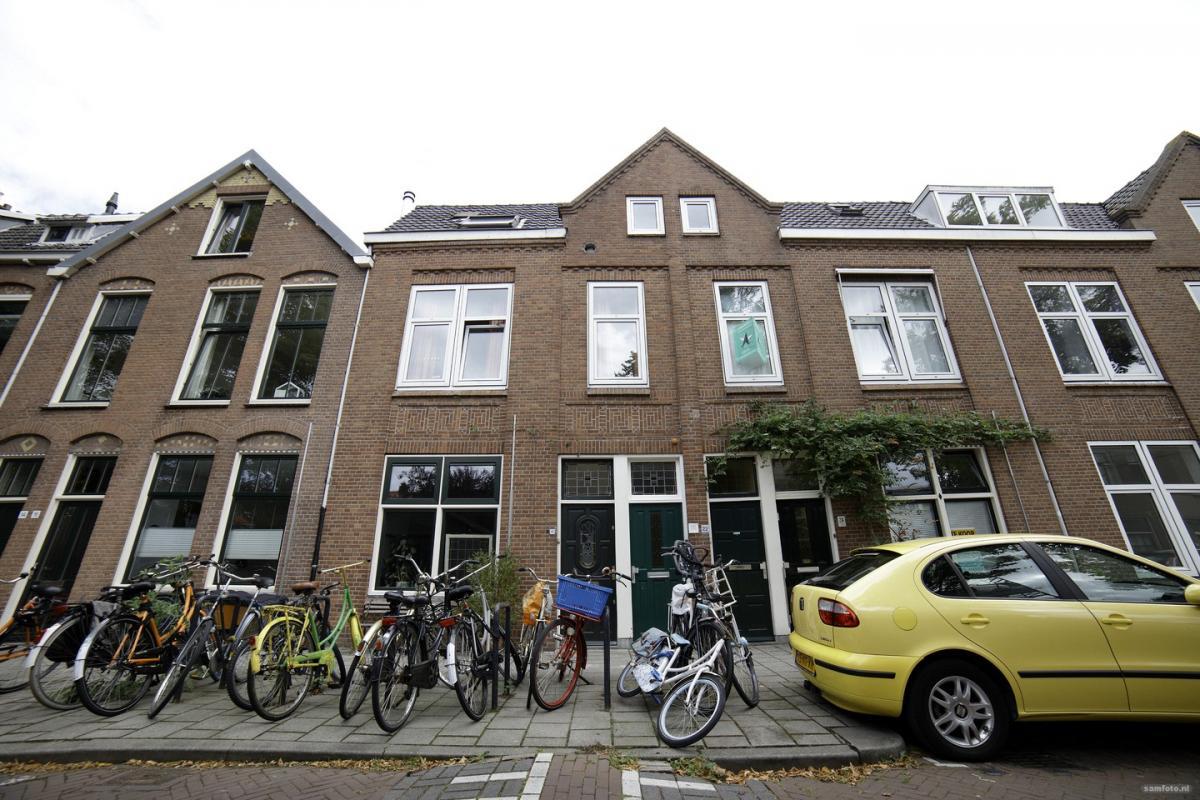
Student housing in Wippolder, Delft. (Photo: Sam Rentmeester)
The number of private student houses in Delft is decreasing fast as landlords are selling their properties. This emerged from the results of two investigations that were published last weekend. Projects in Delft to build new rooms are not getting off the ground easily. Why is this?
This article in 1 minute
The NRC newspaper analysed statistics and found that 137 small rental houses and rooms were taken off the market. Kences, the advocacy agency for Dutch student accommodation providers, found that 260 student rooms were sold in one year. While both investigations examined different periods, and partly because of this, their figures differ, they both paint the same picture: private student housing is disappearing fast.
The significant increase in sales is putting additional pressure on the already tight student housing market’
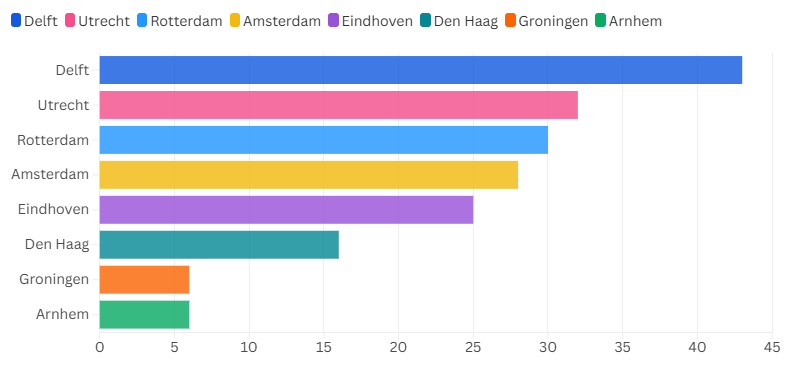
The number of private student housing units in other student cities also decreased dramatically. The NRC said that in terms of percentage, at 43.6% Delft has had the highest drop of all student cities. That figure was around 30% in larger cities such as Amsterdam, Rotterdam and Utrecht.
Nationwide and local regulations
Lisanne Fung Fen Chung of STIP (technology students in politics) and also a municipal council member, calls these figures ‘alarming’. “The selling of housing, which rose sharply, has put greater pressure on the already tight student housing market.”
That so many property owners are putting their buildings on the market is related to tax regulations that are making owning a second house less attractive. Other regulations are also adding to this. The energy certification is also playing a part in determining the maximum rent. This means lower profits for student houses that are badly maintained. Local regulations also play a role. To protect housing for starters, the municipality of Delft has made it much harder to divide a property into more residential units. This too is affecting the number of student rooms available.
Intimidation of tenants
The drop in the number of private houses is affecting both students who are looking for a room and students who are already renting one. The residents of the Lorna te George student house had to move house last year as their landlord sold the house. Delta discovered this summer that some landlords even intimidate their tenants so make them leave quickly.
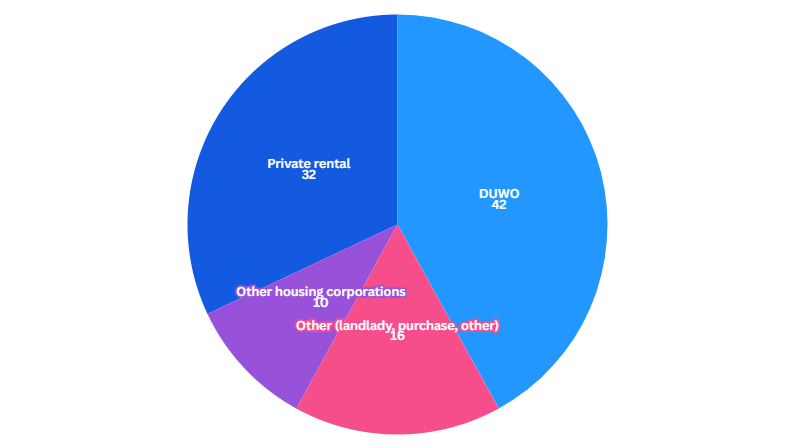
Apart from private lessors, who had 32% of the student housing, 45% of student housing in Delft is in the hands of large corporations such as DUWO. Solutions for the shortage of rooms in Delft thus do not only lie with private rentals, but also with large housing providers.
Building more
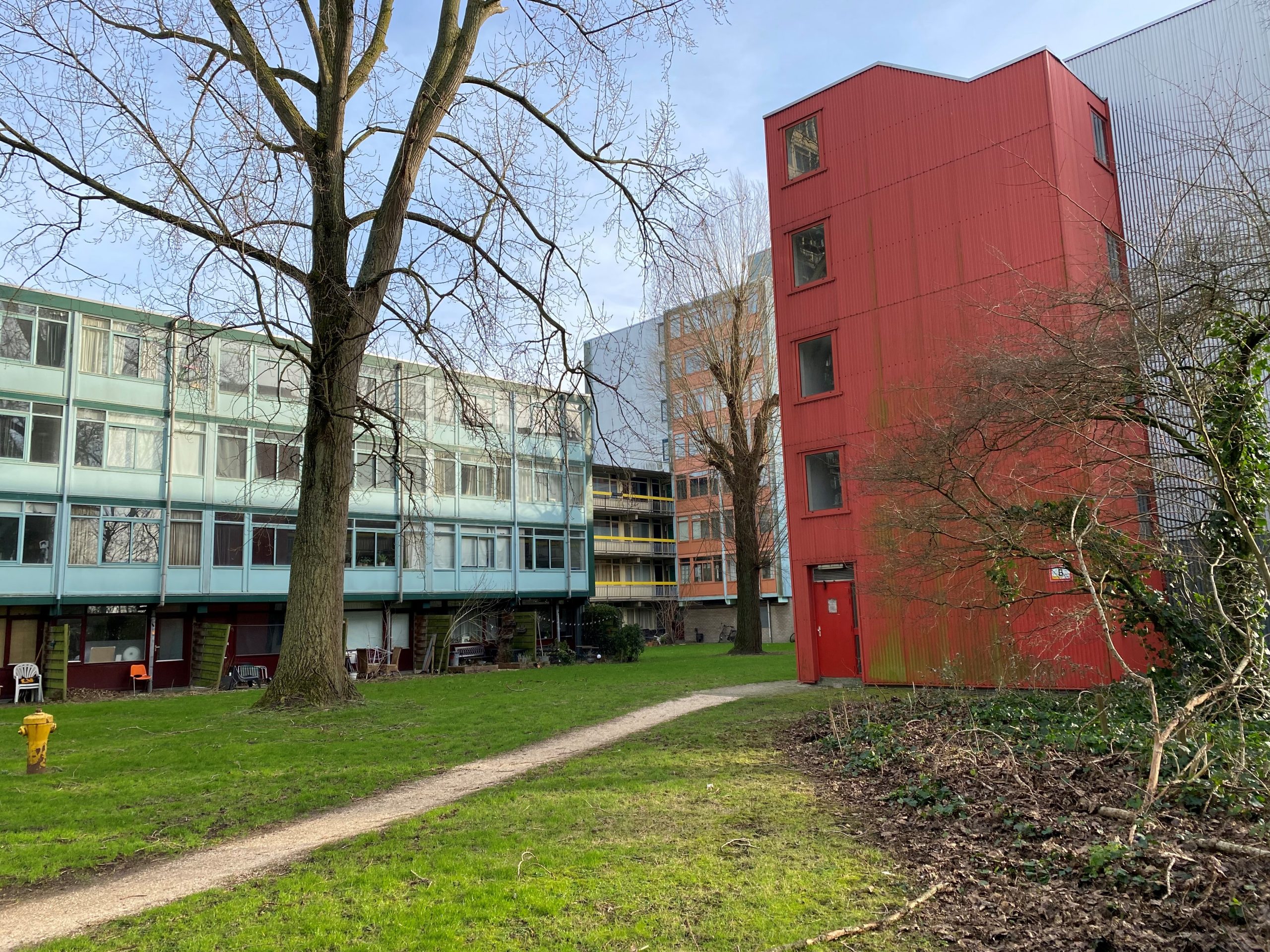
The municipality of Delft has thus tried to work with housing providers for years to add more student housing. In a coalition agreement (in Dutch) followed by the Student Accommodation Action Plan (in Dutch), the municipal council stated that 3,500 student accommodation units falling under large corporations must be added between 2021 and 2031. This would not only entail making building plans for new complexes, but also by making student flats ‘more compact’ or ‘topping them up’. Making housing more compact means adding more residential units to an existing building, for example by renovating it and turning 10 studios into 12 studios. Topping up housing means adding residential floors to a building. DUWO plans to do this to the student flats on the Korvezeestraat and the Röntgenweg.
Students’ urgent letter
But the building work is going extremely slowly. Delta’s investigation shows that in 2021 and 2022 DUWO, the biggest housing provider in Delft, did not build any new housing. By the end of 2026 only 136 of the planned thousands of new builds will be built. In the years after that too, the building targets will not be achieved by a large margin. Up to 2031 there are plans for only 1,800 housing units and a part of those are ‘soft’ and thus uncertain. For this reason, student advocates sent an urgent letter to the municipal council in April in which they demanded more action.
‘The city council acts as if there is nothing you can do about the private market’
Are the plans for 3,500 residential units too ambitious? And why is a municipality in which a student party has six seats and is thus one of the largest political parties unable to meet the building goals? STIP council member Fung Fen Chung does not believe that the building plans are too ambitious. “We find it very important to uphold the plans and we believe that they are doable. But it does mean that we need to speed things up in the years to come. We are thus continuing to raise the issue at the municipal council meetings.”
Short term solutions
The municipal council member also sees wide ranging reasons why less is being built than intended. The building of student housing in De Nieuwe Haven and the Kabeldistrict area is being delayed because of objection procedures. The building of extra student housing units on the DUWO complex location on the Van Hasseltlaan is also not going according to plan. The student housing provider had not given the residents in the area enough co-determination in the planning and started a participatory action research process in 2024. Other plans are on the table of the Council of State again, and issues with nitrogen are holding up a lot of new building work.
But Fung Fen Chung believes that the municipality could do a lot more in the short term to create more housing. It could take measures that would give private lessors more flexibility. She cites the regulations for room rentals as an example. “They are too strict. You are not allowed to rent a room in a small house as there is a rule for the minimum surface area. And this while there are enough people in Delft that have a small house with an unused room.”
Make shared housing easier
She also believes that the municipality needs to start thinking differently about housing. “Up to now, the municipality only considers the building plans of the big housing associations. They act like you cannot do anything on the private market. It is time to change this as the private market is also important for students.”
The Delft municipal council will discuss the housing ordinance this autumn. Fung Fen Chung believes that this will be the time to give the private market more breathing room through local regulations. “We can make shared housing easier and adapt the licensing system. It is currently not possible to add an extra room to existing student houses because of the regulations regarding dividing up housing. This promotes selling properties as it has become less profitable to rent buildings to students. But an extra room may make them profitable again.”

Do you have a question or comment about this article?
a.m.debruijn@tudelft.nl


Comments are closed.