

She left as a dean and returned as TU Delft’s first female Rector Magnificus: since January this year, Hester Bijl has been a member of the university’s three-person Executive Board. Delta spoke with her about her time in Leiden, her vision for TU Delft, and her nomination for Top Woman of the Year. “I had a strong mother and grandmother as role models.”

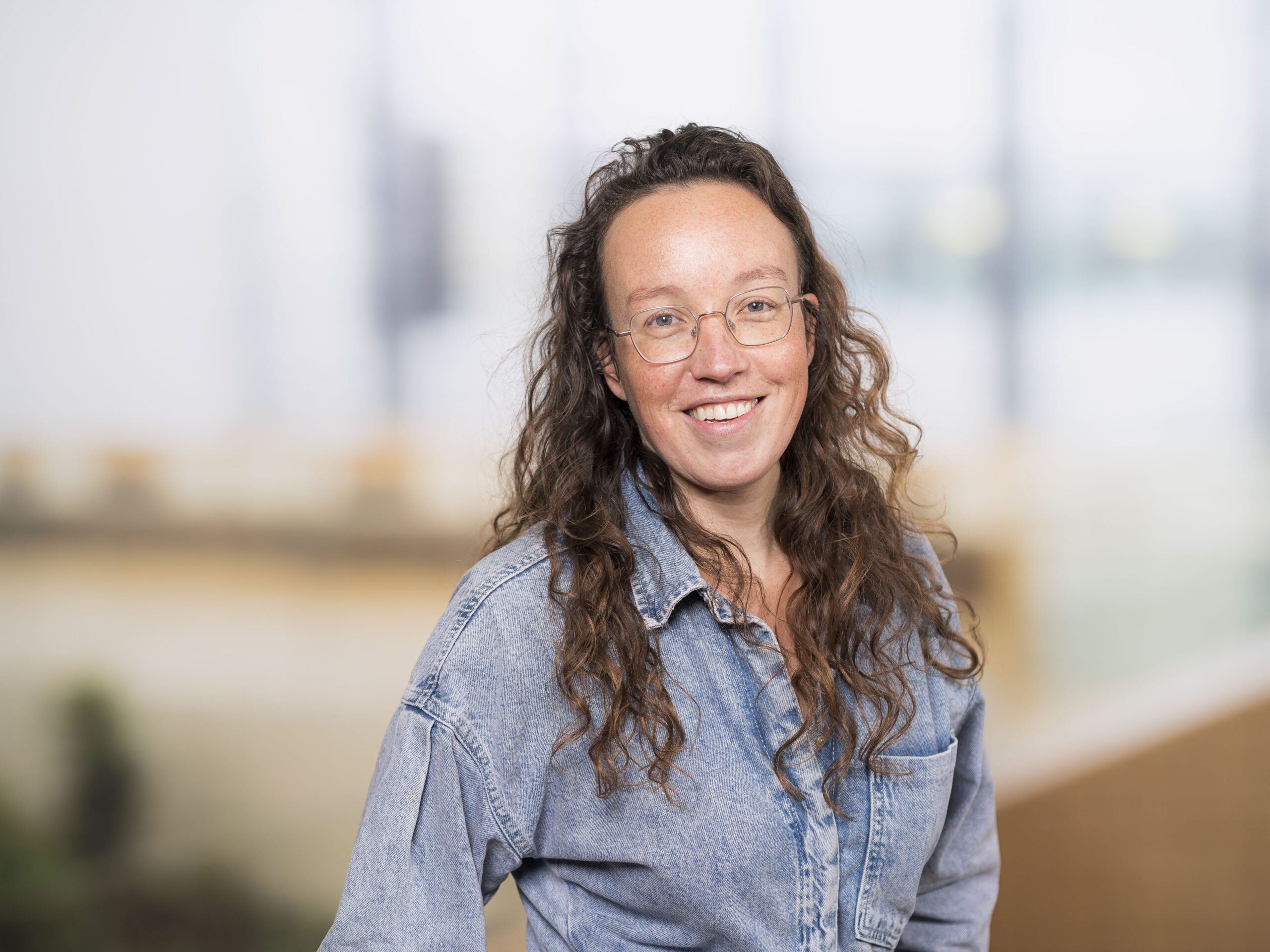
Hester Bijl was the third female dean and is the first female rector of the TU. (Photo: Max van Dongen)
“She is always the first to hold out her hand so that conversation can begin.” That is how Leiden professor Remco Breuker described Hester Bijl when it was announced in July last year that she would be stepping down early as Rector Magnificus of Leiden University. The reason for her departure: she had been approached about becoming the new – and first female – Rector Magnificus of TU Delft. Bijl was invited to apply and subsequently went through the standard recruitment process, consisting of two interview rounds. It was an opportunity she could not pass up, she said in the press release announcing her move. She has now been back on the campus for five months – the same campus where she studied, obtained her PhD, became a professor, and served as Dean of the Faculty of Aerospace Engineering.
What is it like to be back here?
“It’s fantastic, really. Two things have changed since I was last here. I’m in a different position, and the university is even more vibrant and innovative than I remember. There seem to be even more laboratories and even more students. Behind every door I open, someone is working on an exciting new design.”
Have there been any other surprises? What do you recognise from before?
“The educational programme has gained a few new elements, but it has actually remained fairly stable. Among the deans, I see some new faces, but also several people who have been here for quite a while. What is new is that I encounter many more nationalities, and social safety now plays a much more explicit role.”
From 2021 to 2026 you were part of the leadership of Leiden University, first as Vice-Rector and then as Rector. What lesson from your time in Leiden has stayed with you?
“I think it would have to be what was unleashed after the Hamas attack of 7 October 2023. Initially everyone was silent, thinking: ‘This is such a sensitive topic, what do we do with it?’ But eventually it exploded. What I learned is how important it is, even when things are difficult, to keep trying to talk to one another. Not just the Executive Board talking to particular groups, but maintaining dialogue throughout the university community, even about sensitive issues.”
‘I would also like to facilitate that dialogue here’
Do you think Leiden succeeded in facilitating that dialogue?
“That’s difficult to say. It certainly worked better in the end than it did at the start. Leiden University is such a large organisation: 34,000 students and 6,000 staff, all with different opinions. It’s quite complex. It took us two years to find the right format. Looking back, I think that was far too long.
At first we organised panel discussions, but that turned out not to be the right approach. Eventually, world cafés proved highly effective. You bring together a large group of people, who then discuss one or two themes in smaller groups at individual tables. You do not have to agree with one another, but you demonstrate that people can talk about these issues and are free to express their views. I would like to facilitate that kind of dialogue here as well.”
How would you do that? During the pro-Palestinian protests earlier this year, the gates to the Executive Board building were closed when demonstrators wanted to speak to you. That did not exactly signal “dialogue”.
“Well, we had already spoken with quite a number of people. But I do not just mean dialogue with a single group. I am talking about dialogue between different groups. We will need to explore what works best in Delft. Fortunately, TU Delft has a great deal of expertise in conducting constructive dialogue, for example within the Integrity Office.”

Both pro-Palestinian demonstrators and Jewish and Israeli students report feeling unsafe on campus. How do you bring them into conversation with one another?
“Yes, exactly, so that’s something we’re still trying to work out. Hopefully we can find appropriate support and guidance. Perhaps by starting on a small scale with small discussion tables and topics that are thought-provoking without being the most contentious issues.
In Leiden, for example, the Faculty of Humanities discussed the question: ‘Are there taboos within the university?’ Meanwhile, the Faculty of Law chose: ‘Should there be limits to the right to protest?’ Those discussions brought people close to the underlying issues without immediately creating a highly charged atmosphere.”
In an interview with the Dutch local newspaper Leidsch Dagblad [link in Dutch], you said that a leader should never try to be a copy of their predecessor. What do you want to do differently from Tim van der Hagen?
“I am simply a different person, and we are a different Executive Board. Not only in terms of personality but also in how responsibilities are divided. Tim combined the roles of Rector Magnificus and President of the Executive Board, whereas those positions have now been separated again. My portfolio is also different. It combines some of Tim’s responsibilities with areas previously overseen by Hans Hellendoorn. . So I do not want to suggest that my predecessors did anything wrong.”
Wanting to do things differently does not necessarily imply criticism. And choosing to leave Leiden before the end of your term to return to TU Delft suggests you have ideas about what you want to achieve.
“To come into an organisation this large and invent something entirely new on your own? That would not be my first instinct. But there is certainly room for improvement in diversity and in the proportion of women. It is scientifically well established that greater diversity leads to better outcomes. At the end of last year we adopted an ambitious Equity, Diversity and Inclusion policy. The next step is to develop implementation plans. I want us to think carefully about how to create plans that can genuinely be delivered.”
How do you ensure that the policy is effective?
“There are differences between faculties and support services, and we need to acknowledge that. We should identify the biggest challenges in each area and address them together. We have defined various target groups and fifteen pathways . We need to set priorities because it is impossible to tackle all fifteen in a single year. Then we need to establish a realistic timeline while giving faculties and services enough flexibility to address their own needs. And then there is the percentage of female professors.”
‘We cannot simply wake up in five years and discover that we have missed the target yet again’
Yes, the figures are not particularly encouraging. Last year TU Delft not only ranked lowest among Dutch universities, but the percentage also declined.
“That is absolutely not good enough. So how do we achieve our target of 25 per cent female professors by 2030? We cannot simply wake up in five years and discover that we have missed the target yet again. We are therefore examining in detail what this means for each faculty. What is achievable? What changes do we need to make to the system itself? Perhaps we need different recruitment procedures or anti-bias training. We must also review progress annually, looking at how many women have been hired or promoted and how the overall percentage is evolving.”
But how is that different from what has been done in recent years?
“I think we can approach it more forcefully. It is not entirely different. This issue has been on the agenda for a long time, and progress was already being monitored annually. But now we want to look more closely at what the percentage target means in practice for individual faculties. Some are already highly engaged with the issue, whereas others could do more. So it is about effective monitoring, having the right systems in place and perhaps also proactively seeking female candidates.”
Proactively looking for female candidates sounds different from Tim van der Hagen’s approach. In his farewell interview, he emphasised recruiting people through personal networks who fit the TU Delft culture.
Laughing: “That is precisely the issue. People – including researchers – tend to recruit their own reflection. They are often most enthusiastic about candidates who resemble themselves. So if men continue to dominate senior positions, more men will naturally emerge. The evidence for that is very clear. At the same time, women are not free from bias either. It is something that exists in all of us.”
‘I had a strong mother and grandmother to look up to’
You yourself have just been nominated for Top Woman of the Year, alongside Philips CFO Charlotte Hanneman and Sue Preenen, Advocate General at the Public Prosecution Service. What does it feel like to be included in such company?
“Of course, I am delighted by the nomination and proud to be mentioned alongside such strong women and such prominent role models. I am very aware of, and grateful for, the opportunities I have been given. I had a strong mother and grandmother as examples. They encouraged me to become the first person in my family to attend university. Their advice was always to focus on what I considered important in life. That is exactly the kind of example I hope to provide for young women, especially those who want to make an impact through technology and develop their own leadership style. This nomination certainly helps.”
Several high-profile cases concerning social safety
During her time as Vice-Rector and Rector of Leiden University, Bijl dealt with several high-profile cases concerning social safety that attracted considerable media attention. One involved astronomer Tim de Zeeuw, who was suspended by Leiden University following findings of serious misconduct, including abuse of power, gender discrimination, public humiliation of colleagues and unwanted physical contact. He was ultimately barred from returning to the university. Another concerned archaeologists Corinne Hofman and Menno Hoogland. Leiden University initiated dismissal proceedings against Hofman after a report concluded that she and her husband had engaged in prolonged and frequently inappropriate behaviour and had breached standards of scientific integrity. The couple contested those findings, and in August 2025 the Amsterdam District Court ruled that while inappropriate conduct appeared plausible, the university was not entitled to dismiss Hofman.
Leiden, like TU Delft, has experienced significant issues concerning social safety. What have you learned from that?
“I am not going to discuss individual cases, but social unsafety exists in many organisations. One lesson is the importance of examining the structure of the academic system itself. You sometimes see an enormous concentration of power, for example when researchers secure large numbers of grants or become so influential that they shape appointments not only within their own university but internationally. That can leave more junior colleagues in a very vulnerable position.
The second lesson is how important it is to discuss problematic patterns and interpersonal dynamics as early as possible. We are a very large organisation, and things sometimes go wrong. So talk to each other. Seek support through mediation, HR or reporting channels if necessary. Do not wait thirty years until large numbers of people have been harmed. Not every form of social unsafety is intentional.”

Does that not place too much responsibility on victims? The Inspectorate recently reported that people still feel afraid to speak up.
“On that first point, responsibility lies on both sides. You should not place everything on the victim, but neither can you blame only the system. It is about empowering people who feel unable to speak up, for example through training. Such training should not only focus on those lower in the hierarchy but also on managers, helping them recognise what can go wrong.
As for overcoming fear, there are several things we can do. One is creating a culture that actively encourages people to speak up. At the same time, managers need support in engaging in conversations with the people they supervise, including doctoral candidates.”
You have now attended several meetings with both the Works Council and the Student Council. Do you notice major differences compared with the University Council in Leiden?
“In Leiden, the Faculty of Humanities was strongly represented in the council. Members tended to be highly reflective and brought a particular societal perspective. Here in Delft I find the dynamic very pleasant. Council members are critical, they raise issues themselves, and they reflect constructively on what we are doing. That is immensely valuable.
In Leiden, students and staff were represented within a single council, which sometimes meant that one group overshadowed the other. Here, the main discussions take place separately with each council. That gives us more time to explore students’ and staff members’ perspectives in depth. It is still early days, but I am enthusiastic.”
You mentioned that you were a first-generation student. TU Delft hopes to reach more students like that through Campus Rotterdam. Do you have any advice for those who are the first in their family to attend university?
“Do not be too intimidated, and ask lots of questions. You sometimes encounter students whose parents attended university or hold very senior positions. Those students take minors or master’s programmes at prestigious universities abroad or secure fantastic internships. I occasionally wondered what I was doing wrong. But then it turned out those students had parents with extensive networks. Their success was not necessarily because they were exceptionally brilliant; they simply understood how universities work and had access to support. So do not let that discourage you. Find your own path.”
Hester Bijl (1970) grew up in Voorburg and spent six months in England and six months in the United States during her childhood. She was the first member of her family to attend university. Her father attended a vocational school before later completing higher technical education through evening study. Her mother began her career as a nursery teacher before retraining as a remedial teacher and teacher of English. Bijl studied Applied Mathematics at TU Delft and obtained a master’s degree in English Language and Literature from Leiden University. In 1999 she earned a PhD in Computational Fluid Dynamics at TU Delft. She then spent two years working for The Boston Consulting Group before returning to TU Delft. She became an assistant and later associate professor in the Faculty of Aerospace Engineering and was appointed dean of that faculty in 2006. At the end of 2016, she left her alma mater for Leiden University, where she subsequently served as Vice-Rector Magnificus and Rector Magnificus. Since January 2026, she has been Rector Magnificus of TU Delft. In June 2026 she became one of three finalists for the Top Woman of the Year 2026 award, the winner of which will be announced in September. She has two sons.
Do you have a question or comment about this article?
[email protected]


Comments are closed.