
When Olivier Sueur took up his post as interim manager of the TU Delft Integrity Office on 5 June 2024, he joined an organisation that was under immense pressure. The inspection report hung like a shadow over the university, and the unease could be felt deep within the organisation. “Stress at every level,” he says now, looking back.

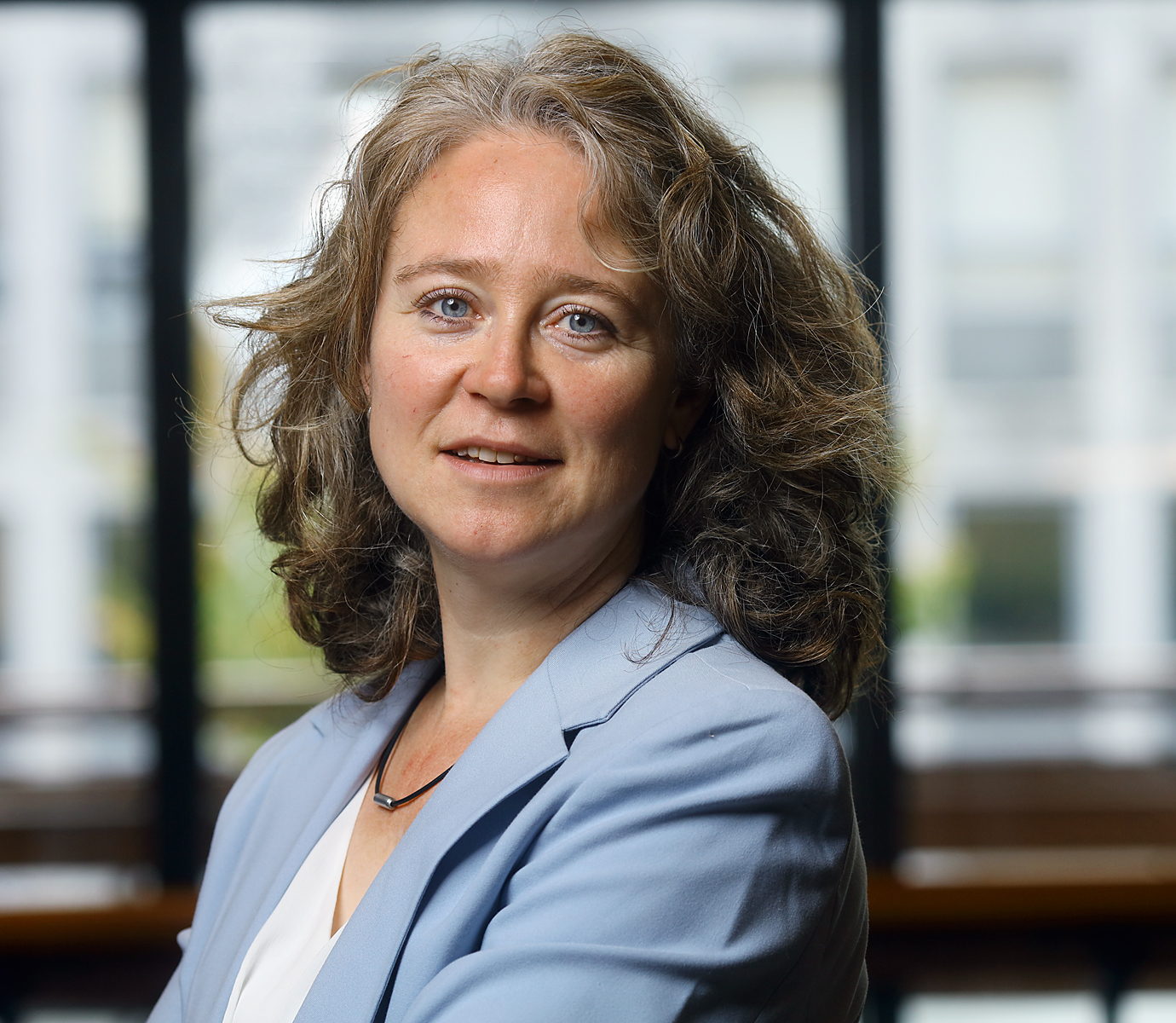
Olivier Sueur: “I found an organisation where people were constantly pointing out what was wrong. At the same time, there was no shared vision of what actually needed to be done.” (Photo: Max van Dongen)
Two years later, he is leaving with mixed feelings. In his view, a great deal has been achieved, but by no means is everything visible to everyone yet. “There are also people who say: ‘I haven’t noticed any difference.’ And I understand that.”
Over those two years, the Integrity Office grew from a small group into an organisation with a clear role and scope. A reporting channel was set up, a new code of conduct was developed, and work on structures, processes and collaboration was carried out at a rapid pace. But anyone who hears Sueur speak will realise that he sees the real change lying elsewhere: in how TU Delft has come to view itself.
You ended up here quite unexpectedly. How did that come about?
“It was actually quite by chance. I read about what was going on at TU Delft and immediately thought of a former colleague who worked here. So I rang her to ask how things were going. Well, they weren’t going very well at all. She gave me the full story of what was going on: a lot of anger, a lot of mistrust, an organisation that had an enormous amount to do but didn’t really know how or where to start. So I said: perhaps I could help to bring some structure to it all. The very next day, I was here for an interview.”
What did you find when you started?
“An organisation under stress at every level. And I really do mean that in the broadest possible sense. From the supervisory board and the executive board right down to the staff on the shop floor, and everyone in between. There were many stressed people and a great deal of mistrust. There was a lot of focus on what was wrong with the organisation, but at the same time there was no shared vision of what actually needed to be done.
What made it particularly striking was that this wasn’t about a technical problem or a specific case. It was about how people interact with one another. That affects everyone, and on a much deeper level too. You’re not just talking about work processes, but about the very foundations of the organisation.”
How do you go about tackling such a situation?
“First of all, I spoke to a great many people. Not to come up with solutions straight away, but to listen. Basically, I kept asking the same questions: how are you, what have you been through, what do you see around you, and what would a good situation look like? And also: would you like to contribute to that yourself?
‘If you do things because you have to, you generate negative energy’
At a certain point, a clear picture emerged. Namely, that we had to work on a lot of things at the same time. We need clear standards, but we also need to enforce them more effectively. And we need to better equip people to do the right thing. Because many things that go wrong don’t stem from bad intentions, but from clumsiness, ignorance or a reluctance to act.”

So how do you go about starting a process of change?
“I literally suggested: shall we agree not to do anything just because someone else says we have to? Not even because the education inspectorate says so. That sounded rather strange at the time, because there was, of course, an enormous pressure.
But if you do things because you have to, you will generate negative energy. People will start thinking: ‘Because of other people’s mistakes, I now have to do all sorts of things.’ That leads to resistance and has little effect. So we started looking for the reasons we ourselves could see for changing.
When people see that, their perspective changes. They no longer think: ‘I have to do this’, but rather: ‘This helps my own working environment.’ And then they really do get involved.”
But you did have to meet the inspectorate’s requirements.
“Yes, of course I kept that in the back of my mind at all times. But we didn’t make those requirements the main focus within the organisation. We kept them in the background and ensured we met them without it becoming a mere tick-box exercise.
I discussed this with the inspectorate as well. The question is: does a regulator want you to do something because they ask you to, or because you understand that you have a responsibility to act? If you assume they’re reasonable people, then I think the answer is clear.”
You were initially supposed to stay for six months. When did you realise that wouldn’t be enough?
“That must have been sometime in the autumn of 2024. That’s when I realised there was so little of a foundation to build on that it wouldn’t be sensible to leave just yet. We really had to lay that foundation first.
That meant the Integrity Office needed to be expanded. At the time, there were effectively just two people; we needed a team that could oversee the whole operation. We needed a structure where we could decide together what to do, in what order and with whom.”

What does the Integrity Office look like now?
“When I started, there were officially three full-time equivalents (FTE), but in reality two. Now we’re at around twelve. But more important than the number of people is that the nature of the work has changed.
We’re working on the fundamentals, such as the code of conduct and regulations. We focus on prevention, for example through risk analyses and training programmes. We train staff and students in ethical judgement and organise ethical deliberations to support careful decision-making on difficult ethical issues. And we deal with case studies via the reporting point and through collaboration with confidential advisers and others. Above all, we try to ensure coherence between all these elements.”
The reporting point is a major change. Why was it necessary?
“Because, as an organisation, you need a place where people can turn to if they can’t speak to their line manager. Those are often precisely the situations where things really come to a head.
A confidential advisor is very important, but they can’t do the work for you. They help you organise your story, but you have to take action yourself. It’s different with the reporting point. There, you can get advice and the organisation can also be helped to take responsibility.”
How does that reporting point work in practice?
“We listen very carefully, ask questions and try to understand what’s going on. In more complex cases, we provide follow-up advice to someone within the organisation who has the authority to make decisions.
We do not investigate the facts and we do not pass judgement. We work with the information we have received from the person making the report. Based on that, we assess what is needed to handle the situation carefully. It is then up to the organisation to take the matter further, by taking other perspectives into account, such as that of the person who has been the subject of the report.”

According to the first annual report, you received around a hundred reports. What does that tell us?
“That we’re somewhere in the middle of expectations. Some people thought that nobody would use it because of mistrust, whilst others expected a huge influx. It turned out to be neither.
The helpline has been busy, but it was manageable. And more importantly: people knew where to find it and felt confident enough to use it. You can also tell that word is getting round, that people are saying: ‘You can go there; they listen carefully and take you seriously.’”
At the same time, people say: ‘I haven’t noticed any difference yet.’
“Yes, I understand that very well. Much of what we’ve tried to change is at the systemic level. That involves structures, processes and agreements. It doesn’t mean that someone in their day-to-day work immediately notices that things have changed. If you’re facing a problem yourself, that doesn’t help you much either. You want your situation to be resolved. So that tension certainly exists.
‘I no longer see the culture of fear and mistrust that used to exist in that way’
It doesn’t mean that nothing has changed, but it does mean that this change hasn’t yet permeated every aspect of daily life. That takes time.”
For years we’ve been hearing that the culture at TU Delft, in particular, needs to change. Is that actually happening?
“If you look at the bigger picture, then I think so. That combination of fear, mistrust and anger that I felt so strongly two years ago has really diminished a great deal. In fact, I no longer perceive that prevailing atmosphere in the same way.
But that doesn’t mean everything is fine everywhere. There are definitely places where things haven’t changed yet. I’m also very well aware that I don’t see everything.”

Where do you see signs that things are improving?
“In the way participation bodies and trade unions view what is happening. They have clearly become more positive. I see these as important signs, because they have a broader perspective and can see changes across the whole organisation.”
What needs to happen now?
“We need to move away from a non-committal approach. We are an organisation of professionals, but we also need to become a more professional organisation. So we need to be clearer about what we expect from one another and what people can expect from the organisation.
That also means that managers need to be better equipped. We’re now seeing that problems have sometimes been going on for a long time before anything actually happens, and that little has been documented. That makes it very difficult to do anything meaningful about it later on. So we really need to take steps in that direction.”

Do you see any new issues emerging?
“Yes, for example, the PhD process. We’re seeing that different people are vulnerable at various stages of that process. So let’s examine the whole process and identify where those vulnerabilities lie and what we can do about them.
And more broadly: we must no longer tackle these kinds of issues in isolation. Complex topics like this require a multidisciplinary approach. That’s certainly one of the most important things we’ve learnt.”
What still needs to be addressed?
“The focus on social safety and integrity has, to some extent, come at the expense of diversity and inclusion projects. Yet these issues are, in fact, very closely linked.
If you look at who is vulnerable, you often find it’s the same groups. So we really need to bring these issues closer together again.”

How do you feel about leaving?
“I have mixed feelings. I’m very pleased with what we’ve achieved, especially when you consider where we started from and how complex it all was. But I’ve also become deeply attached to this organisation, so letting go is a bit painful.”
Are you confident about the future?
“Yes, absolutely. This will go well without me. There’s a strong team in place, a wealth of knowledge has been built up, and the structures are here to stay.
We’re not quite there yet, but things will turn out fine. Not perfect, but better. If we identify issues earlier, communicate better with one another and prevent situations from escalating, we’ll make things genuinely better for a lot of people. And that’s ultimately what it’s all about.”
- Read more about social (un)safety in our dossier.
CV
Olivier Sueur took up his post as interim manager of the Integrity Office at TU Delft on 5 June 2024. He joined from Human Connection and had also worked at the Whistleblowers’ Centre.
Previously, he had been involved in supervision, integrity and cultural issues, including in the financial sector.
At TU Delft, he expanded the Integrity Office into a multidisciplinary team and played a central role in developing the reporting point, the code of conduct and the integrity policy.
Sueur made a conscious decision to remain in an interim role. He wanted to work ‘full steam ahead’ to lay the foundations and then hand over to someone who would stay on.
Do you have a question or comment about this article?
[email protected]


Comments are closed.