

Carin van der Hor has stepped down as an external confidential advisor at TU Delft. She is leaving behind an organisation where transgressive behaviour is reported more often, yet where cultural change is progressing slowly. “If the behaviour does not change, confidential advisers will remain very busy.”
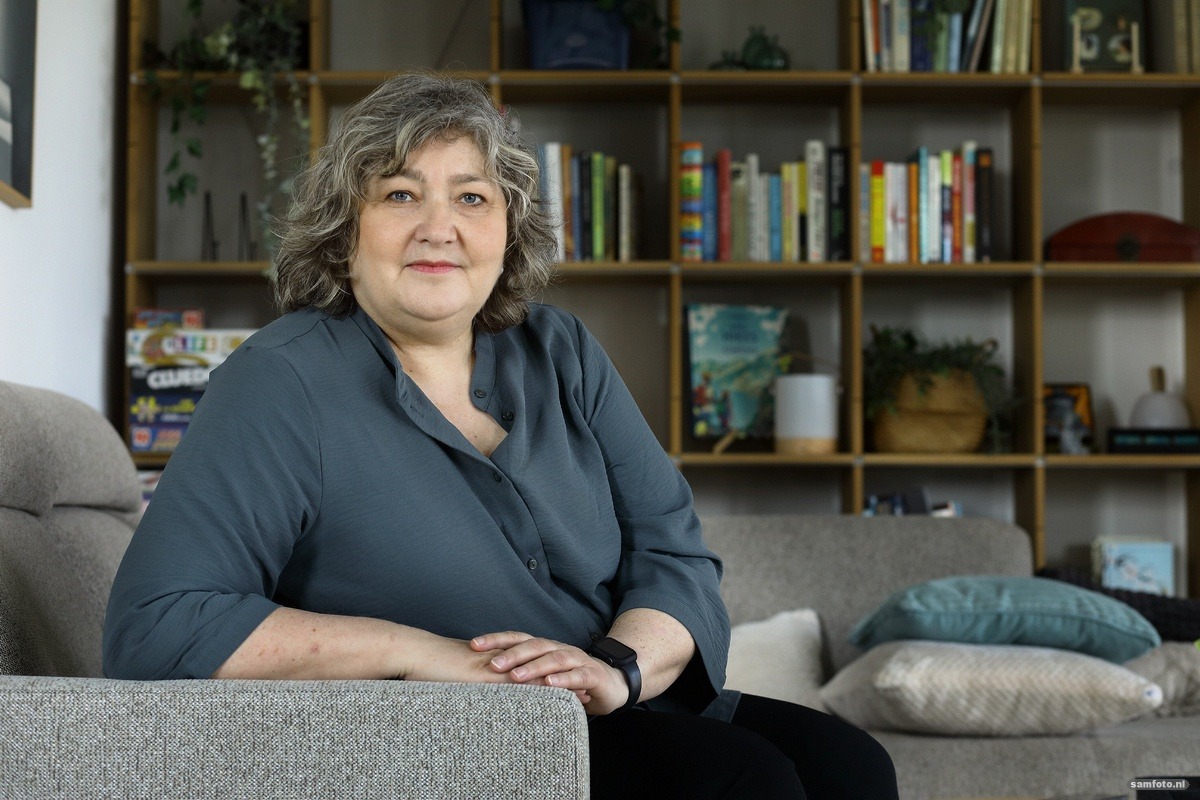
“I am always amazed by people who say that social safety is nonsense.” (Photo: Sam Rentmeester)
Carin van der Hor joined TU Delft in 2023 as an external confidential advisor, at a time when the university was under pressure. The internal confidential advisors had shortly before stepped down due to dissatisfaction with their position (new ones have since been in place for several years), an Inspectorate investigation into social safety was underway, and there was unrest and mistrust within the organisation. Over those three years she spoke to hundreds of staff members. Now she is leaving.
What did you encounter when you started at TU Delft?
“What immediately struck me, and really shocked me, was the enormous mistrust towards the organisation. And also the point at which people came to the confidential advisors. Very often they only came once they had already decided to leave the TU. Unfortunately, that is still often the case.
‘Many people try to process everything themselves’
The conversation then becomes a kind of exit interview: ‘I want to prevent this happening to others.’ That is understandable, but also very sad. Because you hope people come sooner. Then you can really make a difference, look together at what is possible. Now people have often been dealing with what is going on for so long that they are exhausted.
Many people tried to process everything they had experienced themselves. People who first tried to rationalise it: that is just how that person – the perpetrator – is, perhaps it is me. People who at a certain point stopped telling others, because the people around them said: just leave if it is that bad. Those stories really hit home.”
What did you notice of the inspectorate investigation, which was already underway when you started?
“I arrived just after the call from the Education Inspectorate, and I immediately noticed the aftermath. There was a wave of people saying: all sorts of things have been reported, but we are hearing nothing about it. Such an investigation naturally takes a long time, but in the meantime uncertainty and frustration arise. What I found very striking was that former employees also came to the confidential advisors. They said: I want my story to be recorded somewhere. There were about ten of them. That says something about the impact of what people went through, but also about how high the threshold used to be for reporting.”
Did the contents of the Inspectorate report surprise you?
“No, not really. I am an organisational sociologist, so I also look at patterns. TU Delft has a combination of factors you often see in places where these kinds of issues occur: hierarchy, dependence on supervisors, a strongly structured career path, and a culture in which it is not easy to talk about emotions or psychological safety.
‘The culture is nowhere near changing enough’
It is still an organisation that is fairly strongly dominated by men. And you have gatekeepers who have a great deal of influence on your career. If you mix those ingredients in a certain way, you simply run the risk of a toxic culture. That is not unique to Delft, but a great deal comes together here. A substantial dose of good leadership and psychological safety needs to be added to that mix.”

Has anything changed at TU Delft during your time?
“Absolutely. There is now more attention for the topic and the visibility of the confidential advisors has increased. The internal confidential advisors and I have put a lot of energy into that. If you are more visible, more reports come in, and often at an earlier stage. That is not necessarily bad news: it means people know how to find you, that they raise the alarm sooner. But the question is: does the culture change as a result? Honestly: nowhere near enough.
I am still surprised every time I hear or see that there are still people who say psychological and social safety are nonsense, or that they find the attention given to it exaggerated. Until they themselves run into problems, because that also happens. Anyone can become a victim of transgressive behaviour.
As long as such views exist and are not corrected, and as long as this kind of behaviour does not change, confidential advisors will remain very busy. Culture changes slowly. It really is a matter of years.
‘There is still a great deal to be done. Not for nothing do we say: culture eats strategy for breakfast’
That is why I hope the Inspectorate of Education’s recovery report is seen as recognition of the investments in the structures that should promote social safety and integrity. But I also hope the sense of urgency remains when it comes to further changing the organisational culture. There is still a great deal to be done. Not for nothing do we say: ‘culture eats strategy for breakfast’.”
What exactly does a confidential adviser do and not do?
“I always start by explaining what we do and do not do. And then I say: I will not do anything on your behalf. That sounds strange, but it is essential. The person reporting is in control. Confidential advisors do not take over. We do not run off with a case. We outline options: you can have a conversation, we can prepare that with you, we can possibly accompany you for moral support, we can explain how a complaint procedure works, how mediation works or what the reporting point does. But you, the person reporting, decide.
That is sometimes difficult for people. They hope we will solve their problem. But that cannot and must not happen. The only thing we do is ensure that someone regains an overview, sees options and feels supported. And that requires knowing very well what you must not do. You must not steer people or influence them. That is a profession in itself.”
What is, for you, the essence of the work?
“The ‘do no harm’ principle. People must not be worse off for having told you their story. That sounds self-evident, but that is not always the case. It means you have to be very careful with what you say and do. And what really gives me a sense of fulfilment is seeing someone gaining strength. When someone says: I now know that I can set a boundary. That is something someone carries with them for the rest of their life.”
What do you see happening when there are multiple reports about the same person?
“We record that in a registration system. If we see that there are multiple reports about the same person or the same behaviour, that can be a signal. We then raise this within the organisation, in anonymised form. We do not establish the truth, but we identify patterns. And then it is up to the organisation to act.”
What most often goes wrong in practice?
“We very often see ranks closing around the alleged perpetrator. Especially if that person is in a position of power. Managers see someone who is important, who delivers results, and find it difficult to accept that this person behaves inappropriately.
The inappropriate behaviour also very often takes place outside their line of sight, so they cannot reconcile it well with their own experience of that person. And then something happens that is very painful for the person reporting: they see that the organisation is essentially siding with the other person. The reporter becomes the problem.
‘A good manager has nothing whatsoever to fear’
The result is often that the reporter leaves. People who raise the issue eventually think: I am not going to win this here. I will leave. And the other person stays. That is perhaps the most distressing pattern I have seen.”
It is said that managers have started to feel more vulnerable because of all the attention for social safety. Do you recognise that?
“Yes, you do hear that sometimes. That they say: we cannot say anything anymore. But that is really nonsense. A good manager has nothing whatsoever to fear. They ask for advice, listen, ask for help and correct employees’ behaviour in a respectful way when necessary. And very importantly: they say sorry when something goes wrong. You do not get reports about that. The problem lies with people who do not do this. If someone says they are not allowed to say anything anymore, you really need to offer them hands-on training.”
Where do you see specific vulnerabilities within TU Delft?
“For example in PhD trajectories. That is where you see a lot of vulnerability coming together. The people involved come from different countries, with different ideas about hierarchy and what constitutes normal behaviour. And often no explicit agreements are made about how you deal with each other. How do you give feedback? How often do you have contact? When are you available? Things like that.
What then happens is that behaviour that is actually not okay is seen as the norm for a very long time. Until someone really breaks down. People stop sleeping, become ill, lose their self-confidence. And only then do they come to us. Whereas all this misery could have been prevented by discussing things properly at the start.”

What affects you personally most in this work?
“The people who come forward. They truly are my heroes and I’d do anything for them. It takes a great deal to step forward and say: this happened to me. Especially in an environment where you are dependent on the person you are talking about. People do not go to a confidential advisor lightly. They rationalise, downplay it, keep it to themselves, blame themselves. Until they say: I cannot take this any longer.
When that moment comes, I want to be there for them as a confidential advisor. With some people, you have just one conversation; with others, you might spend more than a year getting to know them. Building a relationship of trust is important: after all, confidential advisors are partial to the person reporting. It is important that someone experiences: here is someone who is on my side, who really thinks things through with me without judging me or telling me what to do.
‘If the Executive Board and the deans do not show it, change will not happen’
And when you hear what people have experienced – how they have been bullied, belittled, humiliated, sexually intimidated or put under pressure – that can be very intense. People are experiencing stress, sleeping problems, physical and psychological complaints. They lost their self-confidence. It affects their work, their private life, everything. It leaves scars on the soul. How often have I heard: ‘I began to doubt myself completely’. I could write a book about it. But of course I will not.”
What is needed to really change?
“It starts with leadership, with exemplary behaviour from the top. If the Executive Board and the deans do not show this, it will not happen. And in fact that applies to everyone in the organisation who has positional power: they must truly set the right example. If they do not, you can have as many systems and reporting points and protocols as you like, but ultimately that will not make the difference.
Leaders must be able to handle conflict. They must dare to set norms. They must be able to say: this behaviour is not okay, even if someone is valuable to the organisation. And that is difficult. But it is necessary.”
With what feeling are you leaving TU Delft?
“My assignment came to an end, so it concluded in a natural way. As an external confidential advisor I always work temporarily via a secondment arrangement. That is part of the job. At the same time leaving is bittersweet, because you build relationships and become involved with people and cases. And honestly: I would have liked to extend for another period, as there is now a skilled team of internal confidential advisers, a reporting point has been established and many initiatives have been launched. I am also very pleased that managers know better how to find the confidential advisers for help.
As a team of external confidential advisers, we deliberately worked towards a smooth transition. When people are in the middle of a process, you do not want them suddenly to be without guidance. We discussed case by case what was needed: do you hand someone over, do you close the file, or do you remain involved until a logical moment? So for the time being I am still supporting several people.
Meanwhile, the team of internal confidential advisers is strong: professional and committed. That inspires confidence. But you also know: this work is never ‘finished’: reports will continue to come in.”
Confidential advisors
TU Delft currently has five social and organisational confidential advisors, four academic integrity confidential advisors and two external confidential advisors. Their contact details can be found on their website. They are available to anyone who works or studies at TU Delft.
Curious to know what they encounter in their work? Read more about their latest annual report here: Bullying and intimidation: confidential advisors received a lot more reports.
- In our dossier you’ll find more news, backgrounds and opinions about social (un)safety.
Carin van der Hor is an external confidential advisor with around ten years’ experience in this role. Prior to this, she spent more than twenty years working as a manager and director in the international development sector. She has worked for organisations such as Plan International, Helen Keller and Rutgers, and has been based in the Philippines, New Zealand, Vietnam and Nepal.
In 2016, she returned to the Netherlands, partly to provide informal care. She subsequently worked as an international programme director at World Child and held various interim roles, as well as working as a trainer, including in the education sector, notably at Utrecht University. She is also a specialist in the field of safeguarding and, as a consultant, helps organisations to develop and implement social safety and integrity policies. She does this both in the Netherlands and abroad.
In 2023, Van der Hor started working as an external confidential advisor at TU Delft through a secondment agency. In this role, she supported those who reported incidents, set up peer review sessions and contributed to the professional development of confidential advisors. Following her departure, she is focusing on new assignments and training courses, and will become Chair of a complaints committee on transgressive behaviour. Her TU Delft contract ended on 31 March 2026.
Do you have a question or comment about this article?
[email protected]


Comments are closed.