Higher education without Microsoft? Serious alternatives are being explored here and there. However, the challenge is not yet resolved. While the education sector is attempting to break free, Microsoft is taking on more and more tasks.
(Photo: Edda Heinsman)
At the International Criminal Court, the chief prosecutor suddenly found himself unable to access his email. According to software supplier Microsoft, this was due to American sanctions against employees of the Court. The Trump administration was unhappy with the Court’s arrest warrant for Israeli Prime Minister Netanyahu, which resulted in sanctions against the Court.
The lesson? Anyone who wants to protect themselves from Trump’s wrath would be wise not to depend on companies from his country. The Court has not officially commented on the reason for the switch, but according to Dutch newspaper NRC, it now prefers the alternative OpenDesk over Microsoft.
A lot of education data in Microsoft cloud
Dutch higher education is highly dependent on American tech companies. Microsoft in particular is a major player. Not only do students and staff use its software extensively, but the IT staff of educational institutions are also tied to the American company with all kinds of specialised software. In addition, a lot of data is stored in Microsoft’s cloud.
Dependence on the Americans can have major consequences. Seven Dutch educational institutions, including TU Delft, are already on the State of Florida’s sanctions list because they broke or froze ties with Israeli institutions. With a capricious president like Donald Trump, educational institutions could also find themselves facing punishment at any moment.
Urgent plea from Dutch rectors
Higher education is not blind to this. In 2019, the rectors of fourteen universities published an urgent plea for the digital independence of Dutch higher education. The gist was that we are in danger of losing control to Google and Microsoft.
But little has improved since then, according to Jacquelien Scherpen, Rector of the University of Groningen since last year. “A few months after that article was published, the coronavirus pandemic broke out. We became even more dependent, because we had no time to look for alternatives at that moment.” Microsoft Teams, for example, has become indispensable.
On behalf of the rectors within the UNL university association, Scherpen is the digital sovereignty portfolio holder. She advocates taking small steps: “If we now opt for an alternative product that functions inferiorly, students and staff will start using free applications, and we will then be in deeper trouble.”
Big tech’s hunger
Moreover, says Scherpen, legislation is needed to protect European alternatives from big tech’s hunger. Suppose you partner with a European competitor of Microsoft and Microsoft buys that company, what do you do then?
That is not an imaginary scenario. She points to the Dutch software company Solvinity, which is involved with government services such as DigiD and also provides secure communication within the Ministry of Justice. An American company wants to buy it.
‘We must ensure that the independence we are fighting for does not slip through our fingers again’
Scherpen: “Perhaps we need to become more protectionist, without hindering the free exchange of new insights and innovations. We must ensure that the independence we are fighting for does not slip through our fingers again.”
Everything can be done through one company
Meanwhile, Microsoft is taking on more and more tasks. In addition to office software, it is also developing artificial intelligence, building its own data centres and even laying its own internet cables on the seabed. The company is ‘vertically integrated’, as specialists call it: everything can be done through one company, from basic technology to the end user.
And that is not all. Microsoft is also expanding ‘horizontally’: it is acquiring companies where content, rather than technology, is paramount. “That’s a new phase, and I find it worrying,” says Wladimir Mufty of SURF, the IT cooperative of Dutch education and research institutions. For example, Microsoft bought LinkedIn, with its hundreds of millions of active users who produce enormous amounts of data. Or GitHub, where software developers can share and store their work.
Dutch and European alternatives
There are Dutch and European alternatives. For example, research institute TNO is working with SURF and the Netherlands Forensic Institute on its own AI language model. There are also proprietary data centres. And SURFConext is making headway with a secure login service.
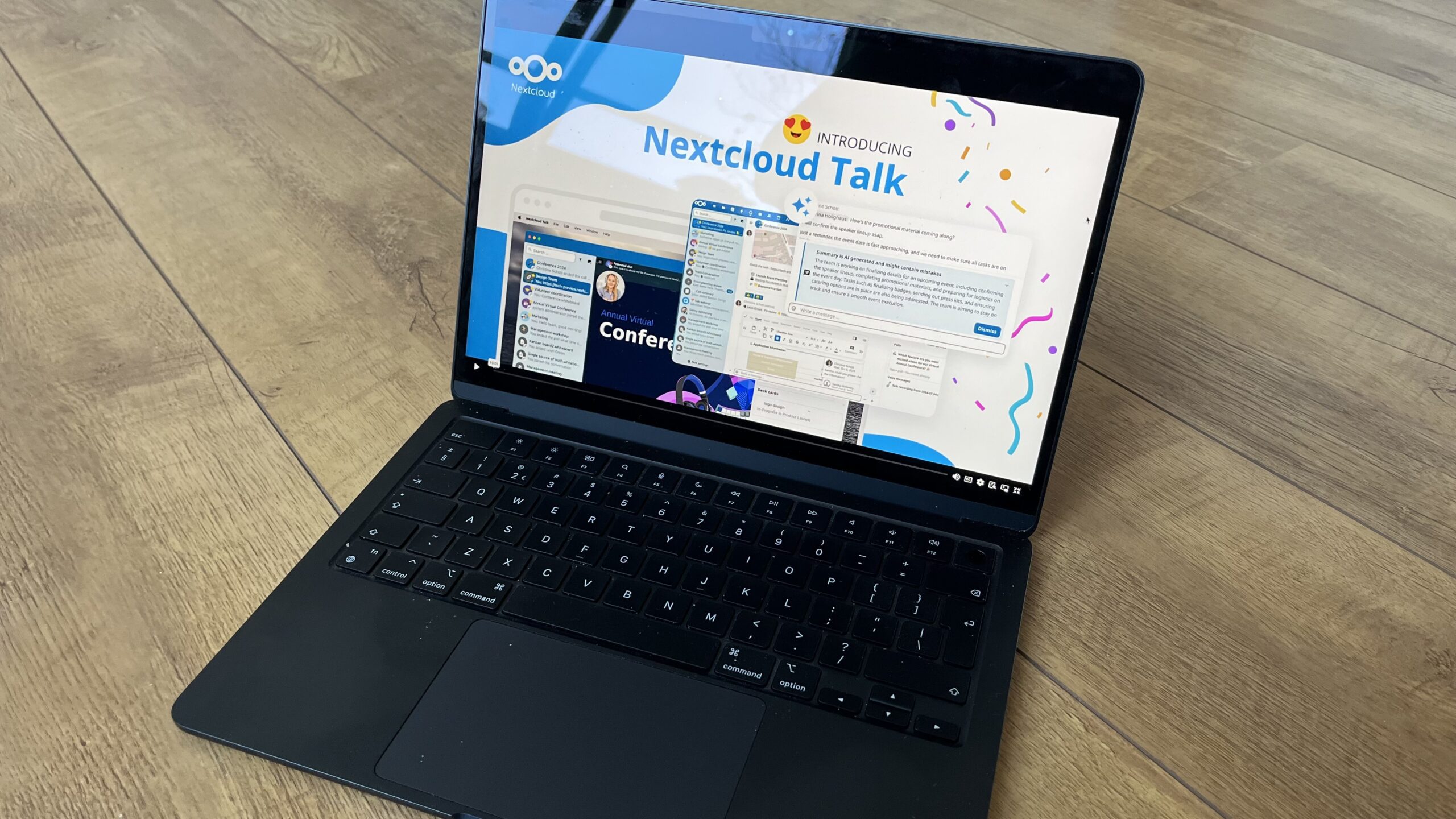
In addition, 75 researchers from five Dutch universities, including TU Delft, have been testing Nextcloud office software since the beginning of this year. TU Delft also has two data centres of its own and recently launched a working group on digital sovereignty.
But which educational institution is willing to sacrifice itself to actually implement these alternatives, with all the inherent growing pains, when Microsoft can deliver everything ready-made? Mufty believes that, especially in the beginning, educational institutions will have to run two systems side by side, with additional expenses for support, maintenance and security. “But I don’t think any sector is as value-driven as education and research. This is precisely where alternatives should be able to take off.”
‘No quick fix’
Could TU Delft perhaps take the lead? The words of ICT director Erik Scherff earlier in Delta do not indicate this yet. “We definitely need to be more digitally autonomous, but there is no quick fix,” he said. “There are currently not enough alternatives to abandon all sorts of Microsoft applications.”
‘Now that Microsoft is stuffing AI into everything, it is making things more annoying to use’
PhD candidate Jacqueline Kernahan (Technology, Policy and Management, TPM) is already quite satisfied with Nextcloud. She is one of its testers and believes it can compete with Microsoft, even though there are still a few glitches here and there. However, she is not deterred by this: she knows how problematic dependence on Microsoft is.
She demonstrates the software in the TPM hall. It looks quite ordinary. “The word processor is quite good,” says Kernahan, who is doing a PhD on quality and security controls in digital systems. “I’m an average user, so I don’t need all the options and apps the programme has to offer. But to be honest, Microsoft is making it increasingly attractive to switch. Now that the company is putting AI in everything, it is making things more irritating to use.”
HOP, Olmo Linthorst/Delta, Edda Heinsman
Also read

- Read more about digital sovereignty and knowledge security in our dossier.

Do you have a question or comment about this article?
redactie@hogeronderwijspersbureau.nl


Comments are closed.