

Short news

Fred van Keulen will continue as Dean of the Faculty of Mechanical Engineering (ME). This has been decided by the Executive Board. Van Keulen started in this role in July 2022. His second term will commence next month and is set to run until November 2029.
Van Keulen has been affiliated with TU Delft since his student days. In 1987, he graduated with distinction in Mechanical Engineering at ME. Nine years later, he obtained his PhD at the same faculty, also with distinction. In 1999, he was appointed Professor of Structural Optimization and Mechanics. Since then, he has held various positions within the faculty.
Search for two other deans
The Executive Board is currently searching for two other deans. At Aerospace Engineering, Henri Werij will retire. He has served as dean since June 2017, and his farewell symposium will take place in November. The first round of interviews with potential successors will begin next week, according to the headhunter Wesselo’s website (in Dutch).
At Industrial Design Engineering, Dean Caspar Chorus announced in March that he will be stepping down. In a message from the Executive Board, he stated that after years in leadership roles, he feels the need to return to working more freely on academic content.
Chorus’s first term runs until the end of August 2026, but he will remain in post for the rest of the year to allow sufficient time to appoint a successor. The vacancy (in Dutch) will be open until 19 June. After stepping down, Chorus plans to take a sabbatical, after which he will return in September 2027 as a professor at Industrial Design Engineering.
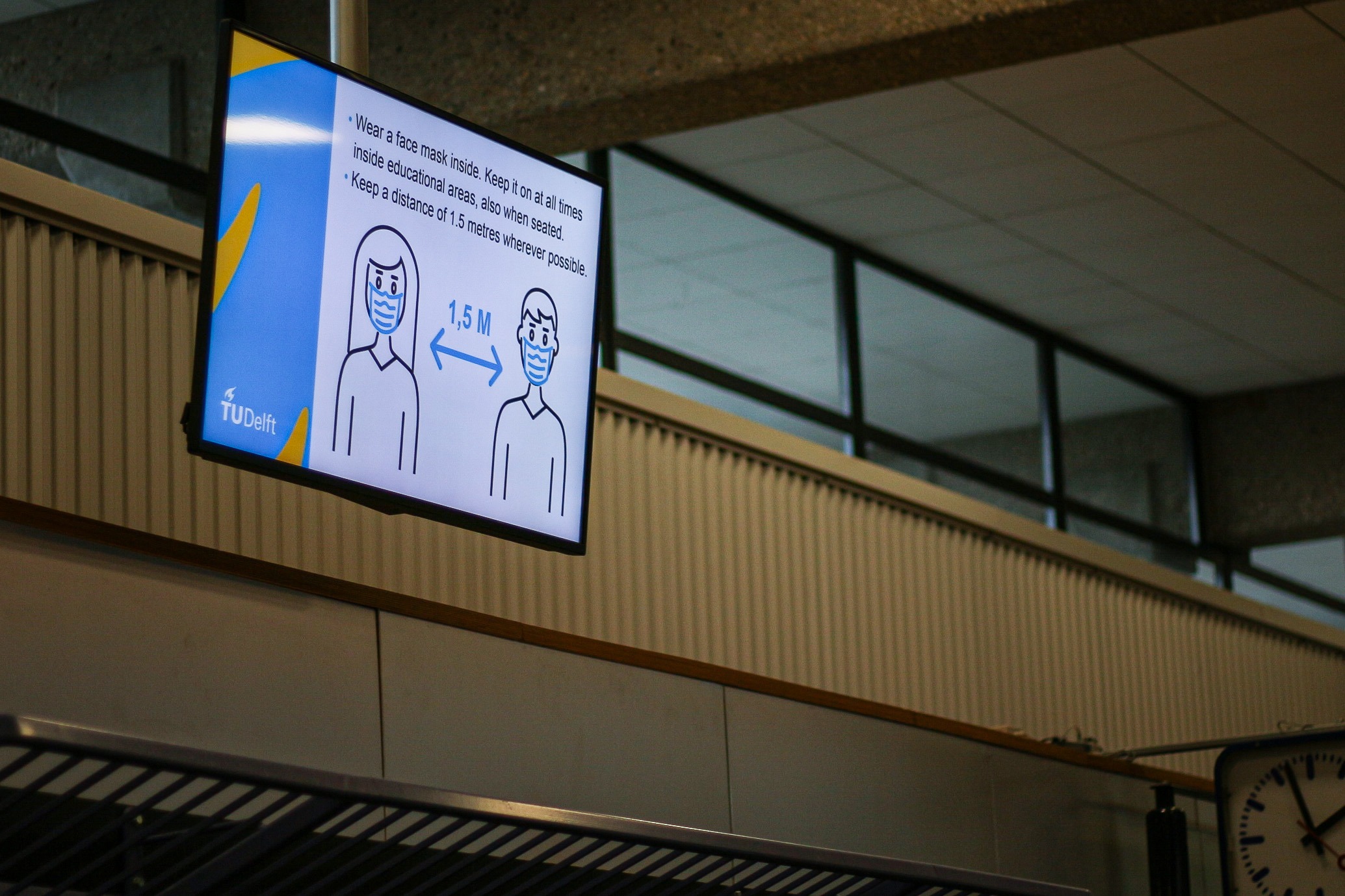
There were serious concerns about the position of young people during the coronavirus crisis, senior official Mark Roscam Abbing said during his hearing in the House of Representatives. According to him, the negative consequences stemmed “not so much from the virus, but from the measures”.
Roscam Abbing was appointed in October 2020 as ‘Director-General Society Covid-19’. He was tasked with addressing the social and societal impact of the pandemic on society, and is one of many now being questioned by the parliamentary inquiry committee, which was established to look back on coronavirus policy and draw lessons for the future.
Avoiding contact
According to Roscam Abbing, the closure of educational institutions led to learning delays and social and psychological harm. “To curb the spread of the virus, you want to avoid contact, but young people in particular often have a great need for social interaction.”
During the curfew in 2021, research was conducted into the mental wellbeing of students. It found that two in three students felt emotionally exhausted. A quarter felt weary of life and had at times wished they would never wake up after falling asleep.
To mitigate the consequences of the lockdowns in education and research, the cabinet made €2.7 billion available. Nearly half of this sum was used to provide students with financial support. The remainder went to educational institutions. Last year, research showed that the coronavirus support funding had been put to good use. (HOP, NB)
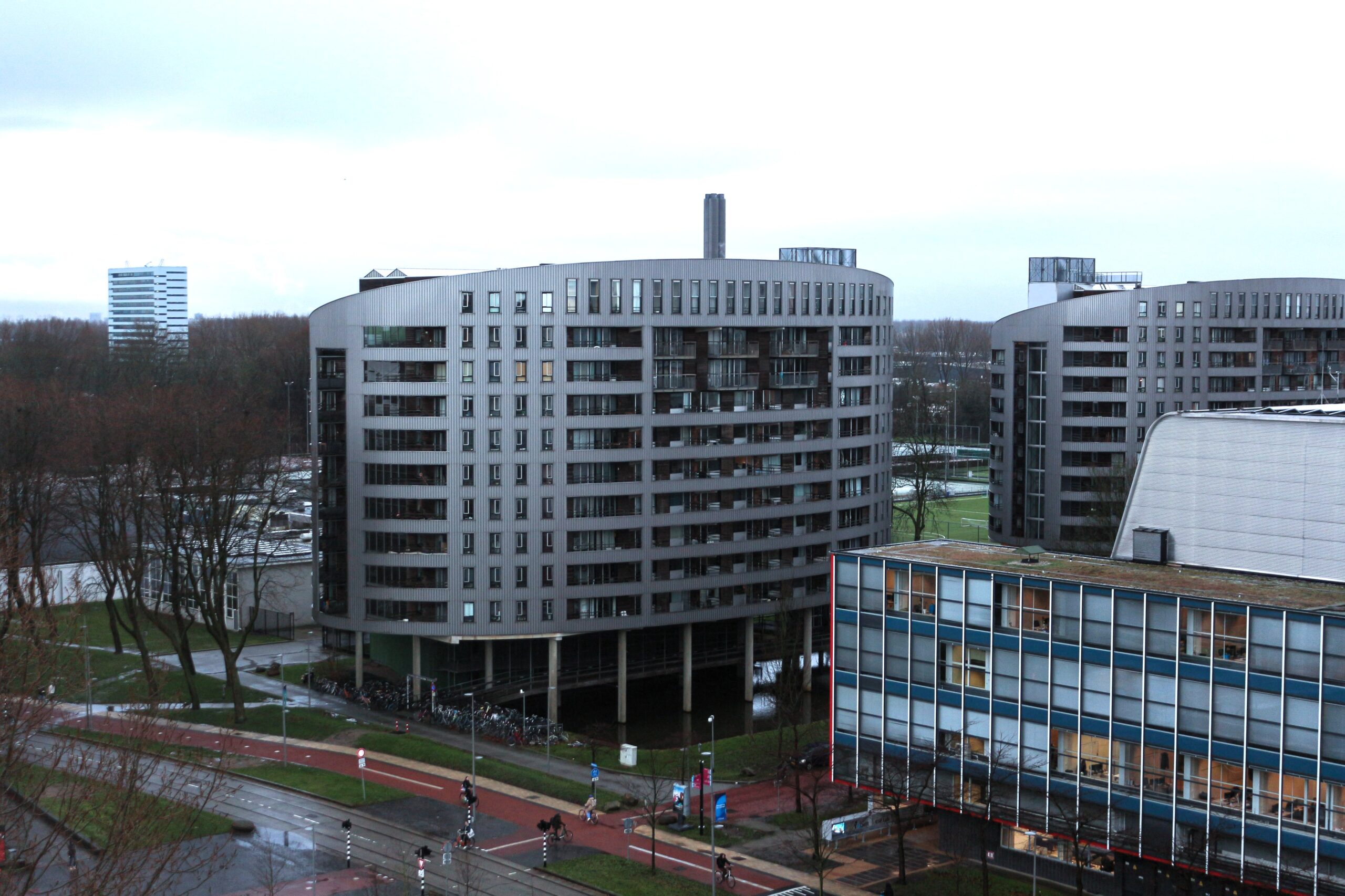
The government must ensure that more non-self-contained housing for students is built, the House of Representatives believes. Two motions on this matter were passed almost unanimously.
Concerns have long existed that traditional student rooms are being squeezed out by studio flats. Because studios have their own kitchen, bathroom and toilet, landlords can charge higher rents. Students can offset the higher rent with housing benefit.
At the same time, the housing shortage among students remains acute, and having housemates is no bad thing. D66 is therefore calling on the government to make concrete commitments “on the number of non-self-contained housing units to be delivered for students”. The motion was co-signed by CDA and PRO.
Incentive
D66 and PRO also tabled a second motion. There is currently “no strong incentive” for the construction of non-self-contained units, the motion states, whereas this type of housing can accommodate more people and is also beneficial for residents’ mental health.
They are therefore asking the government to investigate how the construction of such housing could be made more attractive. Both motions were passed almost unanimously on Tuesday. Only JA21 voted against.
TU Delft professor Peter Boelhouwer (Architecture and the Built Environment), has previously argued that the government made a “policy error”. According to him, there are two options: either abolish housing benefit for studio flats (“but that would cause real hardship for students”) or extend housing benefit to cover rooms. Whether the government is willing to go in that direction remains to be seen. (HOP, NB)

The government must step up its efforts to combat racism and discrimination, according to the State Commission against Discrimination and Racism. Among other things, the commission recommends putting an end to data-driven profiling in the implementation of government tasks and services.
“Recent scandals have shown how deeply discrimination and racism can become ingrained in policy, algorithms and implementation practices,” writes (in Dutch) the commission. In this regard, it also refers to student financer DUO. Research (in Dutch) three years ago revealed that, in the investigation of fraud involving the basic grant for students living away from home, it was primarily students from migrant backgrounds who came under scrutiny.
This led to an apology from the government, the repayment of fines and compensation for the students who had been discriminated against. The state commission would rather prevent such problems than rectify them after the event.
Profiling
The government should therefore no longer use data-driven profiling. According to the commission, random spot checks or inspections without prior filtering reduce the risk of discrimination, are easier to justify and contribute to equal treatment and public trust.
And if the government does wish to assess who is a suspect? Then it must first demonstrate that the use of profiling is necessary and proportionate and assess whether there is no discriminatory effect.
DUO is indeed developing a new system to identify students who are misusing the basic grant for students living away from home. Education Minister Rianne Letschert has confirmed that this system will undergo an independent audit beforehand. (HOP, BB)

An educational team from Delft University of Technology has been nominated for the 2026 Dutch Education Awards alongside eight other teams from further education, higher professional education and university-level education. On 25 June, at the Comenius Festival in Nieuwegein, Education Minister Rianne Letschert will announce the top three winners within their respective sectors.
The Delft project ‘Robotics: I got it!’ makes technology accessible to students step by step, based on the MIRTE robot platform. This allows students to progress from simple construction and programming tasks to working on complex robotics projects.
The other nominees in the higher education category are teams from Leiden University and Erasmus MC. There, they developed e-learning modules on suicide prevention for psychology students and healthcare workers respectively, and innovated aspects such as assessment and evaluation within the medical training programme.
Theatre
In the higher professional education sector, the awards go to Utrecht University of Applied Sciences, The Hague University of Applied Sciences and Inholland University of Applied Sciences. The teams developed a ‘digital education lab’, used theatre to make difficult topics discussable in the classroom, and are tackling student dropout rates in teacher training through a complete overhaul of the curriculum.
Since 2023, vocational education (MBO) has also been participating. This year, DC Terra, Koning Willem 1 College and Gilde Opleidingen have been nominated.
The Dutch Education Awards are presented annually to teams from universities of applied sciences, universities and vocational education institutions that have “developed an innovative educational initiative”.
A total of €2.5 million is available per sector. The winner receives €1.2 million, the runner-up €800,000 and the third-placed team €500,000. The teams can use this money to fund (future) projects focused on educational innovation. (HOP, NB)

In his student room in Groningen, a student has been producing equipment for the Ukrainian army for the past year and a half, according to the university magazine UKrant. He is doing this together with two fellow students.
Using a 3D printer, they are making drone parts and casings for explosives that Ukrainian soldiers can use. “The three of us have now printed more than seven thousand parts,” says the student.
When Russia invaded Ukraine in 2022, students across the Netherlands took action to support the country. For example, during their first campaign, the Delft Students for Ukraine collected a thousand boxes of aid supplies, which the Red Cross transported to Kyiv.
As well as drone parts and explosives, he and two fellow students are also making power banks from broken e-bike batteries. “This war is being held together by duct tape and voluntary work,” says the student. “I now know that, as an individual, you can definitely make a difference.”
It is unclear whether students are providing military support to Ukraine more frequently. “There are many people who are committed to the country,” says a staff member at Eyes on Ukraine, a non-profit organisation supporting Ukraine. “But we don’t know who is a student and who isn’t. Moreover, military support is not permitted, so I can’t comment on that.”
(HOP, NB)

The number of American researchers applying for a European research grant has more than doubled in the space of a year. For the ‘advanced grants’ for top researchers, applications have even increased fivefold. It remains to be seen how many American researchers will actually receive a grant.
In addition to their standard ERC grant, researchers from outside the EU have been eligible since last year for an extra €2 million to set up a laboratory or research team here. The scheme applies to scientists worldwide, but is primarily aimed at American scientists. The budget was increased when President Donald Trump launched his attack on academic freedom in the United States.
Last year, the President of the European Commission announced that she intended to invest even more money to attract top scientists. A ‘super grant’ was to be introduced to fund seven years of research. It has now been announced that this will amount to €7 million.
Due to the Trump administration’s anti-science stance, the Netherlands has also set up a €50 million programme to support threatened scientists from the US and other countries. The Netherlands Organisation for Scientific Research (NWO) expects to announce at the end of June which researchers will receive funding from the so-called Tulip Fund.
(HOP, NB)

Twelve universities of applied sciences are receiving one or more RAAK public grants of up to €375,000. The grant will enable lecturers and other researchers at these universities to spend two years working on solutions to a wide range of societal issues. They will do so in collaboration with public partners, such as hospitals, local authorities, water boards and provincial authorities.
The parties involved, including the universities of applied sciences themselves, will contribute up to €325,000. This means that the total project funding could amount to €700,000.
For this round of the RAAK public funding scheme, universities of applied sciences submitted a total of 59 applications last November, 20 of which were successful. The Amsterdam University of Applied Sciences secured the most grants.
For instance, three research groups at the AUAS will be conducting research, in collaboration with eight local authorities in the Netherlands and Belgium, into so-called microhubs: local hubs that contribute to more sustainable urban transport and a more efficient use of scarce space.
The SIA coordinating body aims to connect researchers, institutions and businesses. In addition to RAAK-publiek, it also funds research in collaboration with SMEs (RAAK-mkb) and long-term research (RAAK-PRO).
(HOP, NB)

Universities and universities of applied sciences are once again being given the freedom to recruit international students in a targeted manner. According (in Dutch) to Minister Letschert, there is ‘no conflict between internationalisation and Dutch interests’. Whereas the previous government had planned to make cuts, the new coalition has opted for a different course and is making €154 million available for a ‘talent strategy’.
Part of this budget is intended to attract international talent to sectors facing staff shortages. In doing so, the ‘balance’ must be maintained, so that benefits do not lead to problems with accessibility or capacity.
Good accessibility
Institutions will be given greater autonomy to determine, on a programme-by-programme and region-by-region basis, where international students add value and where limits are needed, for example through a numerus clausus. Growth in one sector may mean restrictions in another.
The PVV political party fears Dutch students will be displaced, but according to Letschert, there is no evidence to support this. Higher education is generally easily accessible; only 5% of students are unable to start their first-choice programme.
However, the government does want greater control over internationalisation through administrative agreements, including on intake, language proficiency, retention rates and accommodation. Universities had previously promised a maximum of 16,766 international undergraduate students. Without a national language test, financial control remains the main means of control: institutions receive funding up to a set number of students. (HOP, NB)

In future, universities and universities of applied sciences will be permitted to make regular contributions to student sport, culture and campus facilities such as canteens. Minister Letschert announced this in a letter (in Dutch) to Parliament on student wellbeing.
Until now, institutions were officially only permitted to spend public funds on education and research. Stricter enforcement threatened to make sports clubs and cultural initiatives considerably more expensive. Following protests, this policy had already been temporarily relaxed.
The government now wishes to allow this support on a permanent basis via an exception to the rules. The exact details are not yet known.
Social cohesion
Research shows that without support, student sport and culture would ‘deteriorate’ or even disappear. Although subsidising such activities may conflict with fair competition (for example, with commercial gyms), Letschert considers the social value to be decisive. According to her, sport and culture contribute to students’ well-being, social cohesion and personal development.
She also wishes to exempt student canteens and other facilities for students and staff. Without this amendment, institutions might have to repay funds, which the minister considers undesirable. (HOP)


