

Universities of applied sciences have signed up for cooperation with the armed forces. Universities are still working on an agreement. And TU Delft? It signed a letter of intent with the Ministry of Defense in April.
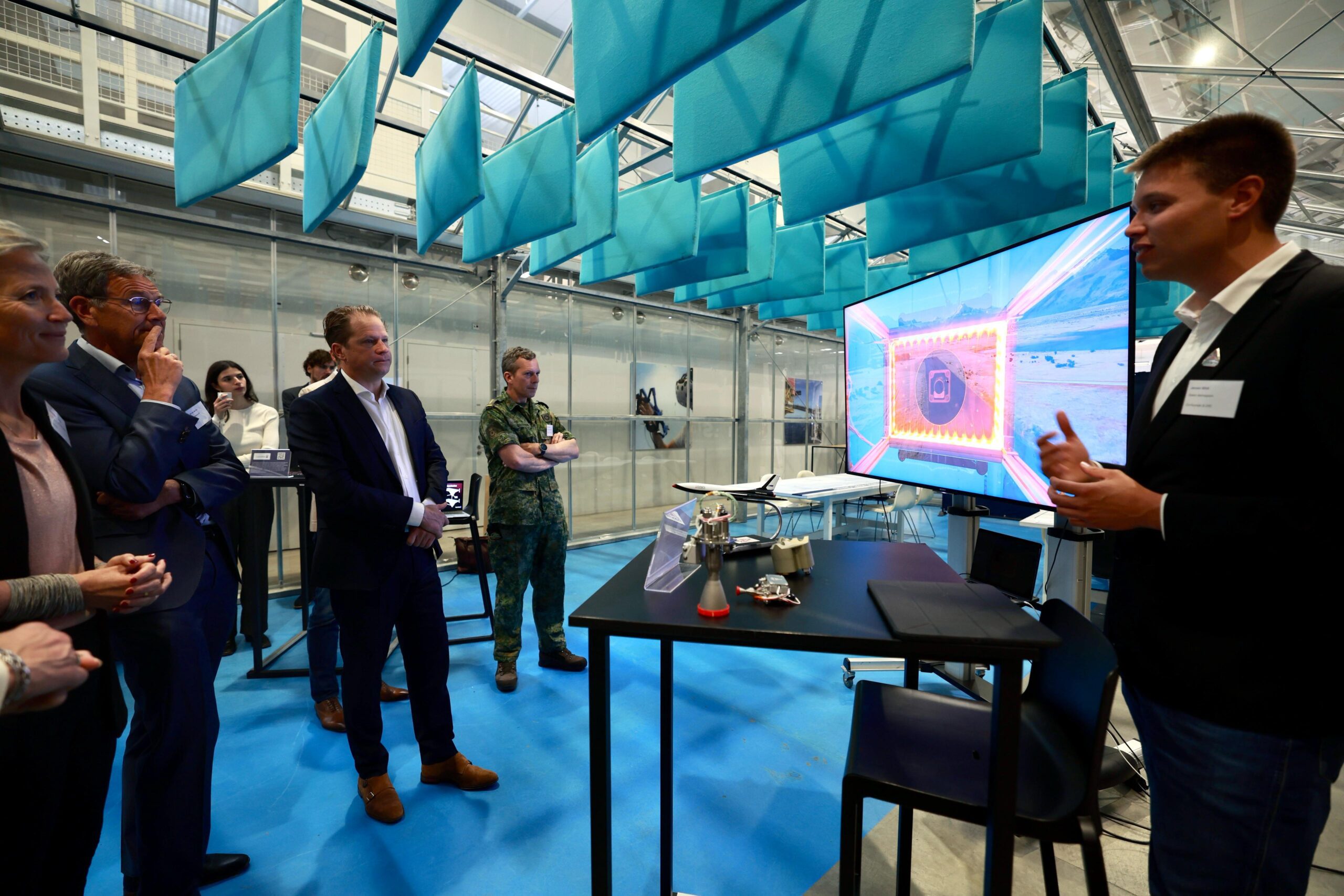
State Secretary Tuinman was also present at the opening of MINDBase at Yes! Delft. (Photo: Ministry of Defense)
This article in 1 minute
- The Vereniging Hogescholen (Netherlands Association of Universities of Applied Sciences) has signed a letter of intent to collaborate with the armed forces, with the aim of creating a ‘scalable and future-proof armed forces’.
- Universities of applied sciences may tailor part of their education to the military.
- UNL, the umbrella organization for Dutch universities, is working with the Ministry of Defense on a “framework agreement” for research.
- At TU Delft, Rector Van der Hagen signed a letter of intent with the Ministry of Defense in April.
- At Yes!Delft, the Ministry of Defense even opened the MINDBase ‘operations base’.
- Discussions about cooperation with the army are also taking place at other universities.
The Netherlands Association of Universities of Applied Sciences (Vereniging Hogescholen in Dutch, red) has signed a ‘letter of intent’ for cooperation with the armed forces. Outgoing State Secretary for Defense Gijs Tuinman also signed, as did the MBO Council and several private training providers.
“The Ministry of Defense faces the challenge of increasing and sustainably securing its personnel readiness,” the statement said. “Given geopolitical developments and the growing demand for training capacity, cooperation with external training providers is necessary and desirable.”
No obligations
The letter of intent was signed at the end of November, but the text was not released until last week. In the letter, the parties express a “joint ambition.” They will increase training capacity, in addition to the core activities of the Ministry of Defense. The collaboration should contribute to a “scalable and future-proof armed forces.”
However, it also states clearly: “This declaration does not create any legal obligations or financial guarantees. It serves as a starting point for further discussions and further policy development.”
Minor for reservists
Universities of applied sciences may tailor part of their education to the military: “Parties are investigating whether, how, and to what extent they will become part of the armed forces’ personnel replenishment system in times of crisis and war,” the statement said.
Minor to become a reservist in six months
Avans and Fontys universities of applied sciences have already made a start. Together with the Ministry of Defense, they are developing a minor in which students are trained to become reservists in six months, for example. Students can already register at Avans in February, with Fontys following shortly after.
What do the universities do?
The universities are not among the signatories. Nevertheless, they have long been exploring ways to collaborate with the Ministry of Defense. Students in Groningen, for example, can participate in the National Resilience Training. The participation council of the University of Groningen recently asked critical questions about this.
Collaboration with the Ministry of Defense is also raising new issues at technical universities. Scientists in Eindhoven, for example, note that they are not accustomed to keeping their research secret. Nevertheless, the Ministry of Defense sometimes demands confidentiality.
In Twente, scientists are considering the dilemmas surrounding dual use: could their civilian inventions end up in military hands? And is that a bad thing? A scientist expects this to be a topic of discussion in the coming period. “Let’s continue to disagree internally, so we can make more careful and better decisions.”
TU Delft wants to collaborate with the Ministry of Defense
At TU Delft, Rector Magnificus Tim van der Hagen signed a letter of intent with the Ministry of Defense’s Command Equipment and IT department in April. “The proposed collaboration focuses on a number of important research themes, technologies, and innovations that are relevant to the Ministry of Defense. TU Delft will be an important partner in this collaboration, contributing its exceptional knowledge and technological support,” the ministry writes in a press release. It is not clear what knowledge and technology are involved.
Army green can now be seen on campus
Since that same month, army green can also be seen on campus. At the end of April, the armed forces opened MINDBase in the Yes!Delft building, where Delft start-ups are located. The Ministry of Defense wants to use this ‘base’ to collaborate with startups and scale-ups.
Universities work on agreement
UNL, the umbrella organisation for Dutch universities, is working with the Ministry of Defense on a ‘framework agreement’ for research. This agreement should simplify collaboration between universities and the Ministry of Defense, says a UNL spokesperson. “The framework agreement concerns the manner and conditions for collaboration, not the content.”
He expects the agreement to be ready sometime in the first half of 2026. “It will then be up to individual universities to decide whether they want to sign it.”
HOP, Bas Belleman and Olmo Linthorst/ Delta, Annebelle de Bruijn

HOP
Hoger Onderwijs Persbureau
Do you have a question or comment about this article?
redactie@hogeronderwijspersbureau.nl


Comments are closed.