

Countries in Central and Eastern Europe are becoming increasingly successful in applying for European research grants. Nevertheless, the gap with the Netherlands and the rest of the EU remains large. “We are losing an enormous amount of talent.”

(Photo: Farah Almazouni via Unsplash, image editing: Delta)
This article in 1 minute
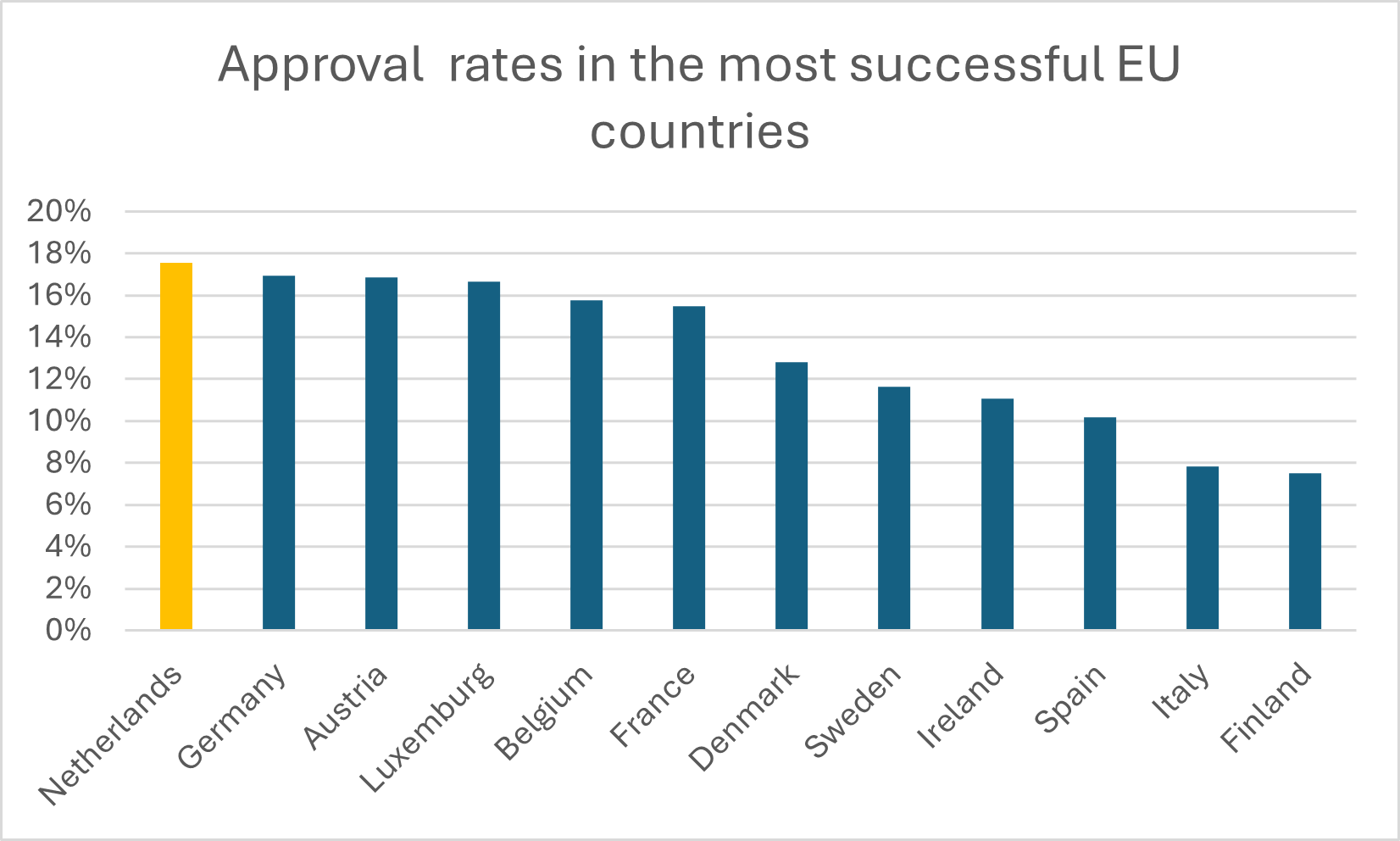
European researchers can apply for research grants from the European Research Council (ERC). Competition is fierce, but the Netherlands performs well: almost 18 percent of applications from the Netherlands are approved. This gives Dutch researchers a higher success rate than their colleagues in Germany, which comes second, and Austria, which ranks third.
By contrast, countries in Central and Eastern Europe receive relatively few grants. This creates a vicious circle: successful countries continue to build experience and keep attracting funding, while other countries find it difficult to break in.
‘This means missed discoveries, insights and technologies’
That is a shame, says Polish scientist Leszek Kaczmarek, chair of the ERC working group that promotes broader European participation. “Many researchers in these countries don’t even try, because they think they don’t stand a chance anyway.”
The consequences are far-reaching, according to Kaczmarek. “We are losing an enormous amount of talent,” he says in a phone interview. “That means missed discoveries, insights and technologies from which all of Europe could have benefited.”
Large disparities
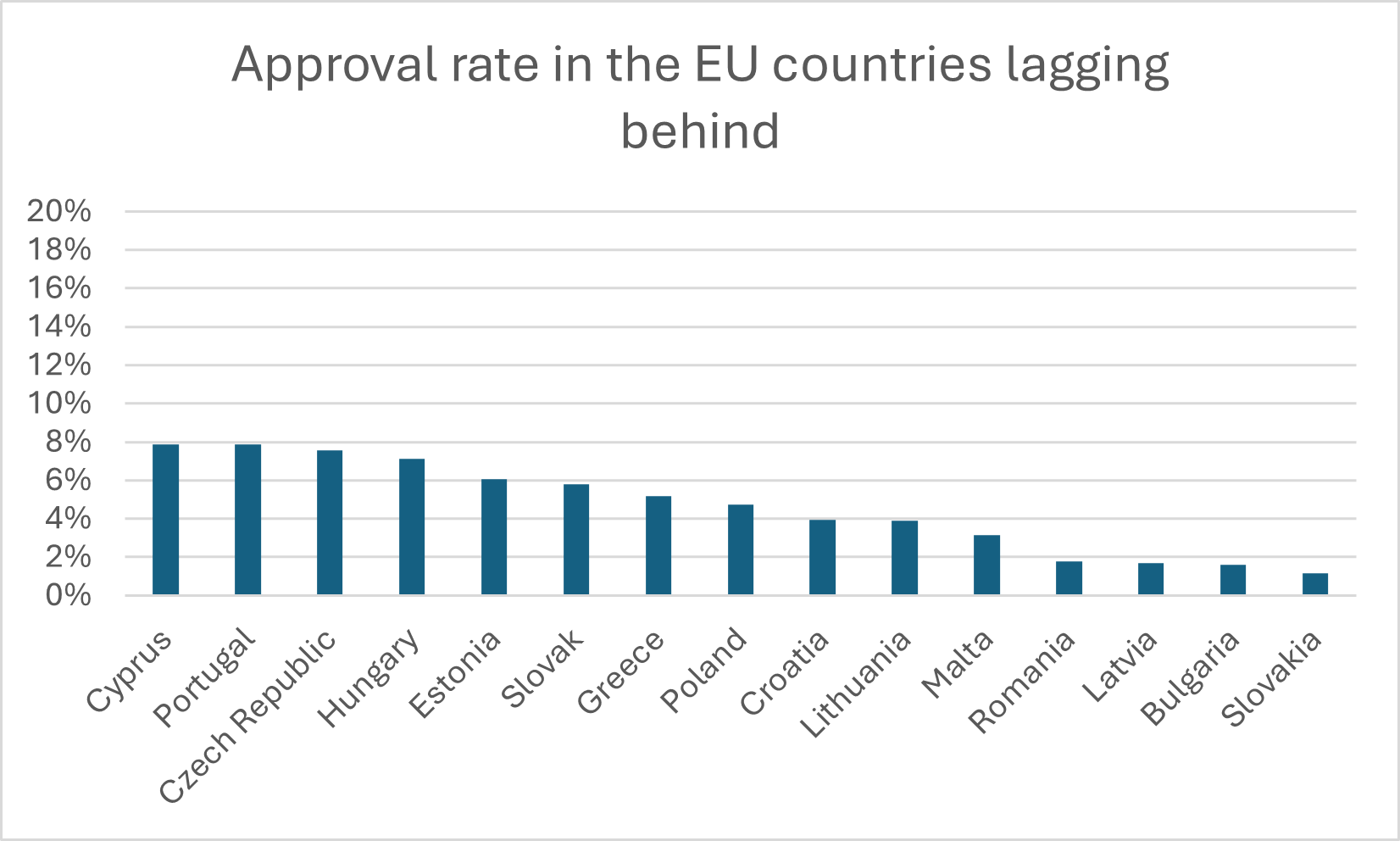
The group lagging behind consists of fifteen EU countries. Together, they represent about a quarter of the EU population. According to a new ERC report, these countries are now performing slightly better, but they still trail the rest of the EU by a wide margin.
In countries such as Greece, the Czech Republic and Poland, the situation has improved. In recent years, the success rate in these three countries has been between 8 and 10 percent. In the period 2007–2011, it was 3 percent or less, according to ERC figures going back to 2007.
Research climate
According to the ERC report, the low success rates are mainly due to the research climate: these countries simply offer fewer opportunities for scientists. Researchers receive little support when applying for grants and have fewer international connections that could help them advance.
Change must therefore primarily come from the countries themselves, the ERC argues. According to Kaczmarek, the ERC’s greatest strength lies in its soft power: “The ERC can encourage countries to improve their academic culture and offer more opportunities to top scientific talent.” He says this will have a greater impact than measures and programmes alone.
Postal code bias
In addition, Kaczmarek warns that there may be bias based on “postal code”: where you come from influences your chances of receiving a grant. Reviewers may unconsciously take this into account, which is why it is important to make them aware of this risk.
Kaczmarek compares this to gender inequality in research. “For years, women were much less successful in applying for research grants,” he explains. “It was only when the scientific community acknowledged this that improvement occurred. People realised that unconscious biases played a role in grant evaluations.”
“That is not only unethical, but also a tremendous waste,” he says. “We wasted talent by not giving women the opportunity to fulfil their full potential. The same now applies to researchers from these fifteen countries.”
HOP, Naomi Bergshoeff

Do you have a question or comment about this article?
redactie@hogeronderwijspersbureau.nl


Comments are closed.