
The European Research Council (ERC) has awarded forty scientists from Dutch research institutions a ‘consolidator grant’ of around €2 million. Five of them are affiliated with TU Delft.
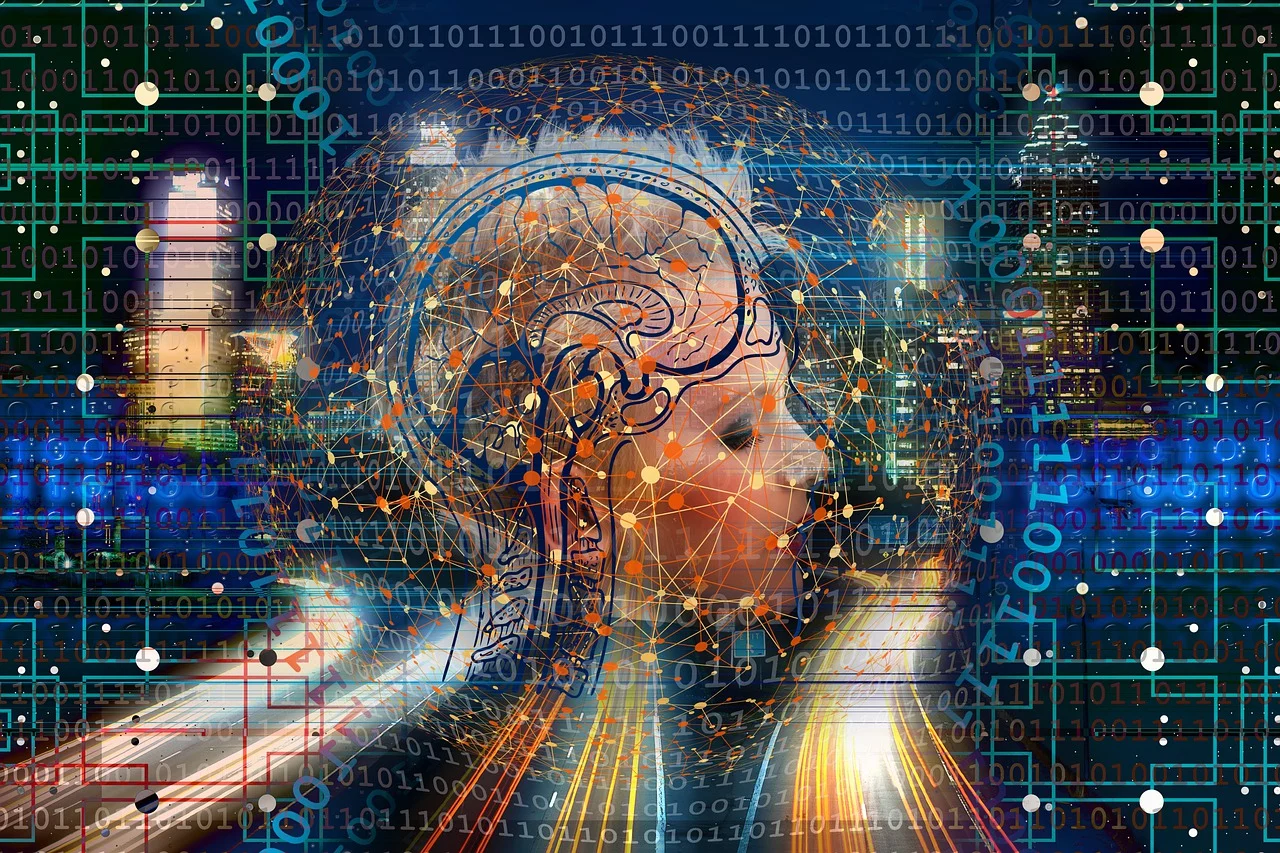
Research into brain-computer interfaces is one of five Delft projects receiving ERC grant. (Image: Geralt @Pixabay)
The researchers receiving the research grants are:
- Dante Muratore (bioelectronics researcher at Electrical Engineering, Mathematics and Computer Science)
- Sergio Grammatico (complex systems researcher at Mechanical Engineering)
- Arjen Jakobi (bionanoscience researcher at Applied Sciences)
- Louise Nuijens (atmospheric scientist at Civil Engineering & Geosciences)
- Shadi Sharif Azadeh (transport researcher, also at Civil Engineering & Geosciences).
Research
The research that these Delft scientists will be working on in the coming years is very diverse: from better brain-computer interfaces to optimizing traffic flows.
Dante Muratore had to read the email informing him that his LOOK project had been approved three times before he could believe it. “I was ill during the ERC interview, so I didn’t have high expectations. It’s great that I now have the funding to pursue my research dreams: designing better ways to read signals from the brain.” The aim of his research is to design new devices that not only provide a better understanding of how the brain works, but also enable improved treatments for neurological disorders such as Parkinson’s disease, depression, and paralysis. “Brain-computer interfaces are currently used, for example, in people who are locked in, who have no other way to communicate, but who can control a speech computer or robotic arm thanks to a chip in their brain. This technology is already extraordinary – borderline science fiction – and I believe that it will profoundly change the way we treat neurological disorders in the future.”
The sensors are placed directly on the brain and receive a lot of signals, an enormous amount of data to process. Muratore explains that if you import all the data, you also get a lot of noise, but if you compress the data too much, you run the risk of missing important data. “I suggest not applying the same level of compression to all sensors, but rather identifying which sensors provide the most important data and importing that data ‘lossless’, while compressing the rest using chips that consume little energy.”
He hopes to capture changes on a millisecond scale and with atomic resolution
Sergio Grammatico plans to develop intelligent control systems with his Argon project. For example, for robotics, the power grid, or to manage traffic. Grammatico’s systems will use real-time data instead of theoretical information. This is extremely important, according to the researcher: “Autonomous technical systems, such as self-driving vehicles, are extremely complex and vulnerable. Intelligent control systems are necessary to ensure the safe and sustainable operation of automation.”
Arjen Jakobi will use Inflammazoom to develop new microscope techniques to study complex protein structures. These structures are important for the immune system, for example. Because they change shape and bind to other cells, they are difficult to study. Jakobi hopes to capture changes in the structure very accurately: on a millisecond scale and with atomic resolution.
Louise Nuijens will spend a year collecting data with buoys equipped with sensors in Lake Victoria as part of the Quasi project. The aim is to learn more about the small-scale dynamic processes between air and water. Nuijens: “These insights may hold the key to understanding how the ocean and atmosphere interact over the tropical ocean, which is crucial for understanding local variability in weather and long-term trends in climate.”
Shadi Sharif Azadeh‘s research project Transform combines real-time measurements and prediction models—such as behavioral analyses of travelers—to optimize the functioning of mobility systems. Cities are becoming increasingly crowded and space is limited. The aim of her research is to help ensure that traffic flows smoothly in the event of disruptions, such as accidents or extreme weather.
There were 3,121 grant applications this year – no less than 35 percent more than last year. Although the ERC made €50 million more available for grants this year, a smaller proportion of applicants actually received a grant. Only 11.2 percent (349 researchers) were successful, compared to 14.2 percent last year. In total, the ERC distributed €728 million among 25 EU countries and other countries that contribute to the Horizon Europe research program.
The United Kingdom is the frontrunner with 65 grants, followed by Germany, which secured 58. The Netherlands is in third place with 40 grants. Around 38 percent of the grant winners are women.
The ERC also distributes starting grants (maximum €1.5 million) and advanced grants (€2.5 million). These amounts are higher than the comparable Veni, Vidi, and Vici grants from the talent program of the Dutch research funder NWO.
HOP, Naomi Bergshoeff, Delta, Edda Heinsman
HOP
Hoger Onderwijs Persbureau
Do you have a question or comment about this article?
[email protected]


Comments are closed.