

The elective course architecture and colonialism will not be returning, despite a petition to retain it having been signed 200 times. The lecturers are disappointed about a lack of communication and support from the Faculty of Architecture and the Built Environment. The dean states that it was always clear that the course would be a one-off.
(Photo: Delta)
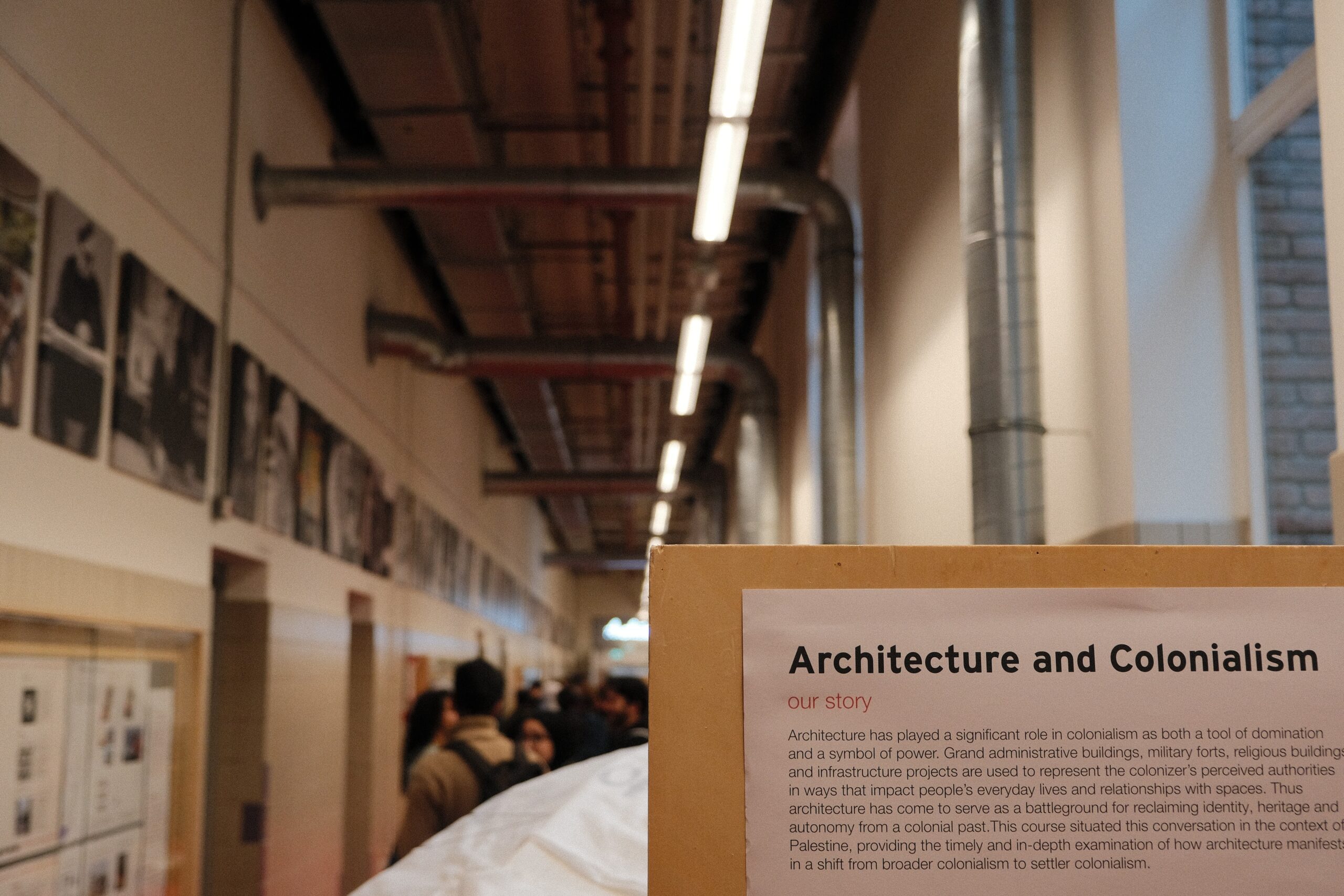
The course Architecture and Colonialism dealt with the role of architecture in colonialism in Palestine and was taught last spring. It was created after an academic event on the destruction in Gaza was cancelled by the dean, on the grounds that he had no confidence in a “constructive and respectful dialogue”.
The cancellation led to disbelief and outrage among the organisers. Subsequently, they agreed with the dean that an elective course on the subject would be offered. This was then surrounded by threats and intimidation. The lecturers were harassed and smeared by pro-Israeli activists, and the final exhibition had to be secured and shortened.
Considerable interest
Nevertheless, lecturers Nama Qudah and Sabina Tanović assumed that the course could return this academic year. That was their approach from the outset; they have been requesting it since May and have never received a definitive rejection.
In addition, there is considerable interest in the elective course. A petition to retain it has been signed more than 200 times. Qudah and Tanović emailed the dean and the master’s coordinator with this outcome on 18 November. When the list of elective courses was published online without theirs, they emailed again on 3 December. They did not receive a reply.
Teach-in
Dean Dirk van Gameren says that Qudah and Tanović have since received a reply, namely from the master’s coordinator. He told Delta that it could request a copy of the email, but this has not yet been shared. Qudah reports that she did indeed receive a reply on 12 December, two days after Delta sent its questions by email.
According to Van Gameren, the elective course was created for a ‘special reason’ and was therefore a one-off. He says the subject is already covered elsewhere in the curriculum. He refers to courses offered by the Centre for the Just City and the subject of colonisation and decolonisation.
He does not know whether Palestine is explicitly mentioned in these courses. In his opinion, a lecture or teach-in about the destruction in Palestine could still take place, ‘within the rules we have agreed upon’.
Urgency
Qudah no longer works for TU Delft, but would love to teach the course again. At the same time, she feels little support or understanding from the dean and the master’s coordinator. She argues that it was never agreed that the course would be a one-off. It would start with Palestine and then extend to other contexts, such as Algeria or Indonesia. This is one of the reasons why the course was given a generic name: architecture and colonialism.
“Moreover, given the huge efforts that were put into the course, the positive feedback that the students had, and above all the urgency of the situation in Gaza and Palestine, and the relevance of the questions of social and spatial justice, saying that the course was conceived as a one-time course is absurd.”
Editor in chief
Saskia Bonger
Do you have a question or comment about this article?
[email protected]


Comments are closed.