Column: Jenna Pfeifer
Crossroads to connection
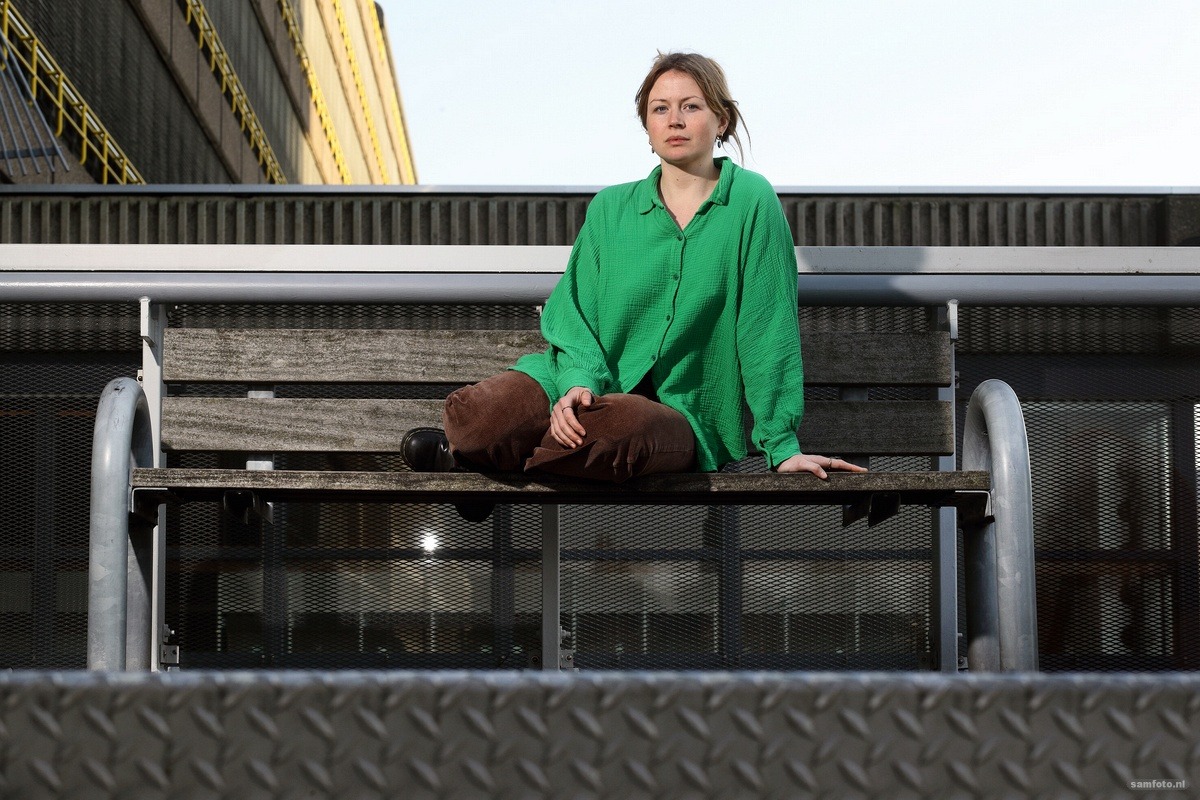
On TU Delft Education Day, Jenna Pfeifer realised how important connection is, that we feel seen and safe, that we can open our minds to new ideas.

On TU Delft Education Day, Jenna Pfeifer realised how important connection is, that we feel seen and safe, that we can open our minds to new ideas.
(Photo: Sam Rentmeester)
In my life, I’ve had the privilege of learning and teaching across different cultures and contexts, from children in Ethiopia to university students in the Netherlands. Each setting and each learner’s story has shown me that learning is not really about the content we teach. It is about the relationship between people, between ideas, between the past and future. How fitting then, that in Dutch to teach (leren) and to learn (leren) are one and the same.
That idea was revived for me on Thursday 6 November at TU Delft Education Day. We started with Tessa Cramer’s invitation to look beyond the headlines, to see hope as an act of imagination, and wonder as an antidote to boredom and fear. We did an exercise with her in cultivating awe by using a recent photo from our phones, and goosebumps rippled through the crowd. In the VR Empathy session, I stepped into the perspective of a person with autism which showed me that empathy is not a fixed trait but a skill we can actively practice.
Later, in Practice What You Preach, we explored the shared vulnerability between teacher and student, which may emerge simply by asking a student how they are doing, or taking a moment to breathe together before a class starts. In the final session, confronting the tension between humans and AI, I heard the familiar echoes of fear and hope where, from a student’s perspective, there was a clear need for proper frameworks to ethically and meaningfully use a technology that will inevitably become part of all our lives.
What struck me most, was how often emotions were visible and named. Twice during the day, I heard speakers admit that they felt nervous before speaking, or uncomfortable when sharing something personal. These acknowledgements reminded me how courageous it is to be vulnerable, making it easier and feeling safer when my turn came to step on stage at the end of the day.
Emotion is the foundation of learning
This, I realised, is what neuroscientist Mary Helen Immordino-Yang means when she says that emotion is the foundation of learning. Our feelings of nervousness, care, or awe, shape what we see, remember, and value. Learning does not happen in isolation, but only in the living conversation between brain and body, story and self, self and other. When we feel seen and safe, our minds can open to new ideas. When we feel disconnected or judged, there is no room for learning.
Throughout the day, I kept thinking about this interplay between emotion and meaning. The sessions were different in content, but the undercurrent was the same: connection. Connection using empathy, through uncertainty, by reflection, and through dialogue. Even though I arrived not knowing a single person, by the end of the day I felt part of a community.
The day’s theme, Crossroads, feels particularly fitting now. The rise of the D66 pro-education party in Dutch politics hints at renewed investment in learning. Yet, after a year of looming budget cuts, a lot remains uncertain. And still, this past year I’ve seen how vital it is to be there for each other, to deal with this doubt. Whatever the political climate ahead, may we continue to do that: to meet crossroads with connection.
Jenna Pfeifer is a PhD student in Biomechanical Engineering and Cognitive robotics, Faculty of Mechanical Engineering. Her research focuses on the Effects of Technology on Youth Loneliness. Jenna writes to understand the world better by attempting to merge two perspectives: the scientific and the poetic.
Do you have a question or comment about this article?
[email protected]


Comments are closed.