Column: Jenna Pfeifer
Lying in the truth
Truth and lies are not always opposites, Jenna Pfeifer believes. A white lie is an acceptable social lubricant, positioned between honesty and compassion.

Truth and lies are not always opposites, Jenna Pfeifer believes. A white lie is an acceptable social lubricant, positioned between honesty and compassion.
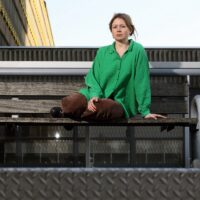
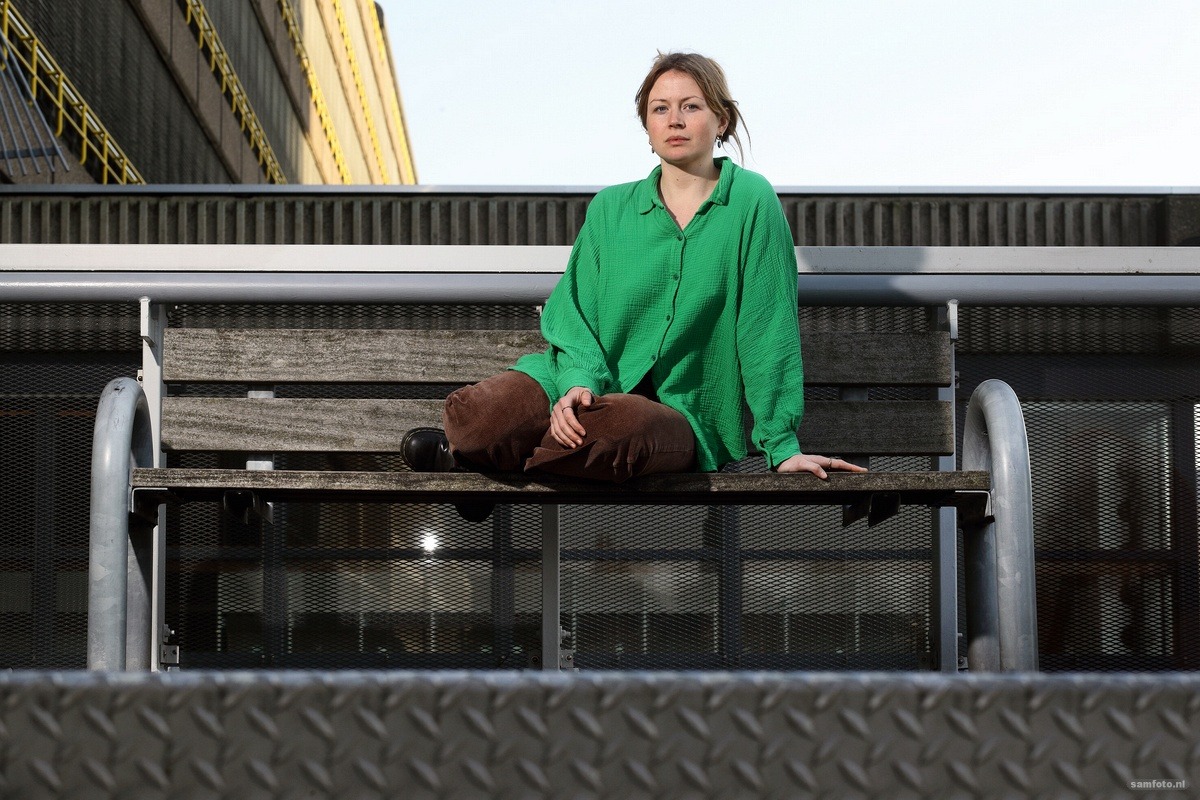
(Photo: Sam Rentmeester)
I’ve always tried to be kind, but I’ve also tried to be honest, intentions that occasionally pull me in two different directions. As a child, I often told small white lies to avoid hurting people’s feelings. They usually started, “My mom said I can’t because…” At the time, my tiny tales seemed harmless, almost practical.
Years later, I came across Sam Harris’s view that even white lies are wrong because they create a false picture of reality. “It is both a failure of understanding and an unwillingness to be understood,” he writes. By lying, we misrepresent our beliefs and deny others an accurate view of the world, shaping their future decisions.
His point hit me viscerally at university, when one of my little lies grew long legs. I told a friend I wanted to live with her, though I knew we’d be a terrible match. Months later, I had to retract the lie, and in doing so, I broke her heart. Here, kindness only deferred suffering.
So, is deception inherently immoral? Or is it sometimes part of how we navigate complexity? The answer depends on the context, and on what kind of truth is at stake. In intimate relationships, lies can erode trust, opening small cracks that widen into chasms. But in other domains, such as art, storytelling and culture, deception can be acceptable, even essential.
In nature, too, deception is crucial to survival
At a recent lecture in Utrecht, novelist and poet Ocean Vuong explored the nuances of deception in literature. He suggested that prose itself can be a kind of beneficial obfuscation; why should every word be handed over to be easily consumed? In nature, too, deception is crucial to survival: the chameleon lives by pretending to be something it’s not; a mother may steal to feed her young.
In human societies, deception can act as a social lubricant. A friend of mine, born in England but long settled in the Netherlands, once told me about a dinner where someone asked him how he liked the dessert. He replied, “It’s alright, not my favourite,” and joked that this proved he’d become Dutch. In England, he might have offered a polite “Lovely!” even if he hated it. I respect Dutch directness, but in England, and in my birthplace, South Africa, politeness has its own value. People learn to interpret tone, posture, and what’s left outside of language. Another kind of truth lives there, in the spaces between.
The Japanese call this concept of negative space 間 (ma). Ma isn’t about deception, but about the interval, the silence between things. It’s embodied in the kind of art I love: stories and poems with little action or plot. In Perfect Days, directed by Wim Wenders, we follow Hirayama, a public toilet cleaner in Tokyo, while he conducts his daily rituals. Almost nothing happens; instead, we move through his experience, see what he sees, feel what he feels. Here, questions of right and wrong, truth and lies, are unimportant.
Ma is also what I call my mom—the name I borrowed again and again for my childhood fibs. In a way, that feels fitting. Just as ma refers to the space between things, my mom gave me room to detour around the truth. She respected my choice to tell white lies when I needed to, but she couldn’t bring herself to lie to me—like the day she told me that fairies weren’t real. It was a small truth that shattered a beautiful illusion, a moment that showed me honesty can be both tender and devastating.
I used to think truth and lies occupied opposite sides, like moral poles. Now I think a lot of life happens somewhere in between. That space, the ma between honesty and compassion, is where I hope to inhabit.
Jenna Pfeifer is a PhD student in Biomechanical Engineering and Cognitive robotics, Faculty of Mechanical Engineering. Her research focuses on the Effects of Technology on Youth Loneliness. Jenna writes to understand the world better by attempting to merge two perspectives: the scientific and the poetic.
Do you have a question or comment about this article?
[email protected]


Comments are closed.