

Dependence on managers, a competitive culture and employees who do not always feel free to speak their minds. These are some of the findings from a risk analysis of the working environment in the Faculty of Architecture. According to Dean Machiel van Dorst, these problems call for a long-term cultural change. “Perhaps we need to move away from the ‘macho architect’ image.”

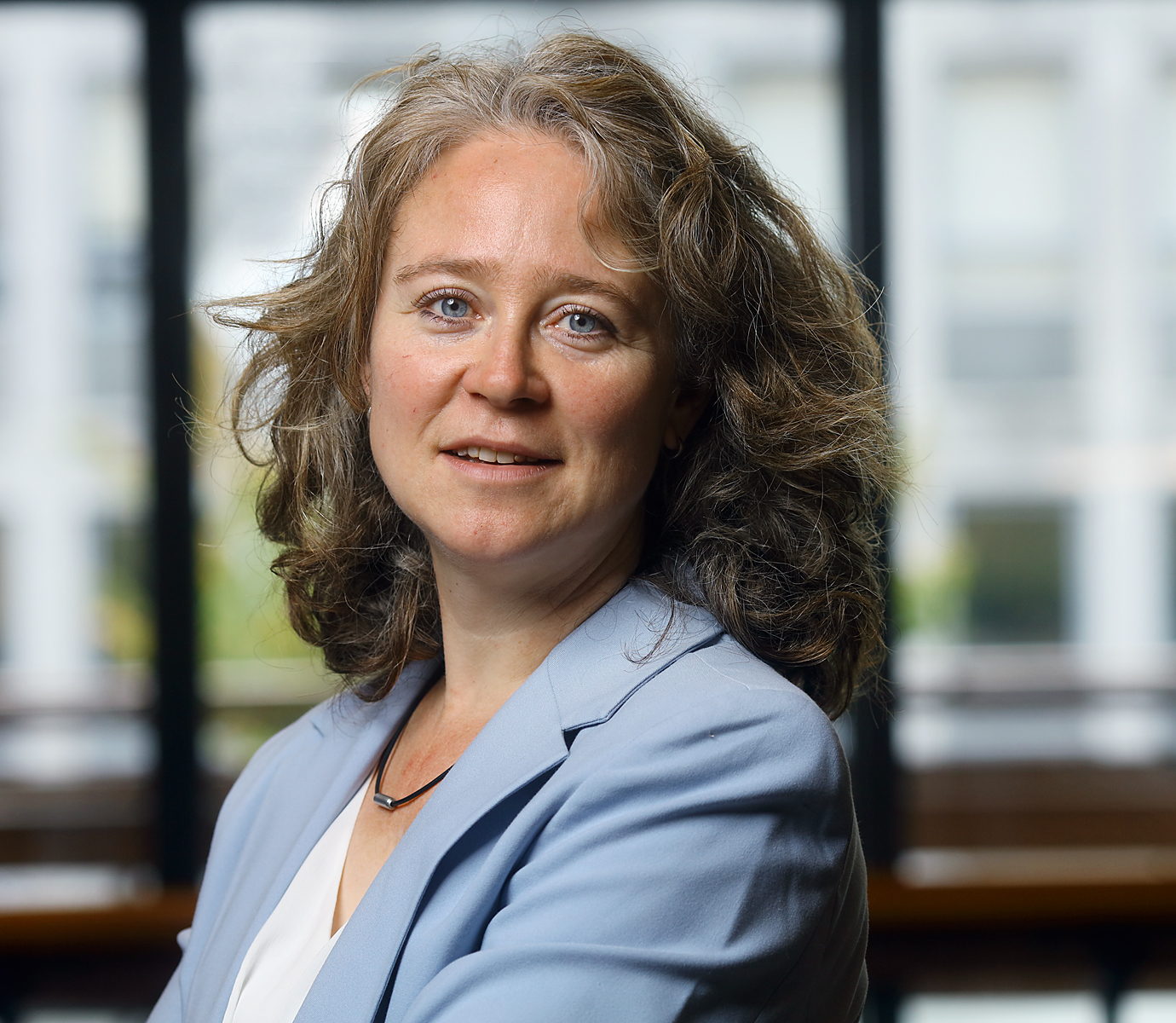
Machiel van Dorst: “Architecture has long benefited from the image of the star architect. Perhaps we should move away from that.” (Photo: Robin Utrecht)
Why was this risk analysis necessary?
“The previous dean picked up on rumours through the grapevine, and there were also reports of social unsafety. This raised the question: how do employees actually perceive the organisation? TU Delft’s integrity and social safety reporting point also suggested taking a closer look at this. That is why we opted for an external investigation involving a large number of interviews.”
The report is dated April. Why were employees given access to it only on 2 July?
“April was the draft version. We then checked for factual inaccuracies. It was subsequently discussed with, amongst others, the Faculty Works Council and several members of the management team. The final version has only been available since 26 June. So the timeline is much tighter than the date on the report suggests.”
What exactly happens now that staff have received the report?
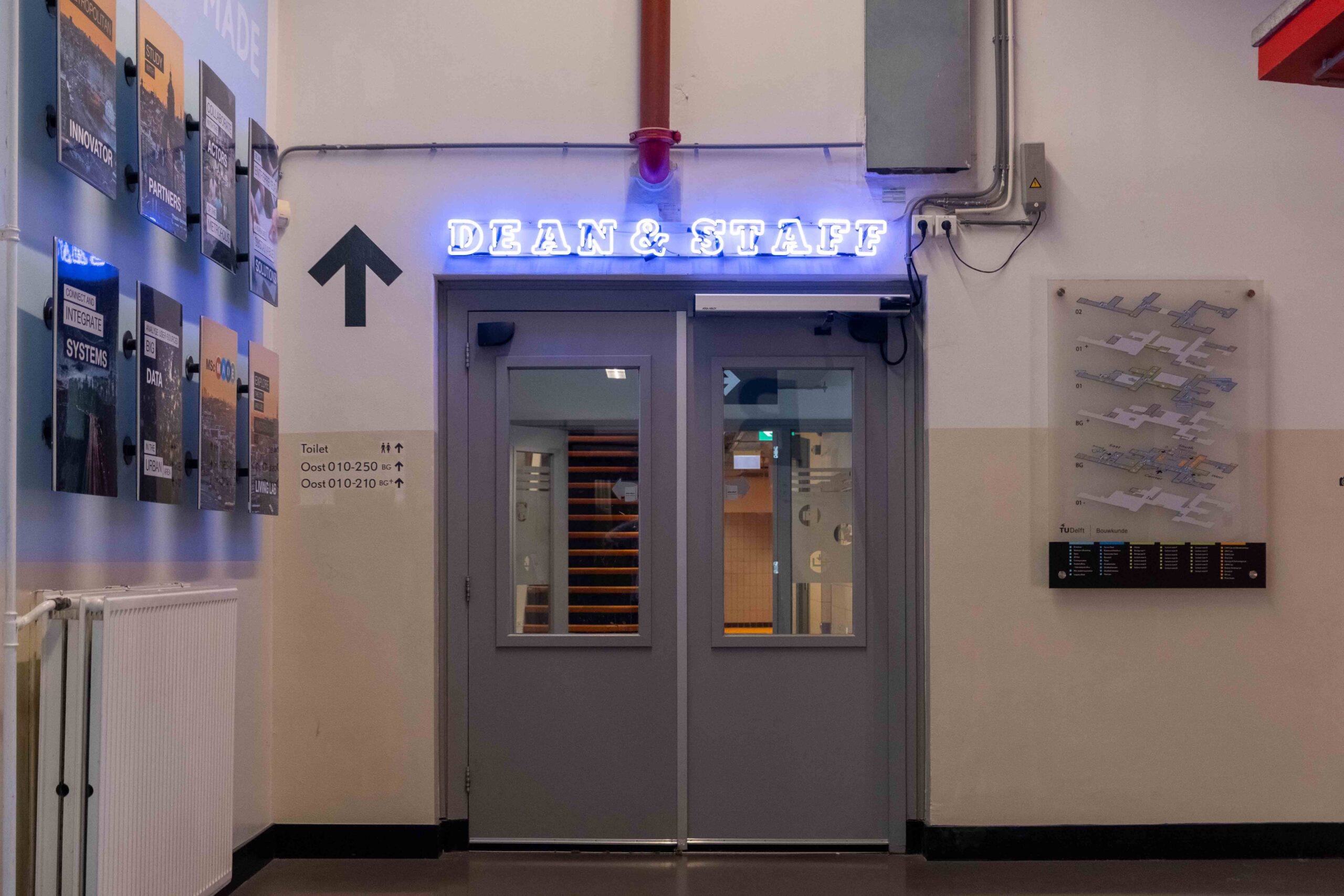
“We presented the report on 2 July and employees could respond straight away. This will be followed by discussions within the departments before the summer break. In the autumn, we will then organise eight dialogue sessions on specific topics, such as leadership, HR, career development and unequal opportunities. These discussions should help determine what next steps are needed.”
‘Of course, there are some challenging points in there – issues that staff consider important’
Were you shocked by what you read?
“I see the report primarily as a tool. As dean, I need tools to help us move forward. Of course, there are some challenging points in there – issues that staff consider important. You have to take those seriously.”
You’ve only been dean since February, but you’ve been working in Architecture for decades. How do you view your own role?
“I’m not going to say I’ve always done things right, because I don’t know that. Everyone has blind spots and everyone makes mistakes. But this subject is certainly close to my heart. My background is in urban design and environmental psychology. In my research, I focused on human behaviour, social safety in the built environment and the way people interact with one another. As a result, I’ve always been involved in this really, including in my collaboration with colleagues and students.”
Many of the issues raised in the report have been highlighted in previous reports by confidential advisers, the ombuds officer and the inspectorate. Why are further discussions needed?
“It’s really about culture. Architecture has long benefited from the image of the star architect. But perhaps we need to move away from the attitude of: ‘we’re the best in the world, and look at us being a bunch of macho architects’. A good design isn’t the work of a single genius, but the result of collaboration. That’s also more in keeping with the diversity we now have within the discipline and at the faculty.”
Discussions about these kinds of issues have never stopped. But they’re never really finished either. Working in an academic environment involves a great deal of ambition, competition and interdependence. That’s what makes this so complicated. What’s more, it’s no longer just about social safety, but also about psychological safety.”
What do you mean by that distinction?
“Social safety is much more about situations where something has gone wrong and how you deal with it. We’ve now put all sorts of measures in place for that. Psychological safety goes a step further back. Can people speak their minds? Do they dare to make mistakes? Do we listen to one another? That’s much more about prevention.”
You’ve opted for dialogue sessions. Why not start with a concrete improvement plan?
“Because we’re a very diverse organisation. I have my blind spots too. If I were to come up with a complete plan myself right now, it would just be something imposed from above again. I want to hear how staff see this first. That doesn’t mean nothing is happening. We’re already working on certain areas, such as professionalising section leaders.”
‘Section heads have an important responsibility towards employees and the organisation’
The report is critical of leadership. Where do you think the biggest change needs to take place?
“Leadership is not a chore. We have sometimes asked people to head a section simply because they happened to be a professor or led a research group. That is not enough. Section heads have a significant responsibility towards employees and the organisation. This requires support, training and clear expectations. We need to assess more carefully who is suited to such a role and prepare people for it.’
When will you be satisfied?
“Not any time soon. We’ve planned eight dialogue sessions after the summer, and further steps will follow from those. Ultimately, it’s about changing the way we work together. That takes years. I might well be working on this right up until my retirement in five years’ time.”
What would you say to employees who currently don’t feel safe speaking out?
“Make use of the options available. Confidential advisors, the reporting point, independent discussions. These resources are there precisely for situations where it’s difficult to have the conversation yourself. But ultimately, I want to move towards a situation where we discuss problems much earlier. In fact, it’s already too late once someone has to make a complaint or report an issue.”
- Read more about social (un)safety in our dossier.
Prof. Machiel van Dorst has been Dean of the Faculty of Architecture since 1 February 2026. Van Dorst is a professor of environmental behaviour and design.
Van Dorst graduated from TU Eindhoven in 1992 with a degree combining architecture and environmental psychology. After graduating, he worked for many years as a researcher and designer.
In 1997, he joined TU Delft as a researcher at The Ecological City. He has been affiliated with the Faculty of Architecture since 2002, where he has also held various leadership roles since 2012.
Do you have a question or comment about this article?
[email protected]


Comments are closed.