Activist group ‘Delft Student Intifada’ announces protest
This article was updated with information about the two new collaborations on 24 November at 2:25 PM.
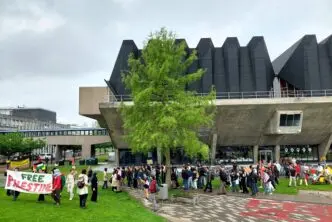
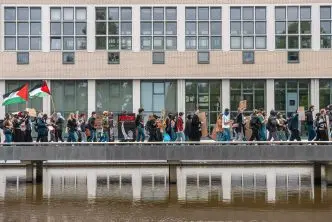
Students believe that TU Delft is not honouring previous promises regarding collaborations with Israel. Action group “Delft Student Intifada” has therefore announced a new protest for 3 December to exert pressure and demand more clarity about these collaborations.
TU Delft is not being transparent about ongoing projects, the students write, and has even started two new collaborations. The first is ‘Next Generation of edge AI crossing technology fields’, which was signed on 4 August. This project concerns secure European artificial intelligence that runs directly on local devices rather than in the cloud. The partner in Israel is the company Weebit Nano. The second project is ‘E2PackMan’ from the European Consortium for Accelerating Innovations in Electronic Packaging Manufacturing. It was signed on 14 July. This research concerns the creation of smarter housings for chips, for example to fit more in, to protect them better and to connect them better to the rest of the electronic circuit. The Israeli partner is the company Nova.
“No, unless” strategy
The debate about cooperation with Israeli institutions has been raging since 7 October 2023 and has led to numerous protests on campus. This proved to be effective. The Executive Board set up a moral deliberation committee. After months of research, that committee spoke of “(increasing) evidence of potential genocide, or at least a risk of genocide, in the conflict between Israel and Gaza”. Being affiliated with that as TU Delft would entail a major moral and legal risk.
In June, the university therefore launched a “no, unless” strategy and decided to adopt a stricter course. This focuses on institutional rather than individual ties. Delta showed that numerous collaborations still fell through the cracks of this new policy.


Comments are closed.