

If everything goes according to plan, four astronauts will travel into space for a trip around the moon tonight at 0:24 a.m. (Netherlands time). Is this Artemis II mission the beginning of a new era in space travel? Students at Space Oasis Delft are already preparing for the next step: “I might even go to Mars myself one day.”
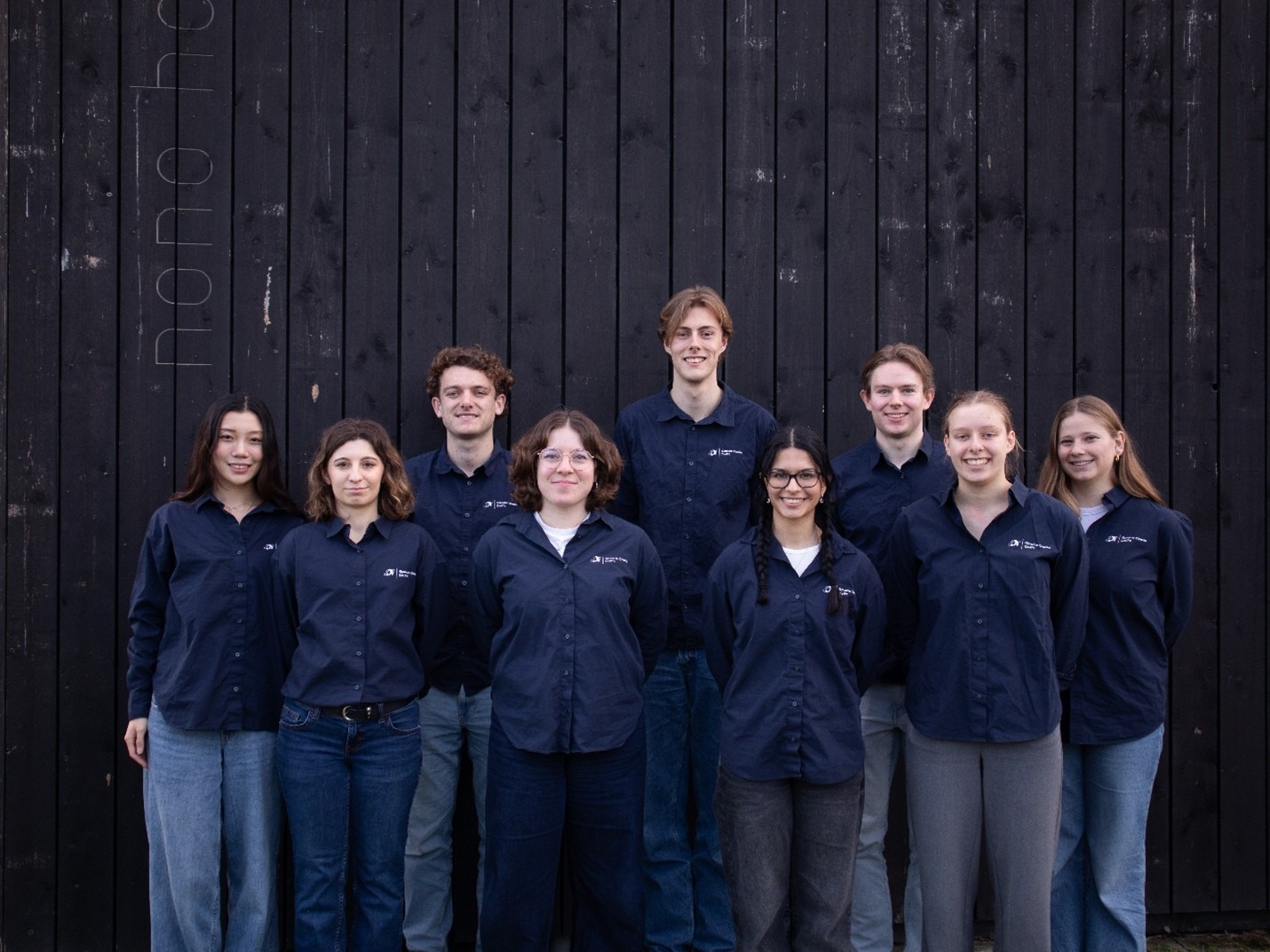
The student team with team captain Maarten Smits third from the left. (Photo: Space Oasis Delft)
In the Dream Hall at the Faculty of Civil Engineering and Geosciences, a team of students is busy discussing how to further develop the designs they have just completed. Team captain Maarten Smits takes the time to explain what they are working so hard on: the design and construction of a real Mars habitat.
Dream team Space Oasis participates with their design of a Mars habitat in the yearly Architecture & Innovation in Space competition, organised by the Jacques Rougerie Foundation.
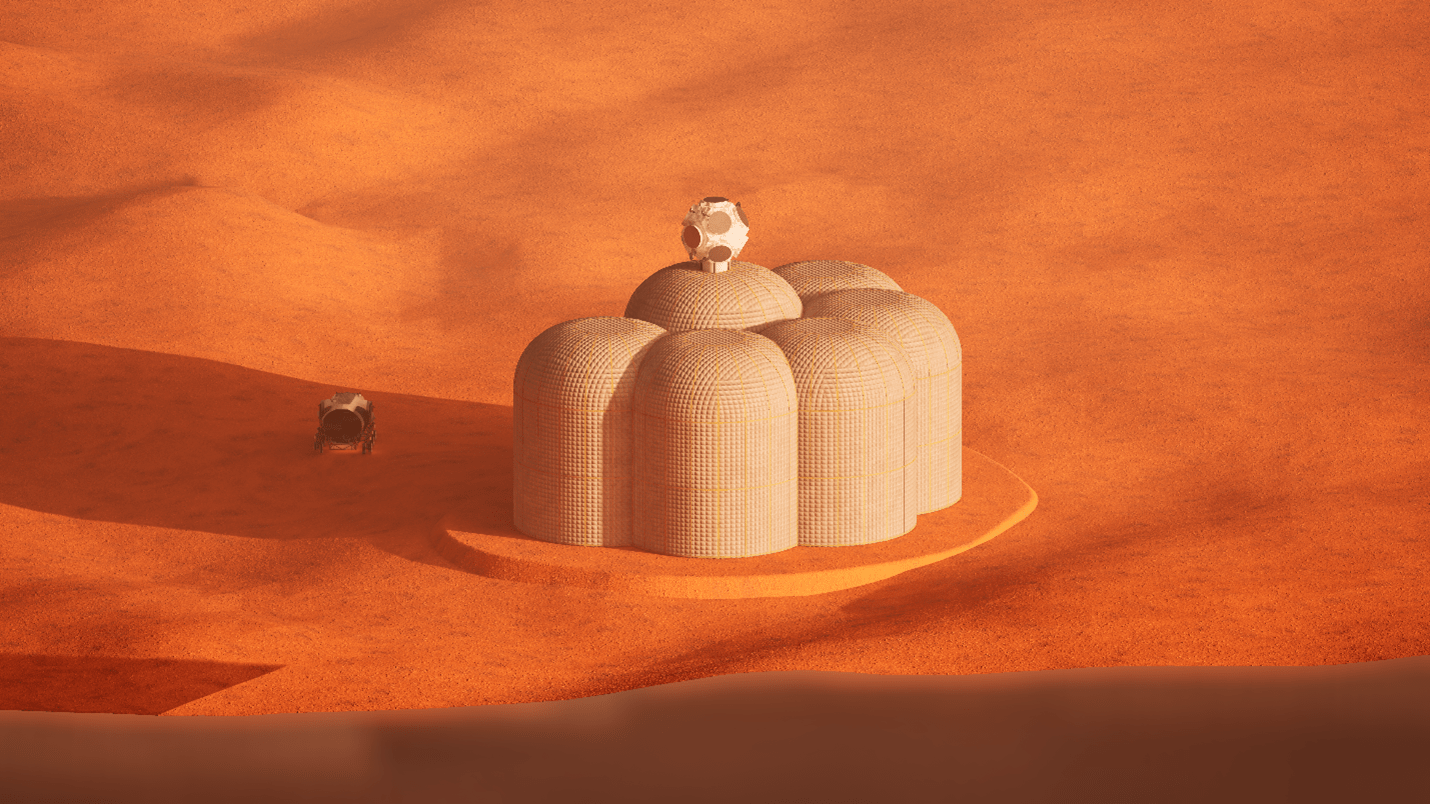
The structure consists of several cylindrical domes. “The round shape makes it sturdy,” says Smits. The walls are constructed from several layers. One of the layers is made of ice. According to the team, this has several advantages. “The ice protects against radiation. On Earth, we have a strong magnetic field that protects us, but that is lacking on Mars.” Moreover, there is no need to bring water, because according to the students, it is available on Mars and can be extracted on site. Smits calls this ‘in-situ resources’.
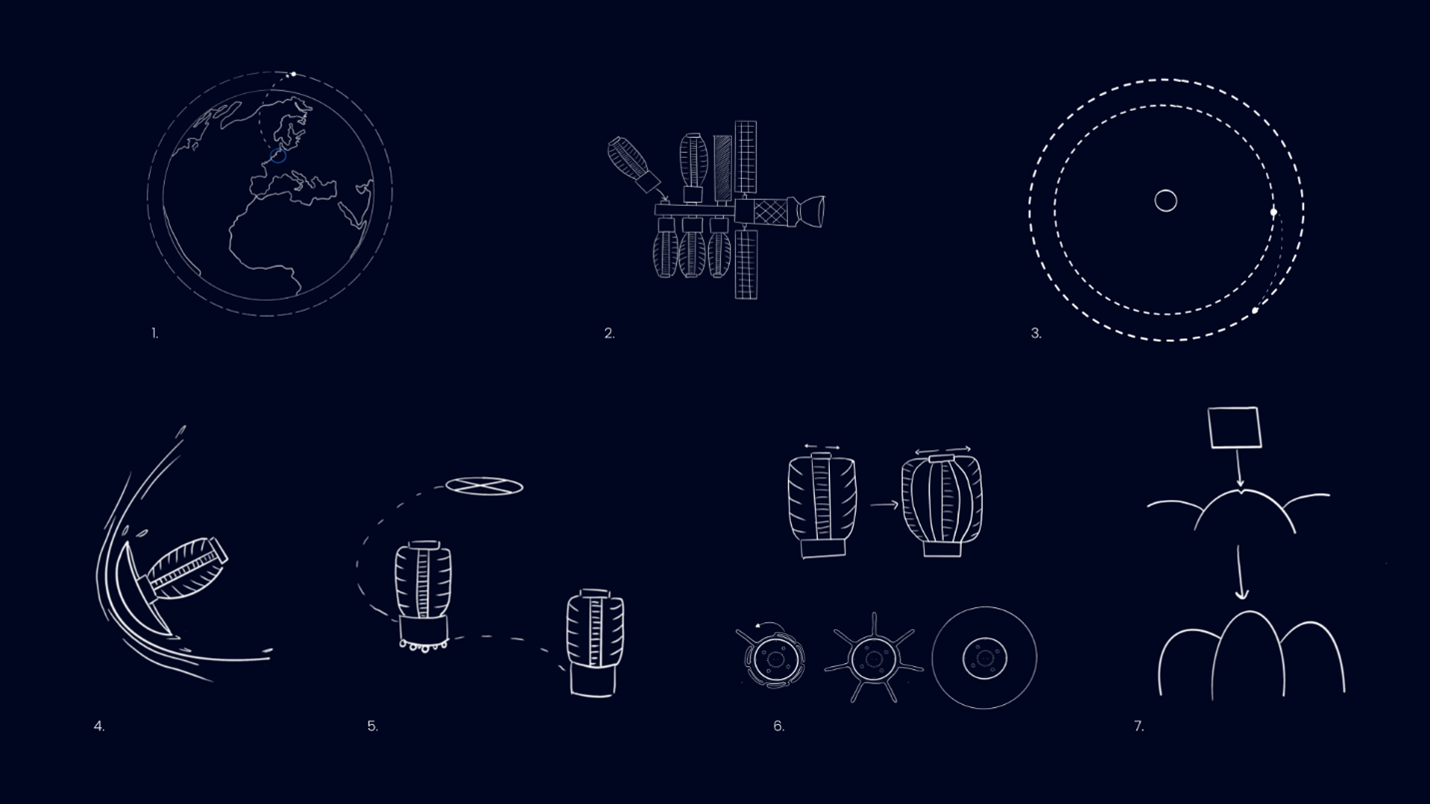
The team has opted for a structure that can be unfolded in one go. It will be built here and transported packed on a kind of rod. “We will place those rods on a transit satellite, a kind of space truck that will take everything to Mars. Once there, everything will unfold and inflate.”
Apart from a periscope-like construction that works with mirrors, there are no real windows in the cylindrical units. A glass sphere protrudes above it. “A lookout dome. You can look in all directions, but can’t stay in there too long because of the radiation.” To maintain a good day and night rhythm in the rest of the building, they adjust the lighting. “We’re not going to design artificial sunlight, but we will make sure it gets a little darker at the end of the day. Then you automatically get the idea: I’m done with my working day,” explains Smits.
New space age
The idea is that robots will be used to make the base completely ready for use before humans arrive. Will humans eventually walk on Mars? If it were up to Maarten Smits, they would: “We are currently in a new space age. It’s not just NASA’s Artemis, but also the companies that are joining in, such as SpaceX, Blue Origin, etc.” Smits is looking forward to the upcoming space mission. “If this is a success, the entire space industry will blossom. Sixty years ago, with a computer that was many times less powerful than your phone, we went to the moon. Imagine what is possible now with AI and all the other technology. First, Artemis will orbit the Moon; soon astronauts will land on it, and before long the first trips to Mars will take place. I’m definitely going to be there,” says Smits. “I might even go to Mars myself one day.”

Do you have a question or comment about this article?
[email protected]


Comments are closed.