

The campaign ‘We claim the night’ raised half a million euros within a few days and led to events in many cities. On Friday, it will be Delft’s turn.
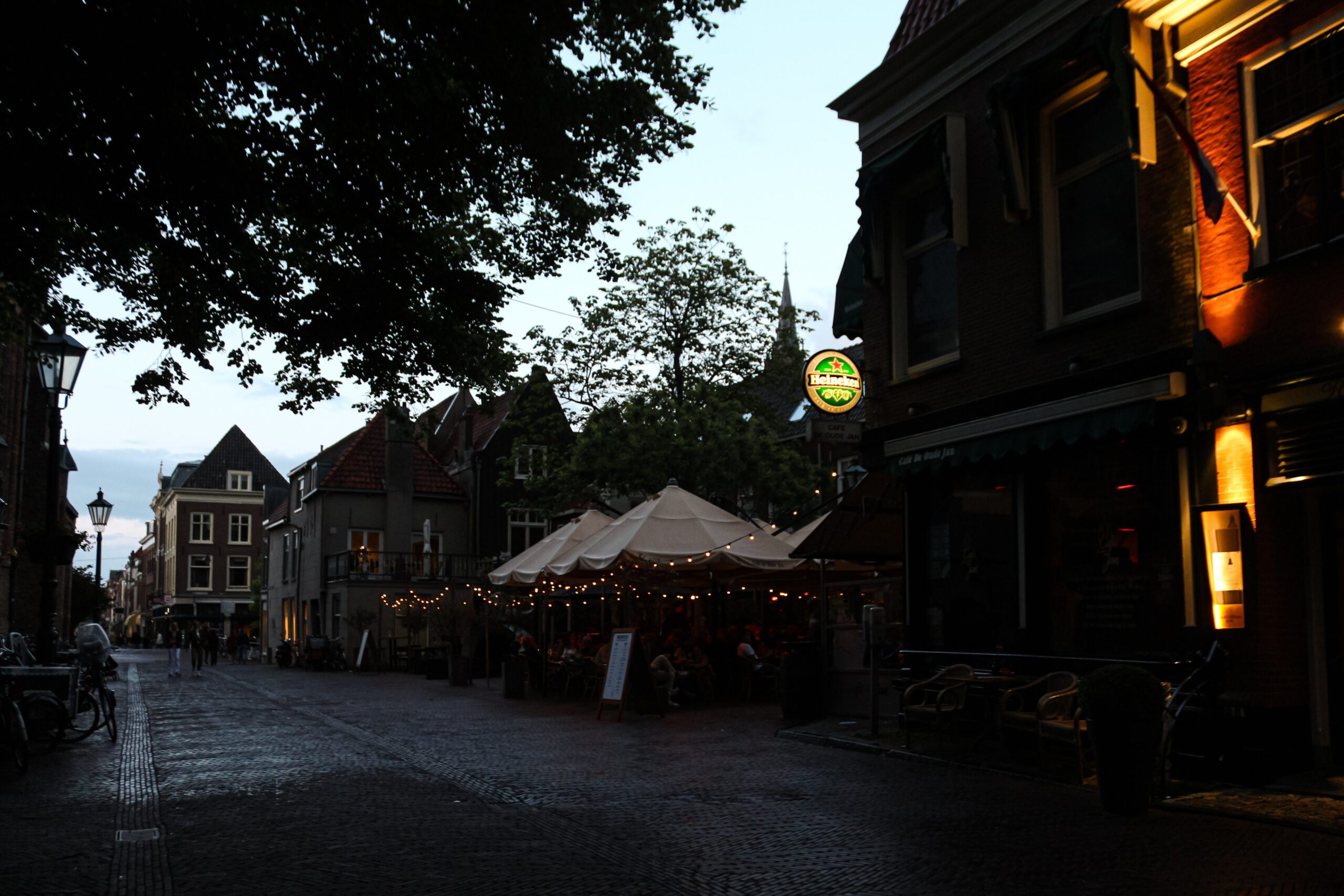
The city centre of Delft can be dark. (Photo: Justyna Botor)
‘We claim the night’ was set up by Danique de Jong after the murder of 17-year-old Lisa from Abcoude, who was killed last week on her way home after a night out in Amsterdam.
The week before, another woman was the victim of sexual violence in the same area, presumably by the same perpetrator. This led to outrage. “No matter what we look like, where we are, or what time it is: let women come home safely” is the message of the campaign.
Delft claims the night too
Following the example of other cities, Delft is also taking to the streets to draw attention to street safety. On Friday evening, the municipal council parties Onafhankelijk Delft and STIP (‘Studenten Techniek In Politiek’) are organising a bicycle tour along ‘the dark spots of Delft’.
In general, residents rate safety in Delft as good, says Lisanne Fung Fen Chung, councillor and involved in organising the campaign on behalf of STIP, but safety remains an important issue. For example, in new area development: “We are going to build in many places in Delft, and that should include safe routes.”
Furthermore, a high safety score in the survey does not mean that there is no problem, according to Fung Fen Chung: “I think every student knows someone who has been intimidated on the street or feels unsafe in some other way.”
The bicycle tour will start on Friday 5 September at 8.30 p.m. at the Market Square. In a WhatsApp group for the event, Fung Fen Chung calls on all participants not to forget their bicycle lights for safety reasons.
Delta, Emiel Beinema
Responsibility
Female students do not always feel safe either. “I always cycle faster at night, pay more attention, and wear only one earbud so I can hear what’s going on. And I constantly share my location via my phone with a few people, so there’s always someone who knows where I am,” a Maastricht student told the university newspaper Observant.
During the introduction week in Nijmegen, things almost went wrong. On Wednesday evening, an attempt was made to take a female student who was cycling home against her will in a car, the coordinator of the introduction week reported to the Brabants Dagblad newspaper. This ended well in the end, but female students in Nijmegen are advised not to cycle home alone.
“We still see women’s safety too much as their individual responsibility, but it isn’t,” emphasises Mariëtte Hamer, the government commissioner leading the fight against sexual violence. According to her, it is important to make the subject discussable.

Transgressive behaviour
Maaike Krom, chair of the Dutch Student Union (LSVb), agrees. “It’s good that there is now more attention for this issue, but it’s terrible that it had to cost a life.”
Earlier this year, it was revealed that half of all female students in higher education had recently been victims of sexually transgressive behaviour. And for one in six female students in higher professional education and one in four female students in university education, it escalated into physical violence.
Educational institutions
“Educational institutions can help students who have been victims,” says Krom. “But students often don’t know who to turn to.”
Sarah Evink, chair of the National Student Association (Interstedelijk Studenten Overleg), agrees. “I do see that it has received more attention in recent years. For example, some introduction weeks have organised a ‘walk home together’ this year. It is important that institutions create an open atmosphere so that if something goes wrong, there is a decent place to talk about it.”
HOP, Naomi Bergshoeff

Do you have a question or comment about this article?
[email protected]


Comments are closed.