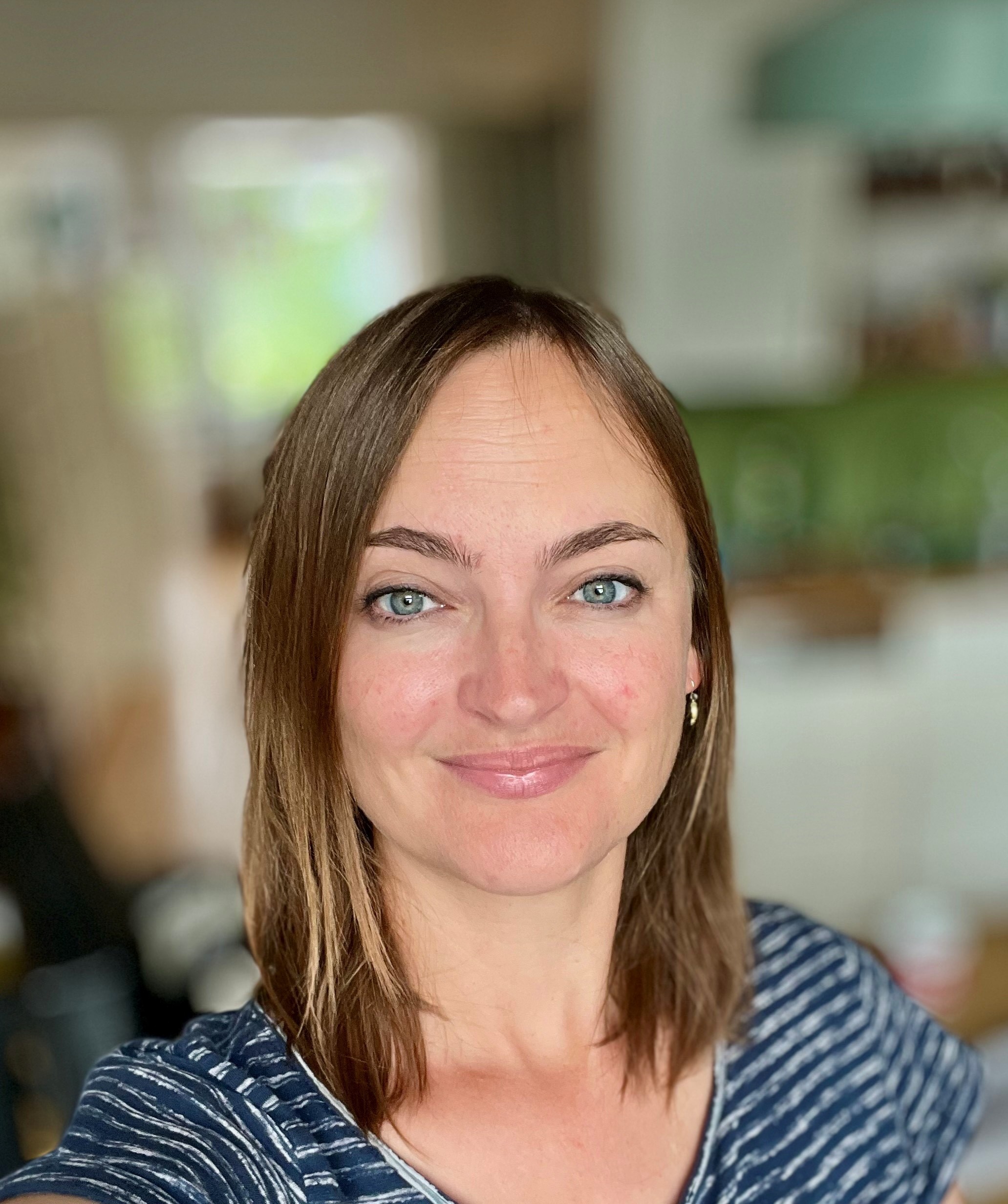
It is not easy to arrange an appointment with Marileen Dogterom. Besides being the group leader of the Bionanoscience Department in the Kavli Institute for Nanoscience, she is the president of the KNAW, and thus has a very full calendar. “She’s one of those people who seem to have endless reserves of energy to do what they are doing, and you wonder where it all comes from,” explained Rector Magnificus Tim van der Hagen while describing her during the award ceremony. How does she do it, combine all those functions?
Lesson 1: Dare to say no.
“Perhaps I function better when I have different tasks on my plate instead of doing something repetitive.” Dogterom works 60% of her time at the KNAW, and 40% in Delft. “I try on those days to really be physically present in Delft. I have help with organising all that, people keep strict watch over my calendar. And I am sheltered in Delft, I don’t have to attend faculty or department meetings nor give lectures at the moment. I can focus solely on my group, supervising students and doctoral candidates. I’m not currently doing many of the things normally expected of an academic, like reviewing proposals. I do occasionally work in the weekend, but I am not working 24/7. That does mean saying ‘no’ often.”
Lesson 2: Do whatever gives you energy.
“The advantage is that I can say no to things that do not give me energy.” This is a luxury that few can afford. “You see young researchers strategically choosing a topic because perhaps there is more leeway in that direction. But if you are not passionate about that direction, then it will never succeed well. Then it would be better to keep looking, take more of a risk. I think that you should search for a certain lightness, remain where you want to be, do whatever gives you energy.”
Lesson 3: Grant space for risk and research outside the standard directions.
“Collegiality, collaboration, trust and social security are all values that I naturally consider important and thus act on implicitly.” Dogterom tries to create a safe, pleasant research environment for her staff. “So you also discuss things that did not go well. That has to do with transparency, openness and trust. I do not chase people up if something is not progressing fast enough. I don’t believe in that. What matters is not how much you publish, but that what you do makes sense. Perhaps this leads to only one publication instead of four. But what you have done garners attention. Dare to take more risk.”
‘There is no one-size-fits-all method for supervising people’
Lesson 4: Encourage diversity.
“In my group there might be members from ten different nationalities. We all harbour the same passion regarding research, but with an entirely different cultural background. There is no dominant group. And because it is so diverse, nothing is ‘normal’, which may actually make things easier. A diverse group can easily discuss existing habits because more varied experiences and ideas will be contributed. That provides space and more flexibility, something I really appreciate. You are not locked into one way of doing things because the group is homogenous.”
Lesson 5: Customise the supervision, there is no one-size-fits-all.
According to Dogterom, there is no uniform approach to supervising students. “You have to listen closely and be able to sense what makes people tick, what motivates them, and what doesn’t, what their interests are, pitfalls. One will only come by when things are going well, another you only see when a problem arises. So a supervisor has to ask what is going on when someone stays away. There is no one-size-fits-all method for supervising people. The fun part of this role is that you are interacting with young, smart, creative and highly motivated people. That last aspect is very important. In an ideal case, you provide inspiration, ideas. Sometimes a student is not that interested in the beginning of a project but becomes inspired halfway through. And suddenly tests out every possibility like a madman in the last few weeks, when there really isn’t enough time left. Then inspiration has taken hold. That is so great to see.”
Lesson 6: Never stop learning.
At what point did Dogterom turn from a student to a ‘Leermeester’ (Professor of Excellence)? “My own supervisor was not easy to get along with, but clearly had confidence in me, allowing me to decide for myself what my focus would be. At such a moment you know: I am the one determining what I am going to do. You are not yet a ‘Leermeester’ (Professor of Excellence), but also ‘no longer the student’.”
Is she occasionally still a student? “I learn a great deal as president of the KNAW, for example, about other scientific fields. For the past year I have been a member of the Unesco international bioethics committee, where I am regularly confronted with other disciplines, like ethics, law and philosophy. So I can now collaborate more easily with them. In December I shall become Co-Chair of a global network of academies that are working on themes like research assessment, recognition and building up new academies in countries with a vulnerable science system. In that role I want to understand better how science can expand globally, while paying attention to non-Western perspectives. I am constantly learning.”




Comments are closed.