

For students and staff members who desire green, X is making the Campus Farm available. About 30 people at TU Delft have rolled up their sleeves. These three explain why. “My mind is more peaceful in the garden.”

In the shed on the right of the photo, gardeners are being taught how to grow vegetables in the Netherlands. (Photo: Sinan Keleştemur)
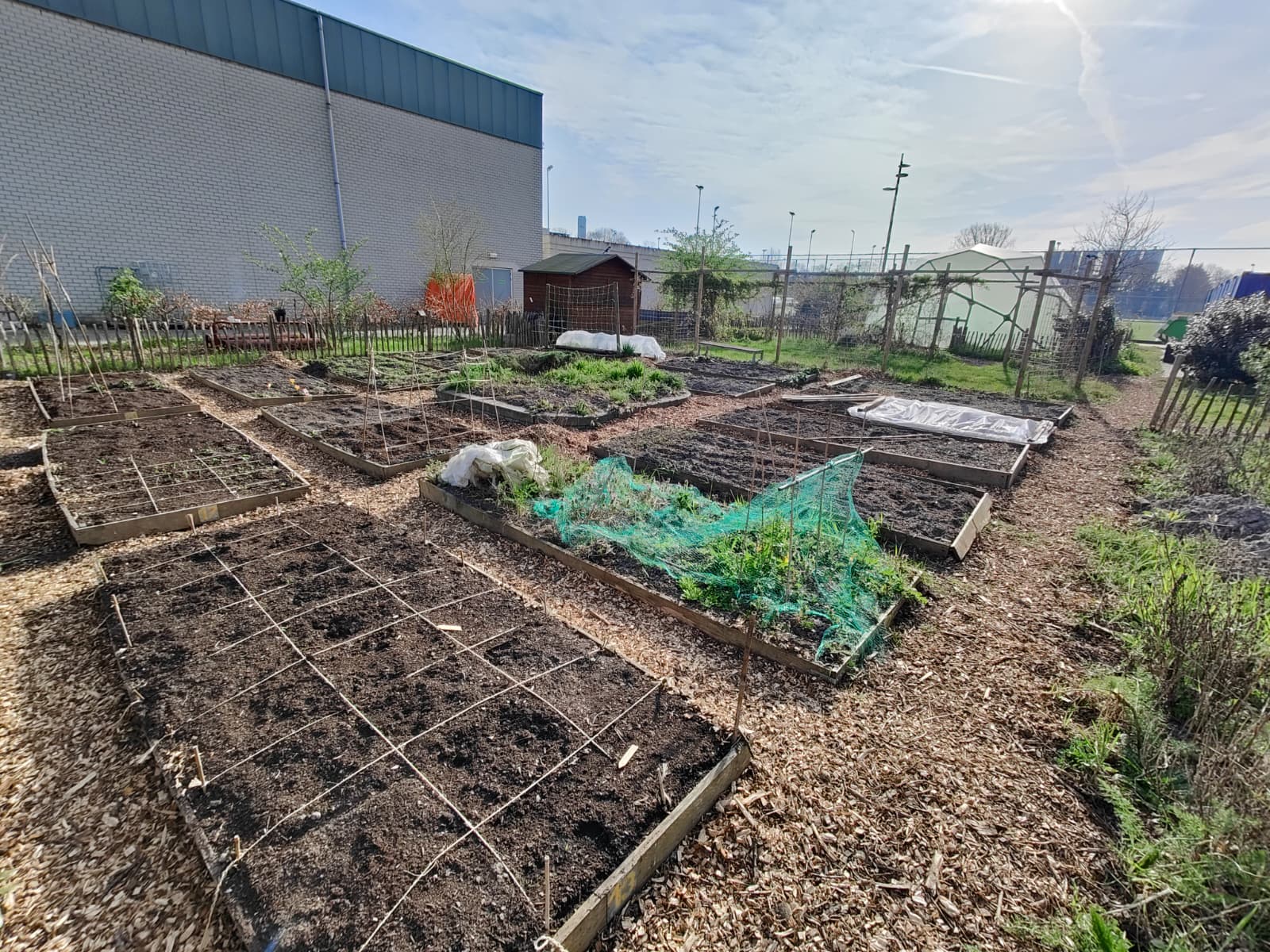
You would expect cobblestones, sand and mowed lawns around X. But anybody who gets lost could end up in a bit of nature. The area between X, the BalPol Flats along the water and the football fields has been turned into a green oasis. You hear birds chirping and, with a bit of luck, may see a hedgehog scurrying around. Welcome to the Campus Farm.
Apart from kitchen gardens and round green greenhouse, there is also the Schuur (literally the shed, Eds.), a small wooden building with a moss covered roof and rain barrels for the plants. Inside are four international students and staff members waiting for the introduction course on gardening, offered by X to the people who rent a campus allotment garden, to start. The attendees are asked to think of the name of a vegetable or fruit that goes with their name. The outcome? Alison Asparagus, Brian Boerenkool, Willa Willow and Renée Radish.
Powerpoint Presentation about plants
Once the prospective gardeners have claimed their pet names, Denise, the kitchen garden teacher, cheerfully clicks through a PowerPoint presentation decorated with plants. The students occasionally pick up their things to allow a spider to creep around on the table.
The Campus Farm has 23 allotment gardens and 30 renters take care of a whole or half a plot. Who are they and what are they intending to do with their patch of green?
Alison ‘Asparagus’ Kelly
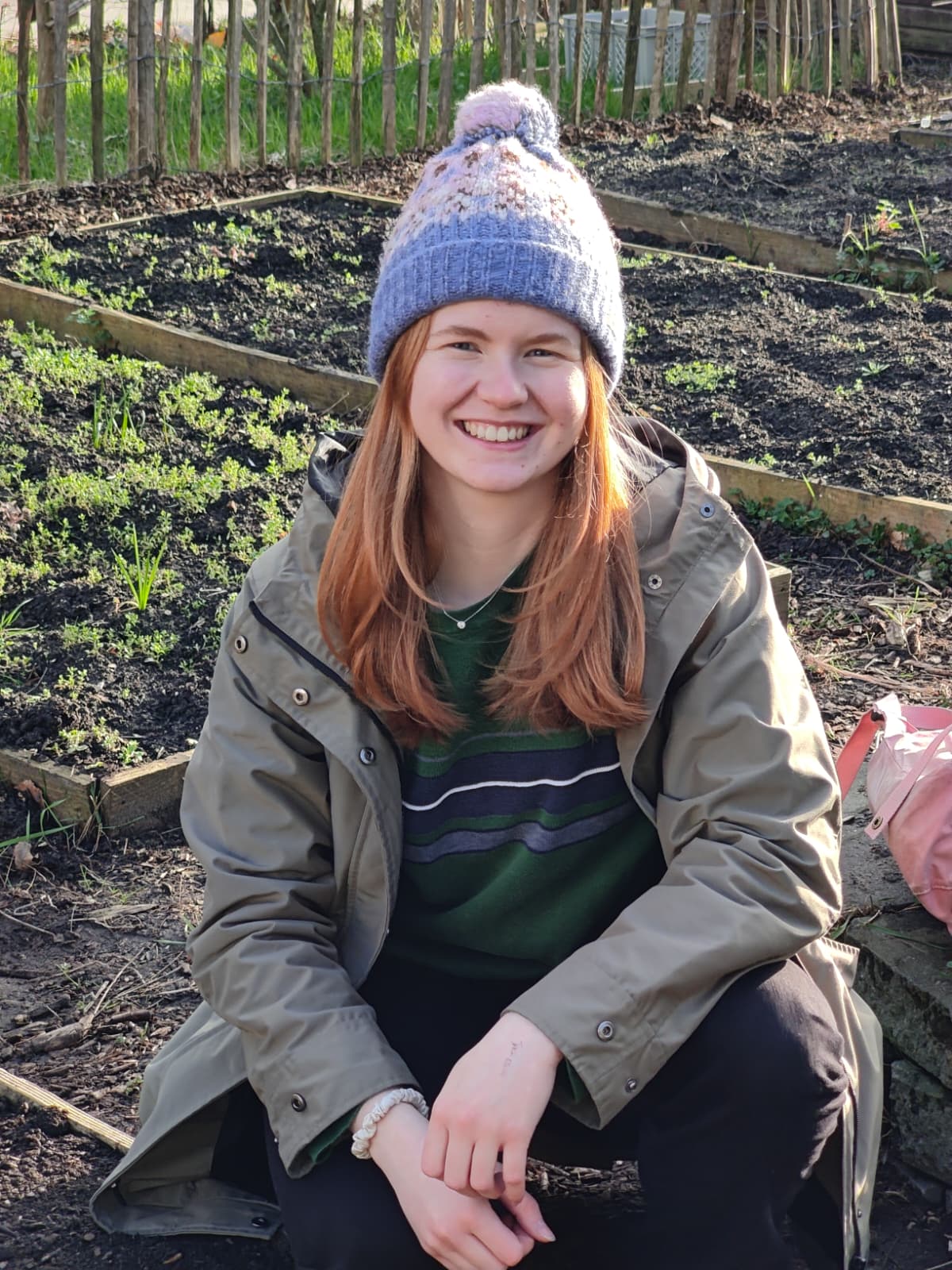
Energy Engineering doctoral candidate Alison Kelly (25) is standing next to her kitchen garden chatting with a Dutch friend. She is Irish and has lived in the Netherlands now for six months. After her friend says goodbye, Alison takes the time to explain about the Campus Farm to a mother and her three-year-old daughter. She enthusiastically tells them about the courses, the materials that you get if you rent a plot, and more. She is easy to talk to and questions are hardly needed.
Alison comes from a village close to Dublin. She describes Ireland’s capital as a village, small enough to know all the primary schools there. She explains that asking about each other’s primary school is a standard way to break the ice for people in Dublin. There are quite a lot of Irish people at the Campus Farm – at least four have plots.
When she was a child Alison tried to grow vegetables in the back garden, but it never worked. “It was simply too wet,” she says. It did work elsewhere. After five years of being on the waiting list of an allotment association around Dublin, she and her father were allocated a 100 square metre piece of land. They experimented for two years. “We planted things at random to see what would happen. Here at the Campus Farm one of the challenges is that you do not have a lot of space. So I really want to learn why something works or not.”
She proudly shows photos of her favourite plant that she grew, the climbing bean. It is a bean plant that grows upwards in circles around branches.
You can read more below the photo.
For her, the Campus Farm was one important reason to come to TU Delft. She went looking for allotments in the Netherlands before she even started looking for housing.
She says that gardening is a way to escape her study. While she sometimes does not want to think about her research, it is hard for her to stop talking about it once she starts. She did Mechanical Engineering in Ireland where she discovered her love for calculations using heat and liquids. She has worked on Energy Engineering since then and half a year later started her PhD. She is now doing exactly what she excels in, she says. “Asking a lot of questions and going into the details of how something works,” she explains. “I can use it to make a difference and that is very motivating. I’m literally living the dream.”
Brian ‘Boerenkool’ Dsouza
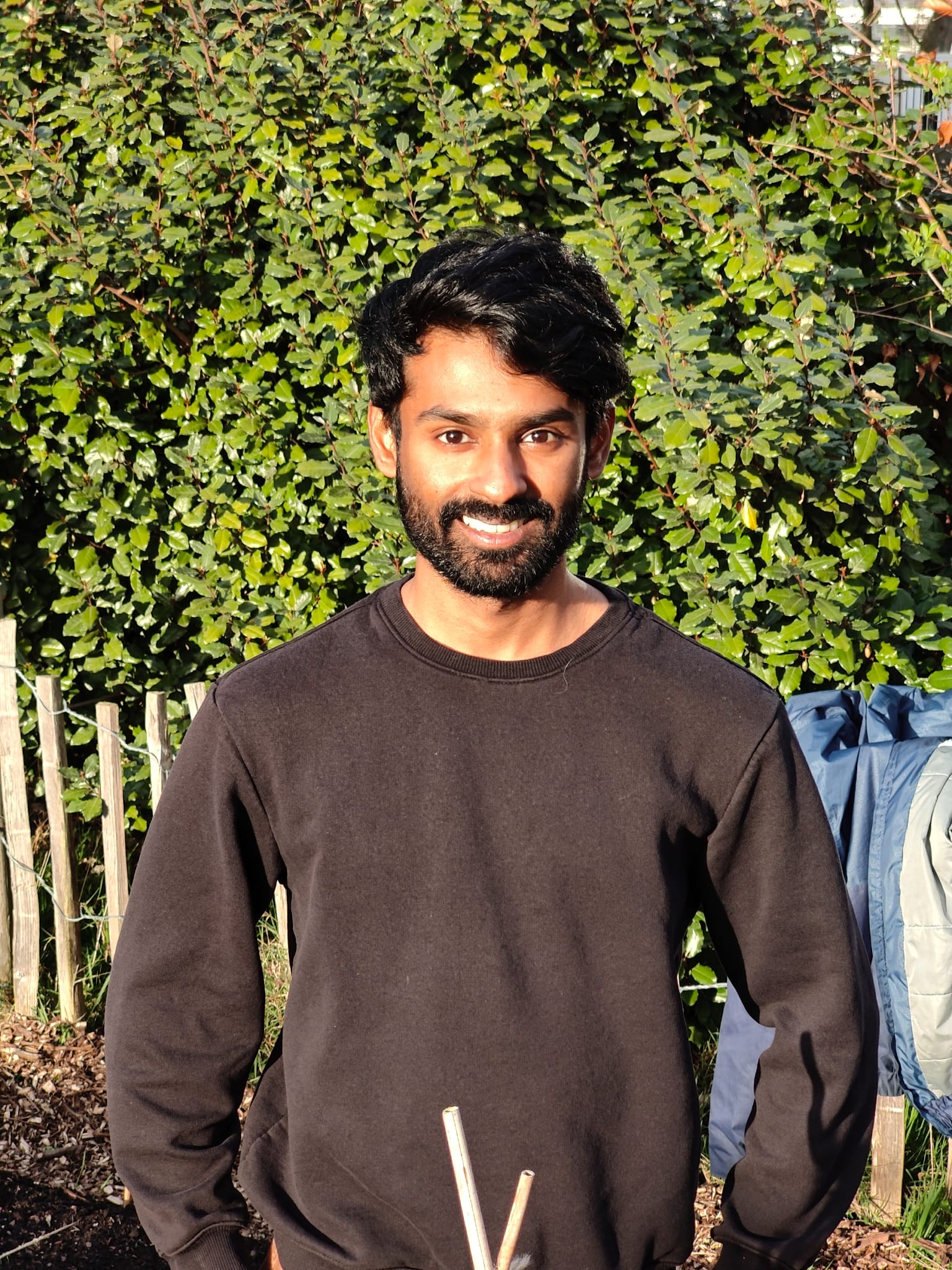
Brian Dsouza (29), a doctoral candidate, picks up some things from the shed, mooches around his kitchen garden, and sits on a bench in the sun. He adopts all kinds of cheerful poses for the camera and is happy with the photos. While he speaks the language quite well, having lived in the Netherlands for seven years, he still prefers to carry out the conversation in English.
Brian moved from Mangalore – a city in India the size of Utrecht – in 2019 to Delft to do a master’s in Aerospace Engineering. It is his family that he most misses in India, and he visits them for a couple of weeks once a year. While he enjoys it, he also wants to come back after a couple of weeks. “I actually feel more at home in the Netherlands than in India. It is very busy there.” The food is also too hot for him, although he does eat hotter food than his friends. “But I cannot beat my mother and grandmother. I think they just enjoy pain.”
That said, he very much enjoys growing chillies. He has a collection of chilli plants at home and occasionally makes a – much too hot – sauce. He started getting interested in gardening when he was a child. “Up to when I was about four years old, we had a large piece of land with banana trees and other fruit plants. I really liked seeing how the plants grew.” When his grandparents passed away, their children divided up the land. Each of them built a house, thus losing a large part of the plants. “We had a gigantic mango tree that produced mangos every year. I really miss it.”
Greenhouse on balcony
He only started gardening himself when he was in Delft. Nothing grew on the shady balcony of his first house. But the house he lives in now gets a lot of sun. “Our dining room is south facing and I call it the greenhouse.” He now has more than 20 plants there, from chillies and tomatoes to a lemon tree that started life as a supermarket-bought lemon.
He works on windfarms in the wind tunnel on campus. “It means I can be a part of something important.” After he finishes his PhD, Brian wants to take things more easy. “I may do some gardening for a while.”
Willa ‘Willow’ Farrelly
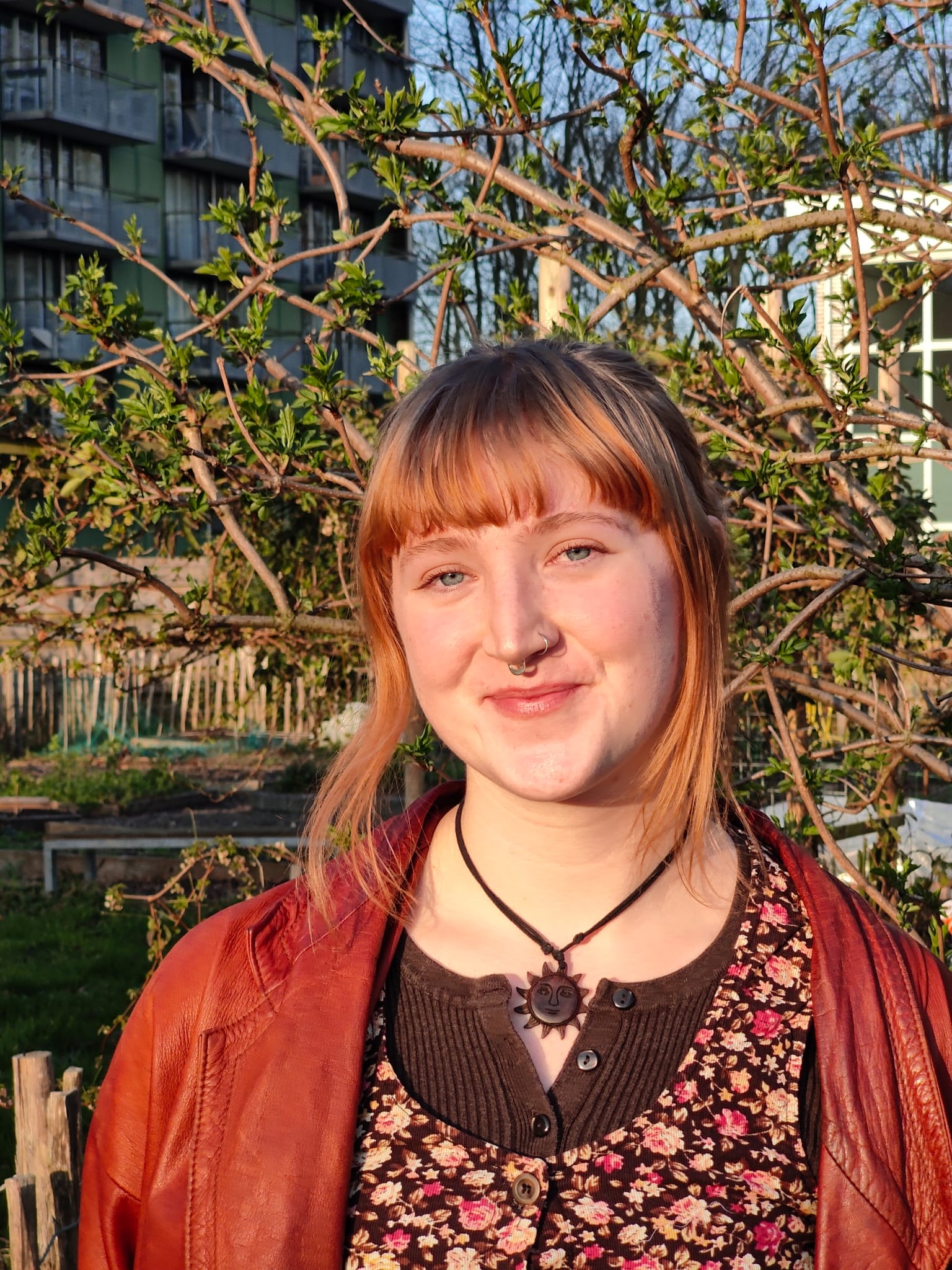
Squatting next to the communal park in the middle of the Campus Farm, Willa Farelly, a university of applied sciences student, removes weeds. When she hears her name, she stands up with a shy smile. Weeding actually goes against her principles. She took a permaculture course last month in Andalusia where you learn to live in greater harmony with nature. “In permaculture, you use what there is. Weeds are there for a reason too.”
Willa left Ireland, the country of her birth, when she was 14. After living in the Netherlands for eight years she speaks Dutch without an accent and interspersed with English language expressions. Her mother had chosen the last house that she lived in for its land. She wanted to garden so much. “But then we realised that it was always cold and wet there, and very stony. It was not doable.”
Animal populations
Willa is studying Landscape and Environment Management at the Inholland University of Applied Sciences. She does things like research on animal populations and ways to make cities greener. Her trip to Andalusia qualified as an internship and she was reimbursed by the University of Applied Sciences. That course was the reason she applied for the Campus Farm.
Willa does not need to think long about her favourite crop. Rhubarb. “I really love this vegetable. It is the only one that grew well in Ireland. But unfortunately rhubarb needs more than one year so I don’t know if I will do it again next year.”
Read more below the image.

She also wanted to grow potatoes, but they are not allowed as they spread too quickly. Luckily she found a solution – a structure with hanging bags of soil which you can cut open to harvest the potatoes. This stops them from taking over the whole area.
She grows tomatoes and cucumber in pots at home. It is still too early to sow seeds at the Campus Farm as, in theory, it may still freeze. “I’m looking forward to starting. My mind is more peaceful in the garden as I am working on my plants.”
Author: Kobus Krabben

Do you have a question or comment about this article?
delta@tudelft.nl


Comments are closed.