Column: Birgit van Driel
No friction, no shine
Birgit van Driel steps into the role of trendwatcher and explores what friction-maxxing could mean for academia.
Birgit van Driel steps into the role of trendwatcher and explores what friction-maxxing could mean for academia.

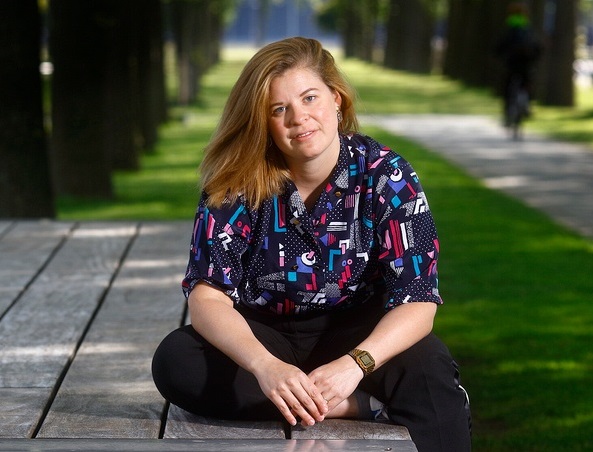
(Photo: Sam Rentmeester)
I am stepping into the role of trendwatcher for this first column of 2026. The new year may not even be one month old, but new trends are already appearing. On 3 January Kathryn Jezer-Morton introduced the concept of ‘friction-maxxing’ in The Cut. This new trend, currently focussed onparenting young children, could be a source of inspiration for academia. It could be a guide for slow science, a trend that has been around for a while.
I heard the term friction-maxxing for the first time last weekend so I assume that it is a new concept for most readers. Friction-maxxing (also known as character building before 2026) refers to not doing things in the easiest way possible so in order to make it a personally enriching experience. This could be that you learn something or become a better person. During the friction-maxxing process, you become more tolerant to inconvenience, you learn from it and learn how to handle it. This is an interesting concept in these times where technology is aimed at making our lives more and more convenient.
During the friction-maxxing process, you become more tolerant to inconvenience
At the same time it is not new. Last year for example, during my travels around Central America, I unconsciously did friction-maxxing by choosing to take long bus journeys instead of domestic flights. After all, my trip was about the journey and not the destination. Another example is the column in which my fellow columnist Sofia Ghigliani unconsciously describes the advantages of friction-maxxing during a graduation project.
While this term describes an existing way of making choices, introducing a new and trending term like this gives me the opportunity to explore what it could mean for the academia. When thinking about friction-maxxing in academia, I think about things like: hand writing notes; checking/giving feedback in analogue ways; going to the TU Delft Library physically to find a book or publication; walking to another campus building to ask a colleague something; reading a publication – preferably a paper version – from beginning to end; or, listening to a presentation without looking at your phone or laptop. By working with pen and paper, your brain processes information in a different way. And by walking across campus, you may bump into someone who gets you thinking about something.
But please note, this is not an anti generative AI column and nor is it a plea to friction-maxx everything (I can think of some HR and claim systems that could do with less friction). Go ahead and use AI for things that do not need in-depth creativity and thinking, and make supporting systems as user-friendly as you can so that you have more time for friction-maxxing and its advantages.
Does friction-maxxing lead to less academic output? Perhaps, and that is why it is also a good guideline for slow science. But it undoubtedly also leads to better output. After all, no friction, no shine. With a publication system that is under extreme pressure, the choice between quantity and quality is not hard.
Birgit van Driel started working as a Policy Officer at Strategic Development in 2021. She returned to TU Delft where she started her studies back in 2006. She’s been affiliated to the Faculties of IDE (first year), AS (bachelor’s) and 3mE (PhD). After earning her PhD, she worked as a Strategy Consultant at Kearney and a Program Officer at NWO-AES.
Do you have a question or comment about this article?
[email protected]


Comments are closed.