A merciless Inspectorate report, cutbacks, and a relationship with the former Chair of the Supervisory Board. Marien van der Meer’s first and only term as an Executive Board member at TU Delft was everything but tranquil. “I am now more aware that I am high in the hierarchy, which means that some things can come across as hard.”
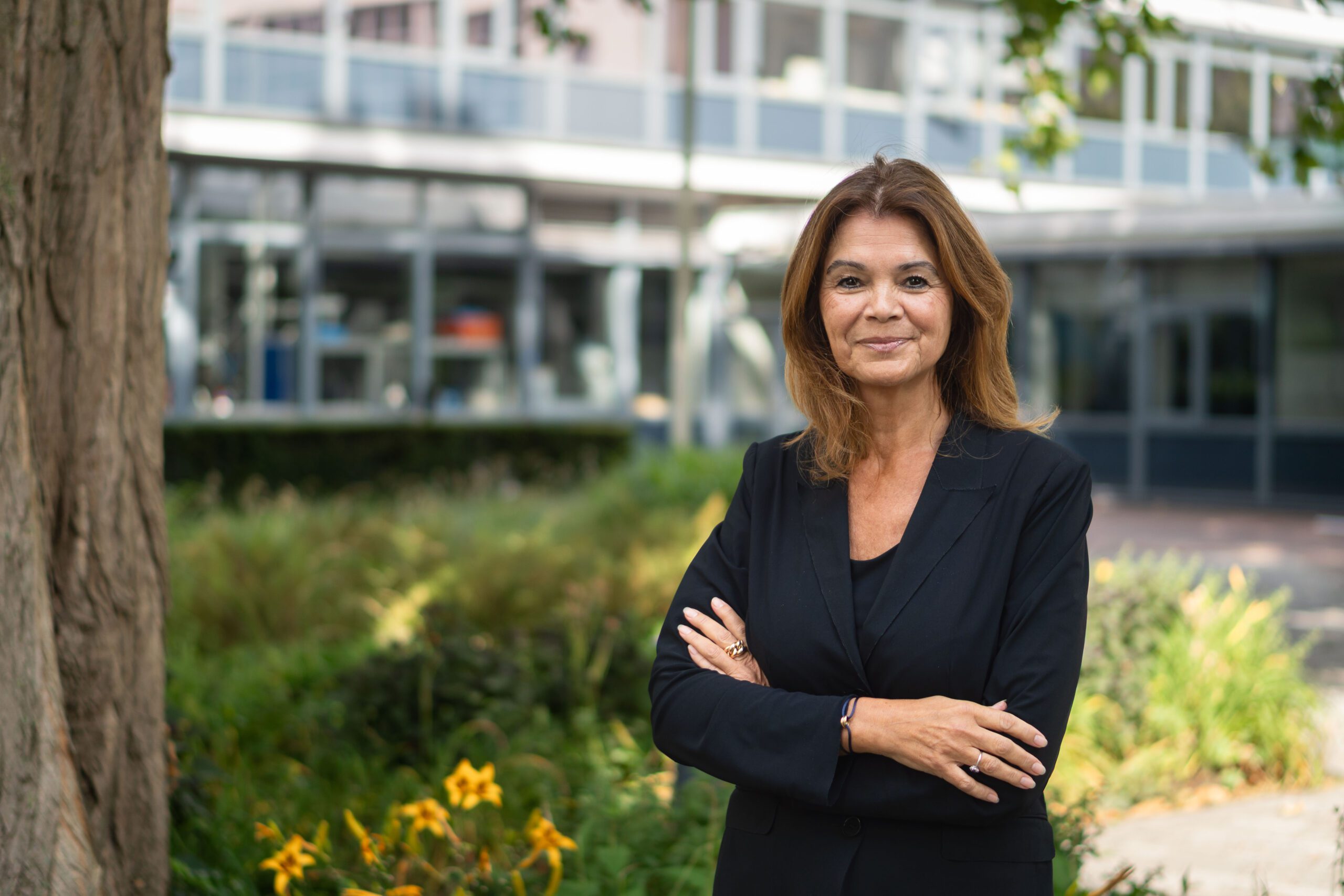
Van der Meer in the garden near the building where the Executive Board is based. (Photo: Thijs van Reeuwijk)
Until last August, Marien van der Meer was one of the three Executive Board members at TU Delft. Yet, Delta hardly spoke with her during her four-year term. It was mostly the other Board members that talked to us. Van der Meer does not like giving interviews, and keeps her private life to herself.
You yourself suggested this farewell interview, while you did not always welcome Delta with open arms at public meetings. Why did you want to be interviewed?
“When I came here four years ago, I also did an interview with Delta. I thought it would be good to end my time here in the same way.”
You are not leaving voluntarily, but because your term of office was not extended.
“In 2021 the Supervisory Board invited me to TU Delft because of my network in Rotterdam. This helped in forging the partnership with the Erasmus MC and the decision to open a campus in Rotterdam, which I think is a good strategy. After that came the Inspectorate report and the need to turn things around (cutbacks, Eds.). I really enjoyed serving my term of office, it was a real privilege. But it is now time for new leadership.”
We assume that you have received feedback on your leadership. What was the feedback that led to your leaving?
“The period behind us is different to the one that lies before us. My management style is businesslike and results-oriented. I managed firmly on issues to move them forward, such as on cutbacks. There is now a different agenda.”
Does your leadership style not fit the pending tasks that well? Is that what we should infer?
“It is a different time. TU Delft’s attention is far more internalised now because of the Inspectorate report on the lack of social safety. It is also extremely important that the cutbacks are done well and that, to do this, the right decisions are taken in the years to come. So the new team will have to take appropriate decisions.”
Marien van der Meer (1966) started her term of office at TU Delft on 1 August 2021, in the middle of the Covid pandemic. She succeeded Nicoly Vermeulen who, after serving on the Board for three years, decided to step down. From 1 August 2025 on, Van der Meer left TU Delft.
In Van der Meer’s first month as Member of the Executive Board, the Cabinet decided that education should be done physically again, with suitable measures such as face masks and one-and-a-half metres distance. In that same month, thousands of students experienced TU Delft student life at the OWee. For Van der Meer, this was her first experience of TU Delft students. She cycled with the then Vice Chair Rob Mudde along the student associations.
Just as in her previous role as a board member at Antoni van Leeuwenhoek (The Netherlands Cancer Institute, Amsterdam), she carried out her Board work at TU Delft alongside two professors. They were Tim van der Hagen and Rob Mudde, both of whom had been connected to TU Delft in various roles for years.
They too bid TU Delft farewell. Mudde already handed his role over to his temporary successor, Hans Hellendoorn. In January, Van der Hagen will be succeeded by Hester Bijl, currently still Rector Magnificus at the University of Leiden. Nick Bos took over Van der Meer’s position on 1 August.
As Vice President Operations, Van der Meer took on the operational tasks. Her broad and busy portfolio included human resources, campus development, IT, housing, finance and sustainability.
‘I draw inspiration from people who are prepared to fulfil difficult roles in difficult times’
Did anything strike you four years ago when you started at TU Delft?
“At the Antoni van Leeuwenhoek I had already gotten used to working with professionals who are highly dedicated to top level research. The dynamics there are very different, because you work with cancer patients and their families. For example, they have a wall with post-its which patients and families can use to express their wishes. You feel the emotions there, such as the fear of dying or something positive that they want to pass on. You definitely feel it if you are sensitive, like I am.
What stands out here at TU Delft is the students’ drive. The hopeful energy of young people. This makes it an amazing experience to work in higher education. I also enjoy seeing young women studying.”
Talking about women, on your LinkedIn page, you recommended the books of two other female leaders, Jacinda Ardern, the Prime Minister of New Zealand, and Angela Merkel. What did you get from their books?
“I draw inspiration from people who are prepared to fulfil difficult roles in difficult times. The last few years were not easy, while it is highly important to have people who are prepared to take difficult decisions and in doing so, benefit our society. It’s also about setting your course and following it. These are some of the things that drive me.”
What were those difficult moments for you?
“The lack of social safety. That was a hard dossier. We were heavily criticised by the Inspectorate of Education both as a Board and as a university. We have made good progress by trying to roll out the recommendations as best we could. But it was not an easy time.”
‘I am a strong administrator. Businesslike and results-oriented’
The issue of social safety preoccupied the Board over the last one-and-a-half years of Van der Meer’s term. In February 2024, the Inspectorate of Education concluded that mismanagement was the cause of the lack of social safety at TU Delft. The Executive Board was said to have ‘much information available about what was happening in the area of social safety’, but they ‘neglected’ to respond appropriately, said the Inspectorate.
After an initial intention by the Executive Board to sue the Inspectorate of Education and the ensuing protest by students and staff members, the Executive Board started writing the so-called Plan for Change. Staff meetings followed, social safety became a permanent fixture on the agenda at meetings with deans, directors, representation bodies, and the unions. Whether this has helped will transpire this autumn when the Inspectorate of Education presents the outcomes of its assessment of the actions taken.
The report states: ‘The Inspectorate has heard of some incidents of intimidation and/or threats by administrators or former administrators and a former regulatory body supervisor.’ How do you look at your role in this as an administrator?
“I do not know who this sentence refers to as they were all anonymous reports. And they were conversations that the Inspectorate had (with complainants and other TU Delft staff members, Eds.). They thus did not tell me, Tim (Tim van der Hagen, Eds.) or Rob (Rob Mudde, Eds.), or the Supervisory Board which was involved too. Nor did they say when these things happened.”
Have you thought about ways in which you could have helped bring social safety about?
“I certainly thought about it. I am a strong administrator. Businesslike and results-oriented. I also had to manage the cutbacks. And that my message is not always welcome is perfectly understandable. Since the Inspectorate of Education report, I have tried to be more aware of the impact of my management style. I believe that I have really developed over the last two years.”
Can you give an example of that development?
“I am more aware of power distance. The fact that I am high in the hierarchy means that something can come across strongly. I now try to be more subtle.”
The TU Delft annual report of 2024 (in Dutch) also covers the social safety programme that was set up. One of the goals is to do right ‘by those who have been affected by the lack of social safety at TU Delft’. This is very generic. What does it involve?
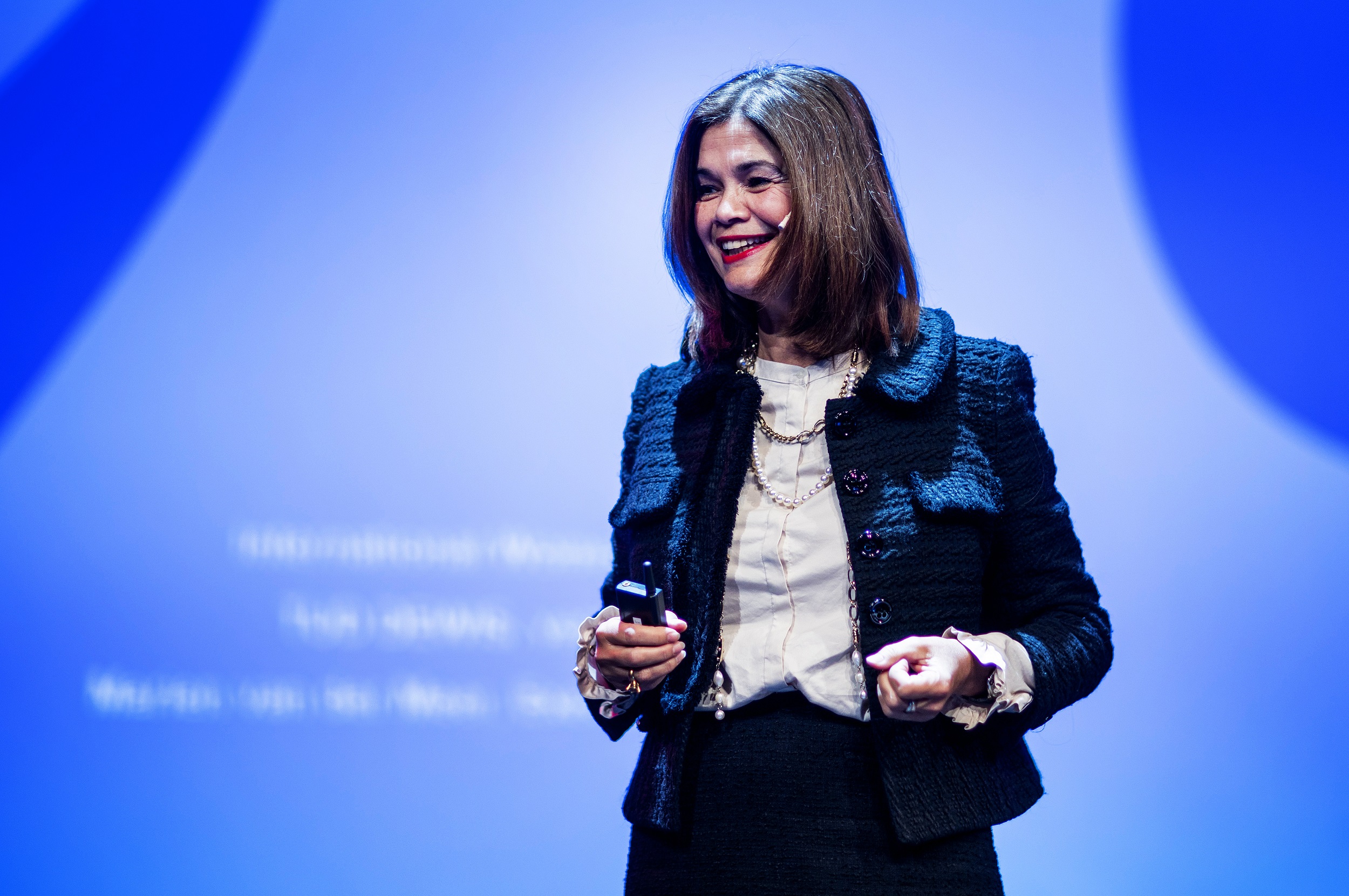
“On International Women’s Day, shortly after the Inspectorate report was published, I was on stage at a TU Delft meeting. I realised that this was really the heart of the debate. I wanted to show that we were taking responsibility, to say that it touched us, and to say that things had not gone well. I took the things that people had experienced seriously. I carried out a lot of conversations over the rest of the year.
We eventually got a point of contact. We also have plans for more confidential advisors, additional ombudspersons, and more training. We offered our apologies at the staff meetings on the Plan for Change.”
That is good for the people who are here now. But how do you do right by the people who have left?
“The point of contact is also available for people who have left.”
But is this ‘doing right by’? Not everyone wants to lodge a report as it can be painful. A point of contact rakes everything up. There may other ways to provide aftercare.
“It’s possible.”
Making the campus more sustainable could not have been done without you, Andy van den Dobbelsteen, the Sustainability Coordinator, told us. Thanks to you there was a manageable streamlined plan. But he also said that the collaboration did not go smoothly at first. It took a while before he and his team earned your trust. We also heard this from other people when we prepared this interview. What is the situation?
“The budget of the sustainability programme was EUR 100 million. When there is that much money at stake, I feel a huge responsibility. It is no longer available to invest in hiring teachers or student psychologists. So I want to know what the exact situation is and be in control. Given my seniority, I want to make sure that a plan is good before it reaches the administrators’ table. I admit this fully. What I do think is that I grew further in this project. At first I was much more stringent, and I have become softer.”
Apart from Van den Dobbelsteen, we also spoke to other people so that we could get a better picture of what you are like. They told us that they value your process orientation and your strong analytical skills. The other side of the coin is that you were sometimes not that familiar with what their cases involved. Do you recognise yourself in this?
“I know that people have said things like this, but I look at it differently. If you have such a big portfolio, this is how you need to work. Of the 13 directors, six reported to me. You cannot know every single detail. Sometimes the only thing I need to know is the price tag. Apart from that, I try to encourage senior leadership and give a lot of space to people. It could be that this image of me is derived from that.”
‘I get inspiration from classical music. It also gives me peace’
The people also said that they would have liked to have seen more of your personality. You show more of yourself on your LinkedIn page. You did this through your book tips, but also by writing about the St Matthew Passion by the Bachkoor Holland (Bach choir) of which you are on the board. You wrote that the performance was even more emotional this year.
“That’s right. The geopolitical situation is very uncertain at the moment, and it sometimes feels very close. Take the war in Ukraine, or what is happening in Gaza. This has an impact on campus life as people in both the pro-Palestine and the pro-Israel camps feel unsafe. This meant that the St Matthew Passion touched me more deeply this year. I get inspiration from classical music anyway. It also gives me peace and I love the fact that some of the pieces are centuries old.”
In going through the annual reports, your ‘other expenses’ stand out. In 2022 this was EUR 16,452 and in 2023 was even EUR 36,689. The other expenses of Tim van der Hagen and Rob Mudde were EUR 0 and EUR 1,300 respectively. What was all that money spent on?
“My travel costs are lower. I’m very careful with money.”
Your portfolio is also very much based on the Netherlands. This is different for Tim van der Hagen who as to travel the world to network in his role as Chair and Rector Magnificus.
“I could also have done that. The only place money went to is degree programmes. I strongly believe in degree programmes.”
Among your activities is that you took a five-day international directors programme. According to a folder, in 2025 this cost EUR 27,000. Were there no cheaper courses?
“I look at this differently. If you want to manage at this level and in these times and want to do good things in a rapidly changing society, the right thing to do is to take a programme at the right level. This was at INSEAD, a well-respected business school and it gave me a huge amount of knowledge.”
What did you learn there?
“It was largely about the perception of roles in times of various societal changes. But it was also about your role as an administrator in relation to your network. How you find collaboration and how you make sure that you always go for quality. Keeping the high quality of your organisation is the most important thing for you to do.”
That still sounds vague. What has stayed with you after the course?
“A lot of it is about ownership. About how to lead change processes. And how you deal with challenges and rapid changes. These things gave me a lot.”
We mentioned earlier that you did not always welcome Delta with open arms. You once sent Delta away from an open union meeting, and after another meeting you asked us not to quote you.
“Let me see if I remember them. When I asked you to leave the meeting, the subject of social safety was on the agenda. At hat moment, there was much tension between the Board and the trade unions. That came through in how I dealt with it. I have grown since then.
I do not remember when I asked you not to quote me. It might have been my lack of experience at the time. Since then I have become completely used to the open Works Council and Student Council meetings.”
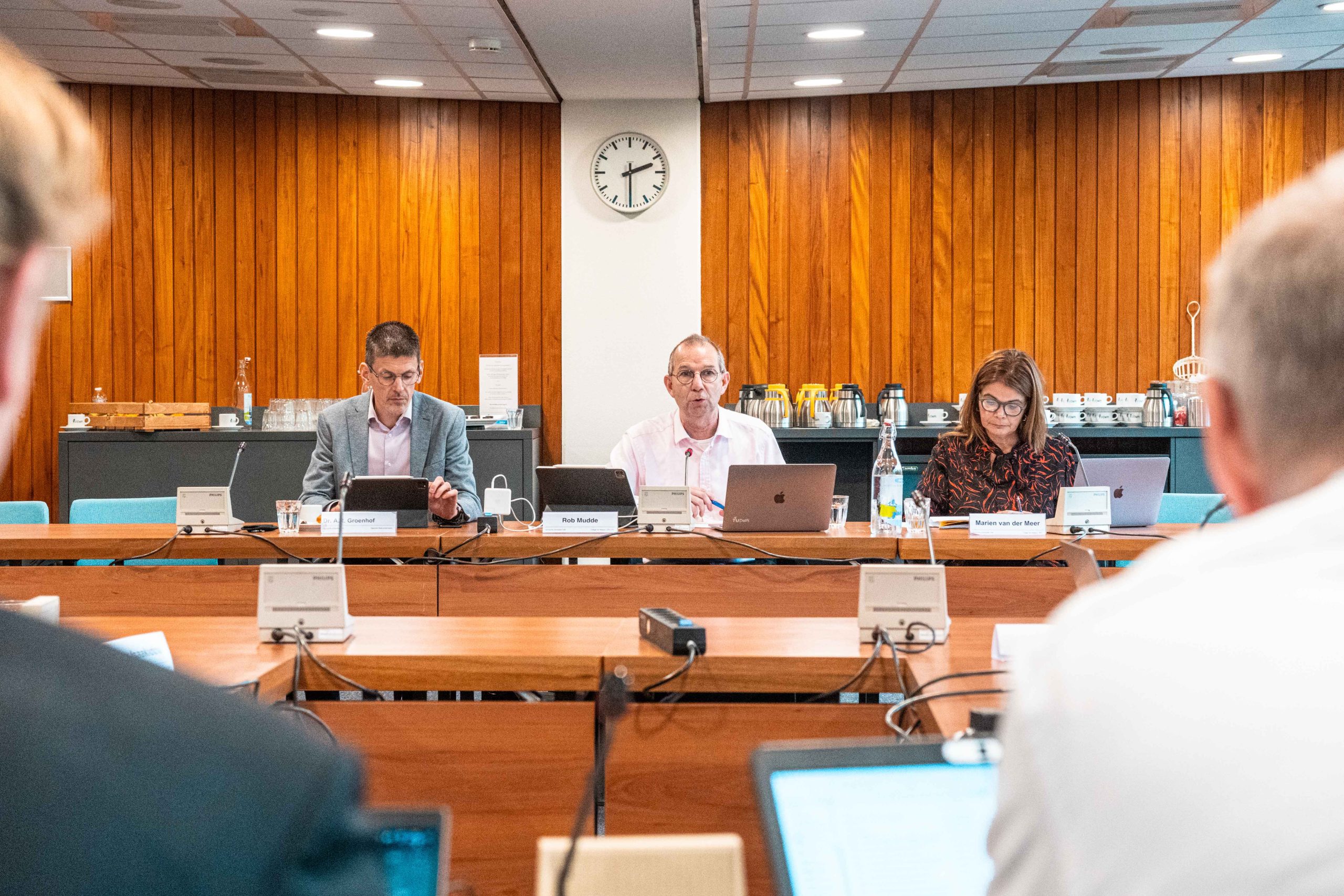
Not only them, but the meetings between the Board and the unions are public too. But you started working on a new ruling. If it goes ahead, the meetings will be closed. Why?
“Things are arranged very differently throughout the education sector. The trade union meetings at most universities are closed. I think they are only public at two universities.”
TU Delft strives to set an example in all sorts of areas. Could it not also do this in terms of transparency, which is included in the good management code of all Dutch universities?
“The nature of the subjects means that they are not always appropriate for being open.”
During the union meetings this year, the issue was raised about whether the new point of contact for social safety should be internal or external. This is a discussion that affects everybody. Can you still choose to make this public?
“Definitely. This subject is also being discussed in consultation meetings with the OR and the Student Council. The discussion is still ongoing with the unions. I am leaving so it no longer rests with me.”
Talking about leaving, in your farewell gathering in mid-July, you thanked your current partner and former Supervisory Board Chair, Jeroen van der Veer. What support did you get from him?
“I will not discuss private affairs. It is not appropriate. But I am very grateful to my loved ones.”
‘It was a privilege to do this work’
Van der Veer was Chair of the Supervisory Board when you were appointed. Did you have a relationship then?
“He appointed me and quit before I started. We only started a relationship much later. So that is something else that TU Delft has given me.”
What is it like for you to bid TU Delft farewell?
“I feel gratitude and respect. It was a privilege to do this work. TU Delft stole my heart, so I will continue to be an ambassador of both TU Delft and the sector. It is unbelievable to see the impact of developments and research on a society. My ambassadorship will also entail ensuring that we as a society continue to invest.”
That is a good managerial answer. But what is it like for you as a person?
“No, it is not a managerial answer. I see it differently. This is really how I feel as a person.”
Marien van der Meer (1966) studied Management at Leiden University and took various management courses at INSEAD, an international institute, and at Erasmus University, Rotterdam. Apart from her work at TU Delft, she has been a member of the Supervisory Board of the Jeroen Bosch Hospital since 2022. She is also the Vice Chair of the Bachkoor Holland in Delft.
Van der Meer started her career in consultancy. She now has 20 years of management experience in hospitals and academic hospitals. Before starting at TU Delft in 2021, she was an administrator of the Antoni van Leeuwenhoek Dutch Cancer Institute in Amsterdam.
Van der Meer was born into an academic family. Both her parents graduated from the University of Leiden. Her mother grew up in Indonesia in a well-to-do family. Van der Meer describes her mother as a ‘real survivor’. “After the Second World War, my mother’s family decided to move to the Netherlands. They had to leave everything behind and were received by the Red Cross. It is very special to have this in your blood.” Van der Meer lives in Delft and goes to campus by bicycle.
This interview was carried out by Kim Bakker and Annebelle de Bruijn. Prior to the interview, Delta was requested to send ‘a sample’ of the questions. While this is highly unusual in personal interviews, we did so. The subjects for discussion were thus clear in advance.
In preparation, we talked to six current TU Delft staff members about their experiences with Marien van der Meer. The primary aim was to obtain a general picture of Van der Meer, without laying emphasis on individual relationships or events. Furthermore, some sources requested anonymity.
However, at the start of the interview, the TU spokesperson present requested that we quote the employees by name. Delta refused to do so, except for Andy van den Dobbelsteen’s anecdote. The spokesperson’s request meant that we were unable to include some of the observations made by the employees interviewed in the interview.
Do you have a question or comment about this article?
delta@tudelft.nl


Comments are closed.