
What do you think of our new draft code of conduct? That is what TU Delft wants to know from its staff and students. The code is intended to provide more clarity about what behaviour is and is not desirable.
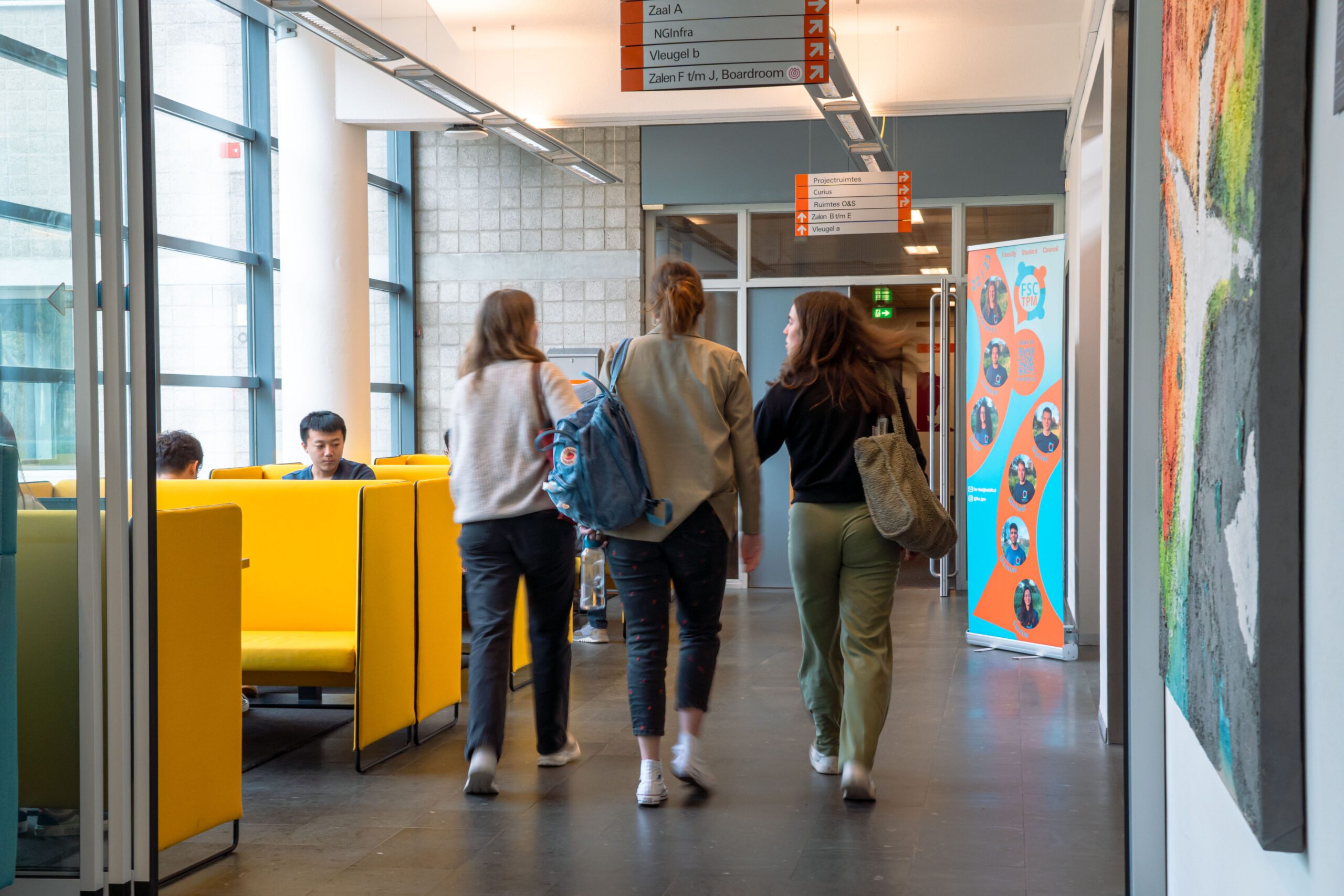
(Photo: Thijs van Reeuwijk)
The draft code of conduct was drawn up in recent months by consultancy firm Berenschot on the basis of interviews with 150 TU students and staff and publicly accessible dialogue sessions attended by another 150 people.
The document is not based on the current code of conduct from 2020, says Olivier Sueur, manager of the Integrity Office, because that document lacked clarity. This posed a problem for the Complaints Committee on Undesirable Behaviour, for example. When complaints were made, there were no clearly established standards to fall back on.
Email to employees
But in daily practice, too, vague rules proved to cause major problems. Among other things, this meant that victims of transgressive behaviour such as intimidation or abuse of power were unable or barely able to defend themselves, while those responsible remained unpunished. Partly as a result of this, the Education Inspectorate (in March 2024) and the Labour Inspectorate (in June 2024) concluded that social safety at TU Delft was inadequate. Both will issue a new assessment in 2026.
A new code of conduct is one of the ways in which TU Delft wants to free itself from the label of mismanagement. That is why students and staff can now make their voices heard. On Tuesday, staff received an email asking them to complete a short survey. This can only be done with a TU account. At the time of publication of this article, students had not yet received such an email, but TU Delft is also explicitly seeking their input.
New basic principles
The survey asks respondents for their general impression of the draft code of conduct and to what extent they think words such as ‘inclusive’, ‘humane and committed’ and ‘applicable’ match it.
They are also asked for their opinion on the new basic principles of equality, eagerness to learn and responsibility. These principles should ‘colour the way we want to interact with each other within TU Delft’, according to the draft document. The core values of diversity, integrity, respect, engagement, courage and trust – embodied in the acronym “DIRECT” – from the current code of conduct are now only mentioned in a footnote.
Opinion on sanctions
An important part of the questionnaire is that respondents can give their opinion on whether the most important boundaries and rules on, for example, interacting with each other, private behaviour and scientific integrity are now described. They can also give their opinion on what has been written about support, integrity violations, measures, sanctions and key roles.
This includes the question of what they think of the examples that emerge here and there in separate boxes in the draft code of conduct. These are short sketches of situations involving interactions between people in the workplace or in the lecture hall, in which it is sometimes made clear and sometimes not whether the behaviour described is desirable or not. An example: ‘A student with autism responds directly to a teacher during a tutorial with the words: “That’s not right, because the research says something else”. The
teacher experiences this as rude while the student says it purely from their focus on factual accuracy.’ TU Delft wants to know whether these and other examples ‘resonate’ with respondents.
What’s next?
The questionnaire in Microsoft Forms is open until 15 December. After that, an analysis will take place, after which Berenschot will meet again with the guidance committee in early January and the document may be amended. It can then be submitted to the participation councils. The aim is for the new code of conduct to come into effect at the end of the first quarter of 2026.
- In our dossier you’ll find more news, backgrounds and opinions about social (un)safety.

Editor in chief
Saskia Bonger
Do you have a question or comment about this article?
[email protected]


Comments are closed.