

Niels van Nieuwland has been gliding since he was 14. He goes to the airstrip three times a week and enters competitions. “You learn to fly a lot faster than you learn to drive.” This is part 3 of a series on unique student sports.
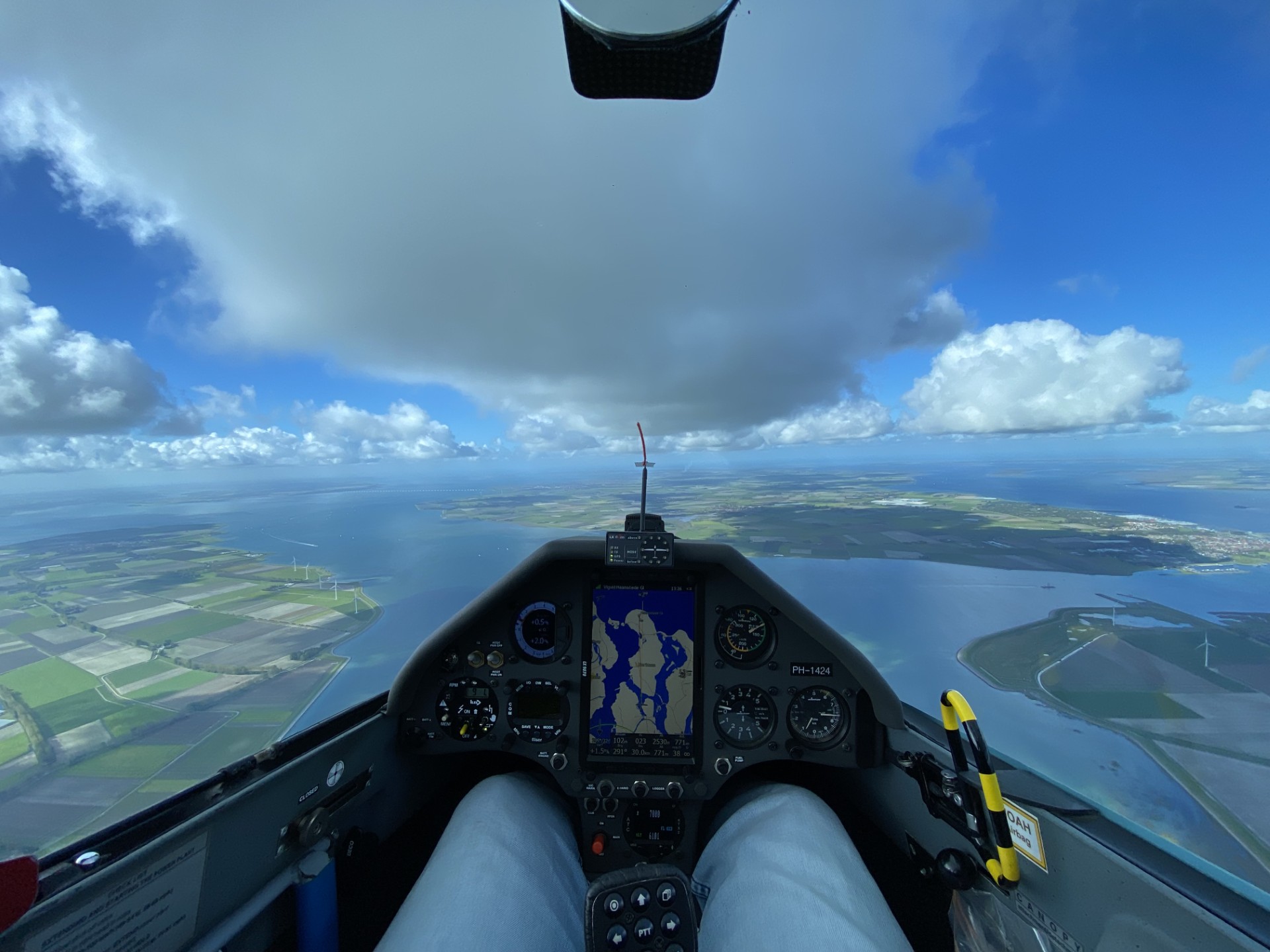
Niels van Nieuwland wants to be world chamion. (Photo: Niels van Nieuwland)
What is gliding?
Gliding is a sport in which pilots fly in aeroplanes without motors – gliders – for as long as possible. They do this by making clever use of thermals. There are three classes of competition: one, the Racing Task in which the pilot flies as fast as possible along a series of GPS coordinates; two, the Grand Prix, the person who crosses the finish line first is the winner; and three, the Assigned Area Task in which the competitors have to reach different areas within a set time. Competitions last four to 14 days. They are subject to weather conditions and tactics.
It’s not only you who flies, your father does too. How did this come about?
“When I was 13 I found out that you can start gliding when you are 14. Just before my 14th birthday I went in search of a club with my father. He was then 60 and thought that if he was going to bring me to the airstrip all the time, he might as well fly too. As 14 year olds learn much faster than 60 year olds, we are not at the same level. But we do enjoy flying together. Luckily he also enjoys helping when I am competing and bringing me and fetching me. It is thanks to him that I can fly in so many competitions.”
Did you learn to fly quickly?
“I learned the basics – flying and steering – within a couple of days. After that it is doing flying hours. You initially do this with an instructor, and later on your own. You learn to fly a lot faster than you learn to drive cars. I flew alone within three months. I was then 14 years, seven months and four days old.”
‘People regularly miss thermals. You then have to land on a farmer’s field’
How does flying without an engine actually work?
“It’s all about finding thermals. You fly in circles in the thermals to gain altitude. If you lower the nose of the plane, you convert the altitude into speed. So you are constantly looking for thermals so that you don’t drop in altitude. Being tactical is important if you want to win. I then weigh up gaining altitude against continuing along the route and thereby risking not finding thermals. If all goes well, it pays off. You can win a competition.”
Do things sometimes go wrong?
“People regularly miss thermals. You then have to land on a farmer’s field. This is not usually dangerous as you are trained for it. I recently had an angry farmer who demanded I pay EUR 1,000. We had a bit of an argument, but luckily I didn’t need to pay anything in the end.”
Your gliding club is not close by and you often have to go abroad for competitions. Does this affect your studies?
“If the weather is good I go to the airstrip several times a week. It does take time as it takes 45 minutes to get there. We can’t fly close by as recreational flying is banned in the Rotterdam The Hague Airport airspace.
Competitions often last one or two weeks. I mostly fly in junior world and European competitions where they take academic timetables into account, so they are mostly in July or August. But the Dutch competition is just before the exam period so they are always tricky.”
What is the nicest thing you experienced?
“Last year my teammate Jasper (who also studies Aerospace Engineering at TU Delft) and I unexpectedly came first and second in one of the competitions of the World Championship. I had no chance of winning the day before as I had made a mistake. But that day, it went really well. We do not usually fly together as we fly at different airstrips at home which makes training together difficult.”
Do you have a goal?
“I want to be world champion at some point. A realistic goal would be to do so in the junior class. I can enter junior classes until I am 25, so I still have two years. Being world champion in the senior class is even better, but that is still a while away.”
Who: Niels van Nieuwland (23)
Study: Aerospace Engineering
Sport: Gliding
Association: GLC Illustrious, Gilze-Rijen


Comments are closed.