
For TU Delft students interested in sharing a common social and academic platform with students from other parts of Europe, the Board of European Students of Technology has recently arrived in Delft.
The organisation places a premium on bringing together students, universities and companies from across Europe.
Twenty years after its European inception, the Board of European Students of Technology (Best) has finally arrived in Delft. This large student organisation with a presence in thirty countries offers its members a chance to participate in Europe-wide academic, corporate and social events, as well as travel and party with Best students wherever they are found. Two of Best’s leading lights on campus are Michiel Maasen (president) and Eda Emirdag (secretary) of Local Best Group (LBG) in Delft. Maasen, an MSc student at the IDE faculty, first came across Best while at KTH Royal Institute of Technology, in Stockholm. He so liked the idea that he subsequently decided to set up a LBG in Delft. Emirdag, an MSc student at 3ME, was already involved with Best while a student at Middle East Technical University, in Turkey. Together with Jasper Eijmers (treasurer) and others, these like-minded people came together and applied to the Best organisation to form a LBG in Delft.
“We worked hard, going from being an observer group in June 2009 to finally become officially recognised as a LBG in December 2009,” Emirdag says. Presently LBG Delft has 11 members (six board members), with an equal proportion of Dutch and internationals. The group is rapidly gaining a foothold in Delft, with around 150 students now subscribing to the group’s email list to ‘stay informed’ about future events. Although Best Delft is still busy working with TU Delft to acquire an office space, the current members meet each week and plan events for months ahead. Maasen told us more about this burgeoning new organisation on campus and how Best members interact with and learn from each other.
What made you want to start LBG Delft?
“Our university is international, but the student community is still not so. When I came across Best in Stockholm, I thought a LBG in Delft would be the right platform to enable Dutch and international students to interact more freely and mix socially. Besides, I’ve worked with other student associations and felt that Best was far more professional and organised. That was my motivation.”
Best Europe has been going for twenty years now. How come Delft joined so late?
“Although Best has invited the university to join since the beginning, there was not enough initiative from the students until now.”
How often does the LBG Delft meet?
“We have regular meetings once a week, but when there is special need, we meet as well. And twice a year we have compulsory regional meetings with other LBGs. One representative from every LBG attends these meetings.”
How does LBG Delft compare with AEGEE, which is also spread across Europe and has a longer and stronger presence in Delft?
“We have more focus on technology students and academic events, whereas AEGEE has comparatively more social events. We also have leisure events, but Best involves students with universities and companies. Our logo features a triangle representing students, universities and companies.”
What events have LBG Delft organised thus far?
“So far we’ve organised one event: a group discussion for internal members. We started very recently, in December last year, so haven’t organised any events for external members yet.”
What is next event LBG Delft has planned?
“Sometime in mid-March there will be a local engineering competition, which will last all afternoon and involve four-member teams being set a certain task to complete. The winners will compete in the next round, to be held for the region and subsequently throughout Europe. We plan to put this information on the Blackboard and our website soon.”
Can a student claim ECTS points for courses or events organised by LBG?
“In many universities where Best has long been established this is possible. At the moment however TU Delft students cannot claim ECTS points for courses or events organised by us. We’re still negotiating with TU Delft about this. It’s comparable to the ATHENS programme, where some faculties give credits and others not.”
So how does one become a Best member?
“Just send us an email: delft@best.eu.org. We don’t have a strict selection process. Members should be active and motivated to develop soft skills, such as organising events. For those who want to be involved passively, we have a group email list for obtaining information about our events.”
Duwo beheert voor veel studentencomplexen de energieadministratie, aangezien studenten hiervoor collectief gas en elektra betalen. Over de verbruikte energie behoort energiebelasting betaald te worden: veertig procent van de totale kosten aan verbruikte energie. De belastingdienst controleerde alle Duwo-huizen en -studentencomplexen op het correct toepassen van deze regeling. Hierbij kwam aan het licht dat er vanaf 2005 te weinig energiebelasting is betaald. Dit heeft te maken met de hoeveelheid energie die Duwo afkoopt voor haar studentencomplexen. Omdat dit gebeurt in een dusdanig grote hoeveelheid, krijgt Duwo het label ‘energieleverancier’ van de belastingdienst. Dit houdt in dat de energie niet meer via de reguliere energiebedrijven wordt afgerekend maar direct met de belastingdienst. Door dit feit hanteert de belastingdienst hogere tarieven voor energiebelasting, die Duwo doorberekent aan haar huurders. De studenten moeten in sommige gevallen 25 euro per maand extra bovenop de normale huur betalen, wat neerkomt op een huurverhoging van 27 procent. De belastingdienst baseert deze uitspraak op de wet ‘belastingen op milieugrondslag’, die is bedoeld om grote bedrijven bewuster met energie om te laten gaan. Het is volgens de Vereniging voor Studie en Studentenbelangen Delft (VSSD) echter uitzonderlijk dat een sociale woningbouwcorporatie het label kan krijgen van energieleverancier, waardoor er absurd hoge belastingen geïnd worden. Dit kan zowel volgens de VSSD, Duwo als de Landelijke Studentenvakbond (LSVb) dan ook nooit de bedoeling zijn geweest bij de invoering van deze wet.
De belastingdienst gaat binnenkort ook andere woningbouwcorporaties controleren op het heffen van energiebelasting. De LSVb en ook Kences, het kenniscentrum studentenhuisvesting, voorzien hier een landelijk probleem, aangezien er tienduizenden studenten een extreme huurverhoging zullen krijgen. “De huur van studentenkamers is al zo hoog en grotere financiële problemen voor studenten zijn dus een logisch gevolg. De landelijke politiek zou zich hier meteen over moeten buigen. Deze toepassing van de wet is onacceptabel.”
Als jij ook een soortgelijke huurverhoging hebt ontvangen, kun je bezwaar aantekenen bij de huurcommissie. Dit kan met een bezwaarschriftformulier, dat te vinden is op www.huurcommissie.nl/Servicekostencheck/Wat_kunt_u_doen_als_huurder. Als er dringende vragen zijn kunnen deze gesteld worden aan steunpunt@vssd.nl. Alle desbetreffende complexen worden op de hoogte gehouden door de VSSD.
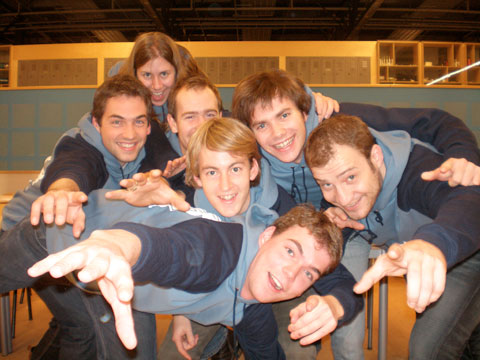
Twenty years after its European inception, the Board of European Students of Technology (Best) has finally arrived in Delft. This large student organisation with a presence in thirty countries offers its members a chance to participate in Europe-wide academic, corporate and social events, as well as travel and party with Best students wherever they are found. Two of Best’s leading lights on campus are Michiel Maassen (president) and Eda Emirdag (secretary) of Local Best Group (LBG) in Delft. Maassen, an MSc student at the IDE faculty, first came across Best while at KTH Royal Institute of Technology, in Stockholm. He so liked the idea that he subsequently decided to set up a LBG in Delft. Emirdag, an MSc student at 3ME, was already involved with Best while a student at Middle East Technical University, in Turkey. Together with Jasper Eijmers (treasurer) and others, these like-minded people came together and applied to the Best organisation to form a LBG in Delft.
“We worked hard, going from being an observer group in June 2009 to finally become officially recognised as a LBG in December 2009,” Emirdag says. Presently LBG Delft has 11 members (six board members), with an equal proportion of Dutch and internationals. The group is rapidly gaining a foothold in Delft, with around 150 students now subscribing to the group’s email list to ‘stay informed’ about future events. Although Best Delft is still busy working with TU Delft to acquire an office space, the current members meet each week and plan events for months ahead. Maassen told us more about this burgeoning new organisation on campus and how Best members interact with and learn from each other.
What made you want to start LBG Delft?
“Our university is international, but the student community is still not so. When I came across Best in Stockholm, I thought a LBG in Delft would be the right platform to enable Dutch and international students to interact more freely and mix socially. Besides, I’ve worked with other student associations and felt that Best was far more professional and organised. That was my motivation.”
Best Europe has been going for twenty years now. How come Delft joined so late?
“Although Best has invited the university to join since the beginning, there was not enough initiative from the students until now.”
How often does the LBG Delft meet?
“We have regular meetings once a week, but when there is special need, we meet as well. And twice a year we have compulsory regional meetings with other LBGs. One representative from every LBG attends these meetings.”
How does LBG Delft compare with AEGEE, which is also spread across Europe and has a longer and stronger presence in Delft?
“We have more focus on technology students and academic events, whereas AEGEE has comparatively more social events. We also have leisure events, but Best involves students with universities and companies. Our logo features a triangle representing students, universities and companies.”
What events have LBG Delft organised thus far?
“So far we’ve organised one event: a group discussion for internal members. We started very recently, in December last year, so haven’t organised any events for external members yet.”
What is next event LBG Delft has planned?
“Sometime in mid-March there will be a local engineering competition, which will last all afternoon and involve four-member teams being set a certain task to complete. The winners will compete in the next round, to be held for the region and subsequently throughout Europe. We plan to put this information on the Blackboard and our website soon.”
Can a student claim ECTS points for courses or events organised by LBG?
“In many universities where Best has long been established this is possible. At the moment however TU Delft students cannot claim ECTS points for courses or events organised by us. We’re still negotiating with TU Delft about this. It’s comparable to the ATHENS programme, where some faculties give credits and others not.”
So how does one become a Best member?
“Just send us an email: delft@best.eu.org. We don’t have a strict selection process. Members should be active and motivated to develop soft skills, such as organising events. For those who want to be involved passively, we have a group email list for obtaining information about our events.”

Do you have a question or comment about this article?
delta@tudelft.nl


Comments are closed.