For decades, Iranian scholars, from doctoral candidates to distinguished professors, have elevated universities around the globe, including here in the Netherlands and at TU Delft. Their impact reaches far beyond research and teaching. They embody a profound ethic of kindness and generosity, grounded in a lived commitment to human dignity and respect for others. Despite the often unspoken pressures faced by those living far from home, their devotion to knowledge and social progress remains unshakable, woven into their culture, and the values that quietly guide them.
Yet today, Iran – the land of the noble-hearted – is subjected to an unlawful and systematic campaign of violence. Many Iranian academics now feel abandoned by the very institutions they have long served. The cruel irony is that those who served as the very pillars of these universities with dedication are now met not with gratitude, but with silence, neglect, and a lack of institutional support. Without Iranian minds, some of these departments would forfeit a vital part of their identity and reputation.
Across campuses, a quiet culture of self-censorship prevails. Scholars, whether Iranian, Palestinian, or otherwise, are made to feel that speaking the truth is disruptive, unprofessional, or even dangerous. But neutrality in the face of oppression is no virtue. When society raises its voice, academic silence becomes complicity, especially while children, academics, medical personnel, and journalists pay the price with their lives.
Yet when civil society breaks the silence, we must ask: Where is the academy’s voice?
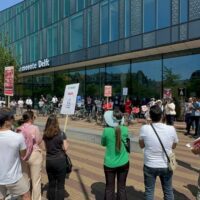
Just days ago, more than 150,000 people marched through The Hague, drawing a red line across the city in one of the largest protests in Dutch history. Many had never visited Palestine or Iran. Yet the line between good and evil is no longer blurred. International law lies in ruins, thousands of innocent lives have already been taken, and the deliberate violence continues. The architects of this aggression now stand accused of war crimes before the International Criminal Court in The Hague.
Yes, genuine academic freedom involves risk. Yet when civil society breaks the silence, we must ask: Where is the academy’s voice? If universities are meant to guide, challenge, and uplift society, why are they trailing behind it? Academics must show that there is no double standard, and that swift, explicit, conviction-driven statements from rectors and governing boards are issued whenever human dignity is at stake, and not only when the cause is politically convenient. Silence is no longer about politics, it is about conscience.
Iran and its people, like all freedom-seeking nations, will resist and rise stronger, with or without international institutional support. What remains in our hands is the legacy we choose to leave.
Society has drawn its red line, academia must do the same. This is more than solidarity, it is a moral imperative. We must mark the boundary between complicity and courage, between rhetoric and action, so future scholars will know where we stood. That boundary is not just about war, it is about who we are and who we can still become.


Comments are closed.