Recent graduate Joey Lageschaar wistfully thinks back to the time that students could get a fatty snack at the Döner Company at TU Delft. The building where the snack bar used to be has been painted over with a thick layer of grey paint. This symbolises an even bigger loss, writes Lageschaar.
Returning home from TU Library, a route otherwise sped through by bike, I recently walked along an eccentric building that I barely recognise anymore. Walking at a snail’s pace I had the time to admire the architecture that possessed a charm and uniqueness that was hard to grasp. I peered inside and tried to picture the times we had there as students.
The Döner Company opened a new branch here in 2013 that Delta (in Dutch) quaintly described as a ‘Turkish eatery’. Shortly afterwards, the establishment was overrun by drunk students, including the then 18 year old Joey, who, having drunk a couple of beers (too many) crossed over from the ID Kafee to the two semi-circular buildings to get a falafel bread roll.
By the way, I was also frequently there completely sober. I still have an old text message to a study friend where I said ‘I’m going to grab a doner and then go and watch the lecture at the library’. The text was sent at 21:29. It wasn’t until much later that I developed a healthy study routine.
While the memories are still fresh in my mind, there is not much left of the döner kebab place. The Döner Company left somewhere between 2020 and 2021 and Oranjestate Vastgoed (a real estate company) put the building up for sale as a ‘stand-alone venue for hospitality purposes’ for just €640,000. The advertisement (in Dutch) has five photos and estimates the premises to be about 90 square metres. What else can a small building of this size and at this location be used for other than a snack bar for 20 something year olds looking for an easy meal?
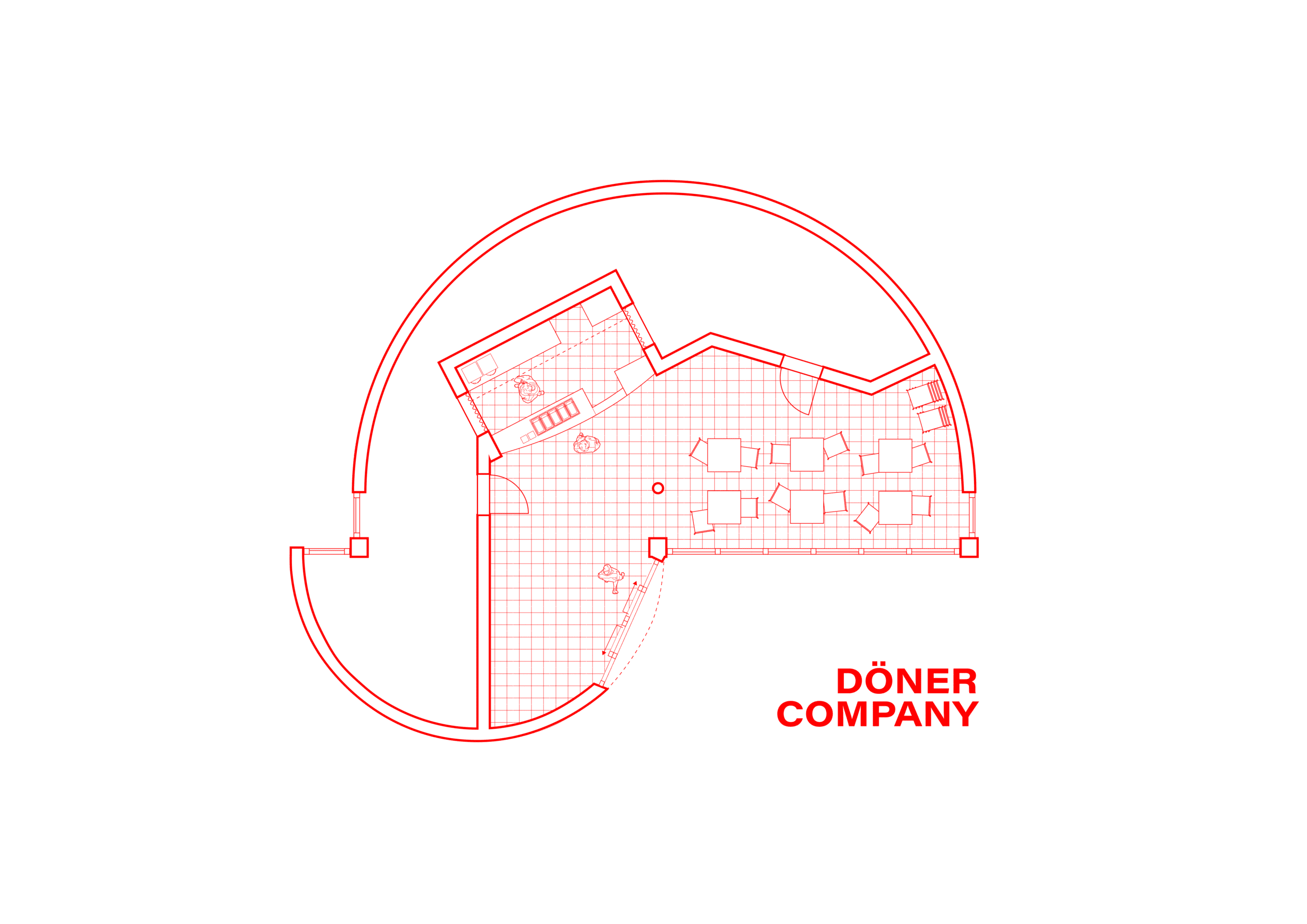
Architectural plan devised from photos and memories. (Image: Joey Lageschaar)

Through the above-mentioned Delta article, I found out that the building was used as a post office before it became a Turkish eatery. A dive into the Google Maps Street View archive shows the building’s changes. I discovered that cigarettes were sold there in 2009, there were three ATMs within 10 metres, and up to 2018 there was a public phone booth. It was still there when I started studying!
I never really noticed how much the place has changed over the years and what we have lost along the way.
Collage with screenshots from Google Street View. (Image: Joey Lageschaar)
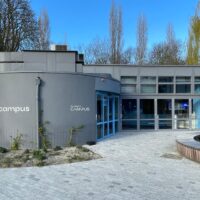
TU Delft bought the property in 2022 and it was given a makeover for the first time in 15 years. While the description of the metamorphosis evokes an image of a ‘female lead actress in a rom com who gets the help of a gay best friend’, the result is far from that. The exterior is covered in a thick layer of grey paint and there is a touch of blue in the interior with meeting tables where I have never seen anyone sit. This cheap-looking, bustling part of the campus now has acquired a gloomy appearance.
The internet offers no explanation for the current purpose of the building, though the interior makes you think that it has an administrative function. Perhaps it accommodates the team that is responsible for the expansion and building developments on campus. Two TV screens in the window, which no one seems to take notice of, show the plans.
Upon seeing the building’s current state, I doubt whether all those plans include space for the spontaneity and impetuousness that I so much enjoyed. All those times I shared with other students,they were interactions for which there is less and less space on campus.
This is how the campus changes, almost without anyone noticing. Not with big changes, but by gradually smoothing out and painting over. That is precisely why it is important to not forget what we had. The Turkish takeaway will at least live on in my head, and now in this article too.
Joey Lageschaar recently graduated as an Architecture master’s and still works as a Student Assistant. Growing up in a village called Zieuwent in the east of the province of Gelderland, he enjoys engaging with experiences, imaginations and translations of how we root ourselves in new environments. In a world that is becoming increasingly more efficient and individualistic, he looks for connections through writing, beach volleyball, and by looking for the unusual in the everyday.
Writer Opinie
Do you have a question or comment about this article?
Om de beste ervaringen te bieden, gebruiken wij technologieën zoals cookies om informatie over uw apparaat op te slaan en/of te raadplegen. Door in te stemmen met deze technologieën kunnen wij gegevens zoals surfgedrag of unieke ID's op deze site verwerken. Als u geen toestemming geeft of uw toestemming intrekt, kan dit een nadelige invloed hebben op bepaalde functies en mogelijkheden.
Functioneel
Always active
De technische opslag of toegang is strikt noodzakelijk voor het legitieme doel het gebruik mogelijk te maken van een specifieke dienst waarom de abonnee of gebruiker uitdrukkelijk heeft gevraagd, of met als enig doel de uitvoering van de transmissie van een communicatie over een elektronisch communicatienetwerk.
Voorkeuren
De technische opslag of toegang is noodzakelijk voor het legitieme doel voorkeuren op te slaan die niet door de abonnee of gebruiker zijn aangevraagd.
Statistieken
De technische opslag of toegang die uitsluitend voor statistische doeleinden wordt gebruikt.De technische opslag of toegang die uitsluitend wordt gebruikt voor anonieme statistische doeleinden. Zonder dagvaarding, vrijwillige naleving door uw Internet Service Provider, of aanvullende gegevens van een derde partij, kan informatie die alleen voor dit doel wordt opgeslagen of opgehaald gewoonlijk niet worden gebruikt om u te identificeren.
Marketing
De technische opslag of toegang is nodig om gebruikersprofielen op te stellen voor het verzenden van reclame, of om de gebruiker op een site of over verschillende sites te volgen voor soortgelijke marketingdoeleinden.




Comments are closed.