

One in four young people is an informal carer. That is not always easy, says lecturer-researcher Hinke van der Werf: “Do I go to a lecture or take my mother to the hospital?”
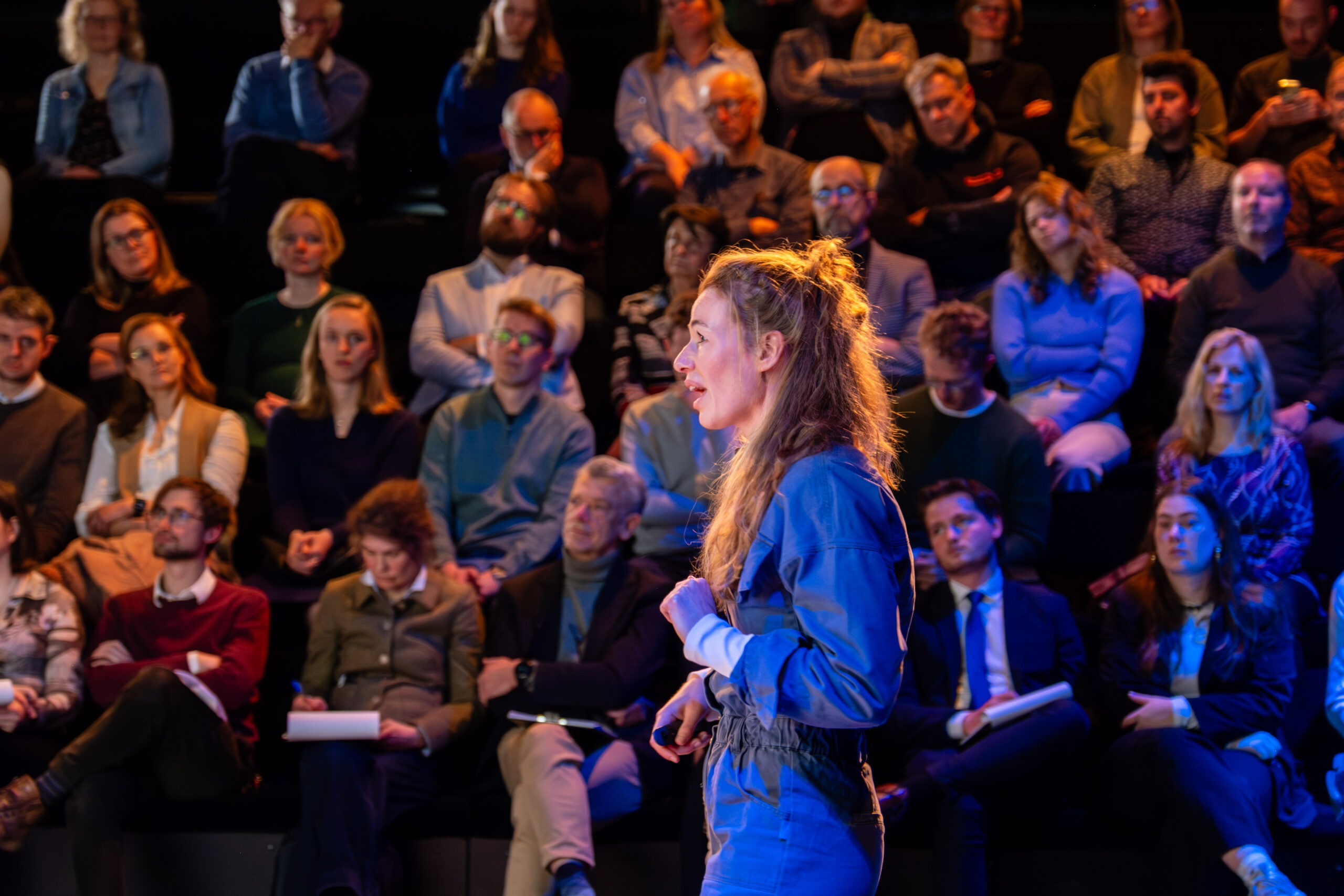
Hinke van der Werf during the Teacher of the Year 2026 awards ceremony. (Photo: Max van der Weide/ISO)
It is Young Informal Carers Week. Educational institutions, care organisations and municipalities are drawing attention to young people who care for a loved one. Many of them are students.
“It is not only about the concrete care tasks you have,” says lecturer-researcher Hinke van der Werf of Hanze University of Applied Sciences Groningen. “It is also about the constant worries and tensions you experience at home.”
Van der Werf wrote her PhD thesis on young informal carers between the ages of 18 and 25. Two years ago, she organised the first national meeting on education and caring responsibilities, which has been held annually since, this year in Rotterdam.
How many students in higher education are actually informal carers?
“One in four young people is an informal carer. You can assume that this is roughly the same among students. You mainly see many young informal carers among students in care-related programmes, for example in medicine, psychology, nursing and social work. Students are more likely to choose such programmes if they have experienced a care situation at home.”
When is a student an informal carer?
“If someone in their immediate environment is ill or needs care, for example a family member. It does not only depend on the number of hours someone provides care. For example, I have had students with a parent who is addicted. They may occasionally do the shopping, but that is not very different from what you do when you live independently. Even so, they are also informal carers. Or there may be financial problems, because a parent cannot work or because care is expensive. You can lie awake at night worrying about that. Worrying about someone is sometimes more burdensome than caring for someone.”
You’re expecting the number of informal carers to increase. Why is that?
“The government is increasingly shifting care into the home. That not only means more care tasks, but also that less funding is available or that people have to wait longer for care. That increases the pressure.
‘They want to study or do an internship, but they cannot simply set aside their responsibilities’
How burdensome caring is depends strongly on policy. Suppose you have a younger brother or sister with Down syndrome, but care is well organised and your parents are coping well. You may formally be an informal carer, but it does not necessarily have to be very demanding. So this also has to do with political choices.”
What challenges do student informal carers face?
“These students often have to make difficult choices: do I go to a lecture or take my mother to the hospital? They want to study or do an internship, but they cannot simply set aside their responsibilities. That means they sometimes have to give things up. As a result, they have less time for their friends or achieve lower grades. Sometimes they even drop out.
Studying is not only about acquiring knowledge, but also about personal and social development. Think of moving out or taking part in a society or club. If you have caring responsibilities, you are often limited in this. You cannot do many things that your peers can do. That can lead to loneliness.”
What can educational institutions do for students?
“We do see some support measures, such as financial compensation for study delay. But these often only come when the need is already very high. What would help is a scheme similar to the elite athlete scheme. That students can indicate at the start of their studies that they are informal carers and receive more structural flexibility. That way, they do not have to keep asking for exceptions. Especially when a lot is going on, it is difficult to seek help.
Sooner or later everyone will be affected by caring responsibilities. That is why we need to look out for one another. Lecturers and fellow students can also play a role in this. Offering a listening ear can already mean a great deal. It does not have to take long, but it can make all the difference.”
HOP, Naomi Bergshoeff
-
The Student Support Fund Scheme at TU Delft offers financial compensation for students who experience study delay due to foreseen or unforeseen circumstances. On this page you can find more information.
Education Minister Letschert on student wellbeing
Education Minister Rianne Letschert argues in a letter (in Dutch) to the House of Representatives for a different view of student wellbeing. According to the minister, the strong focus on individual support for mental problems places too much pressure on education.
Letschert states that educational institutions should rely less on care and make greater use of the strength of good education itself. According to her, this helps students to build self-confidence and become more resilient.
The minister also believes that institutions should set boundaries more often: in cases of serious or complex support needs, they may say ‘no’ and refer students to appropriate support outside education.
At the same time, Letschert emphasises that tailored solutions sometimes remain necessary, such as flexibility in timetables or assessment moments to prevent dropout. In addition, she places part of the responsibility with parents, who must teach their children how to deal with pressure and setbacks.
The minister does not consider additional funding or new policy for student wellbeing necessary. (HOP/OL)

HOP
Hoger Onderwijs Persbureau
Do you have a question or comment about this article?
redactie@hogeronderwijspersbureau.nl


Comments are closed.