While development aid is under pressure, the Delft Global Initiative is celebrating its 10 year anniversary on Thursday. Continuing it is needed, says its Managing Director Claire Hallewas. “Major issues do not stop at the borders.”
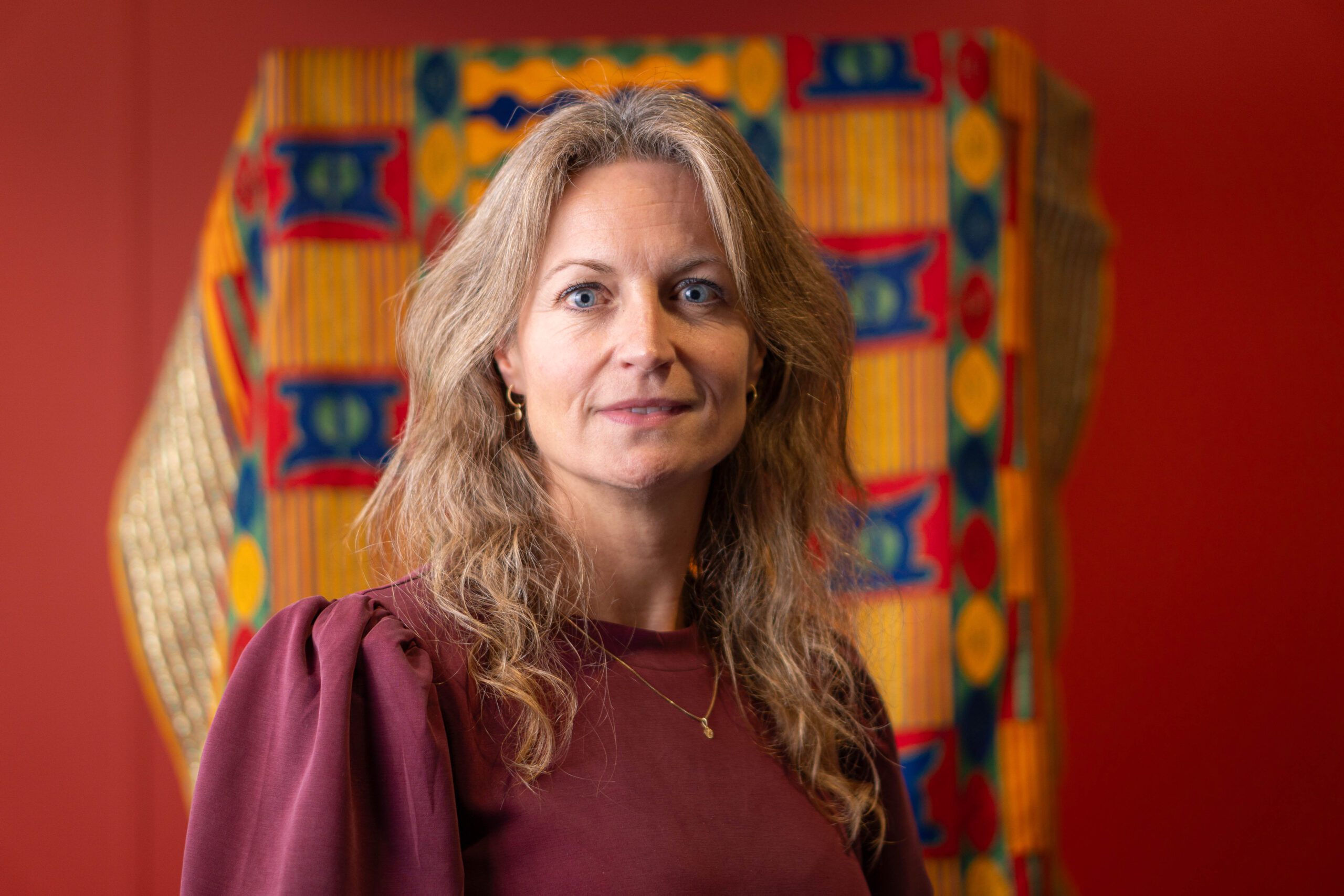
Claire Hallewas is the managing director of Delft Global Initiative. (Photo: Thijs van Reeuwijk)
This article in 1 minute
TU Delft academics were already working on societal issues in the Global South before 2015, but their work was fragmented and they did not really know what the others were doing, let alone being able to help each other.
This had to change. So 10 years ago the Delft Global Initiative brought them together to work on one shared mission: to help further the Sustainable Development Goals (SDG, established by the United Nations) in low and middle income countries in the Global South. The focus is on Sub-Saharan Africa and Southeast Asia.
It now rests on a strong foundation, says Claire Hallewas. She has been the Managing Director of the programme since 2019. “TU Delft has taken on a real leadership role.”
TU Delft is the only Dutch university that has a programme like this. What does that say?
“Other institutions are also working on these issues, but their activities are indeed not as organised as here. This costs them money and labour. I sometimes hear that other universities look at us jealously. I see it as the duty of a university to share knowledge and innovation with society. And doing it like this strengthens the efforts.”
Does having a programme office like this help to provide support ensure greater impact?
“In the end, a university wants to know why they should invest in something. Ten years later, our self-evaluation shows that the investments made in us by the Executive Board has increased our impact by a factor of eight. We attract a lot more capital than TU Delft invests in us. This is external funds from NWO (Dutch Research Council), the EU, and from competitive grants.”
TU Delft’s Global Initiative celebrates its 10 year anniversary
In celebration of the programme team’s 10 year anniversary, the Delft Global Initiative is arranging an event with various speakers from 2:00 PM in the Aula.
The speakers in are: Ena Voûte (Pro-Vice-Rector International Affairs), Nick van de Giesen (Chair of Delft Global), Claire Hallewas, Rita Akosua Dickson (Vice Chancellor of Kwame Nkrumah University of Technology in Ghana) and Dirk-Jan Koch (Director of AIV, the advisory council for international issues). There are exhibition and pitches in the foyer. The afternoon will be closed with drinks.
The 10 year long investment amounted to EUR 9 million. The money went to the 4.3 FTEs that make up the programme team and to the 20 PhD candidates that were appointed right from the start. These Global Fellows came from the Netherlands and abroad.
All 20 of them have now earned their doctorates. They show what a different way of making an impact through the programme can be like, says Hallewas. She means the non-financial side, in other words how they can tangibly improve the lives of local communities in the Global South.
Malaria diagnosis
Hallewas refers to Temitope Akbana from Nigeria as an example. This Global Fellow earned his doctorate in Mechanical Engineering, is currently doing a post-doc at TU Delft and runs a company that brings technologies for malaria diagnosis to the market in Nigeria, Gabon and Morocco.
Thanks to him, thousands of people have been diagnosed correctly which may not have happened otherwise, says Hallewas. “And another good thing is that his company also collects data for research, which has already led to being published in Nature Communications.” Her point is that just one individual can make such a big difference thanks to the opportunities offered by the Delft Global Initiative.
Another PhD programme has been added: GROW. In contrast to the Fellowship, this programme was set up specifically for prospective PhD candidates from Africa. Apart from TU Delft, five other universities are part of it. The students came to the Netherlands last year and started their Doctoral Programmes at one of the six universities.
TU Delft is leading the way as 24 of the 51 doctoral students are working on their PhDs here. Half the funds are provided by the universities themselves, and the other half by the Marie Skłodowska-Curie Actions EU programme.
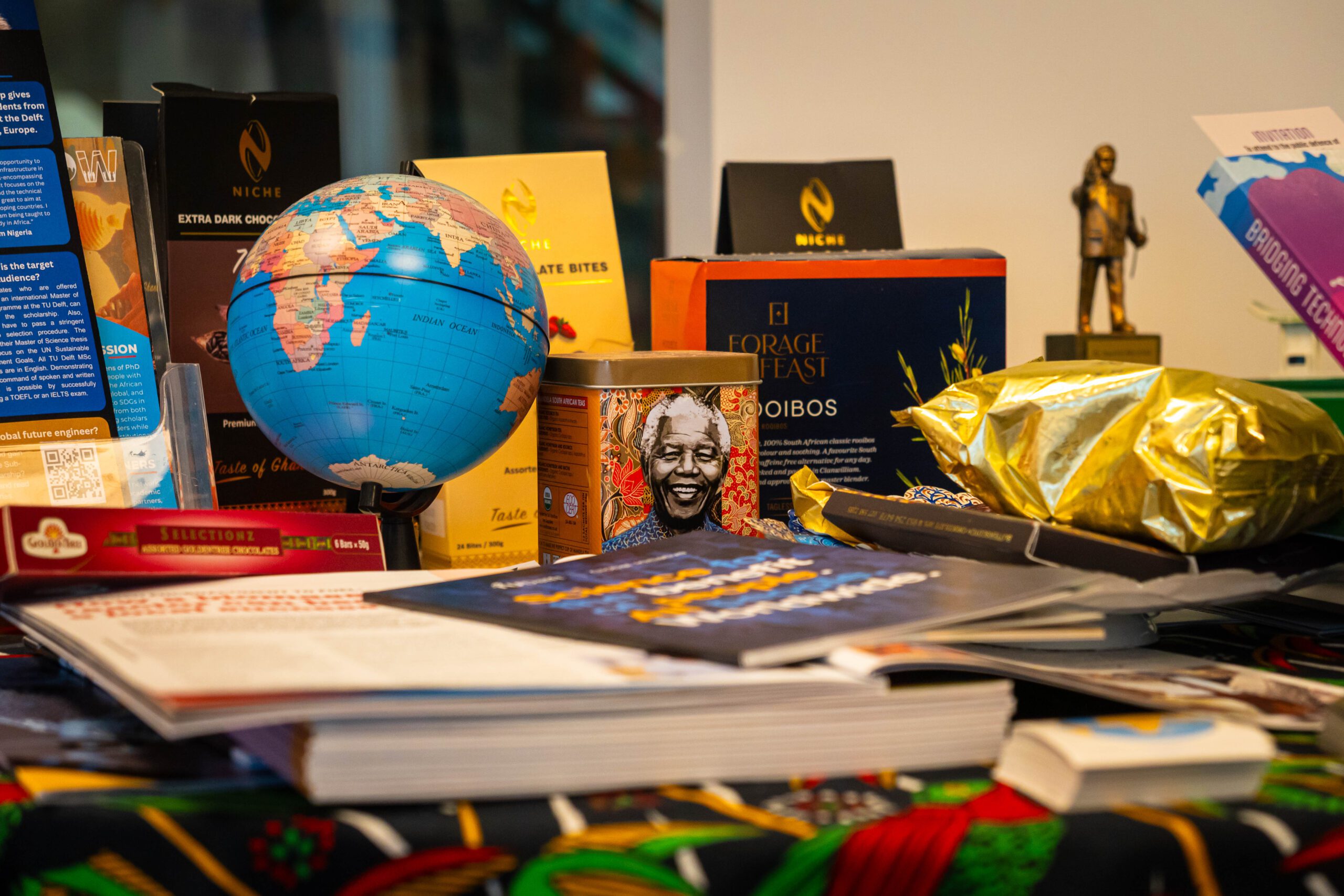
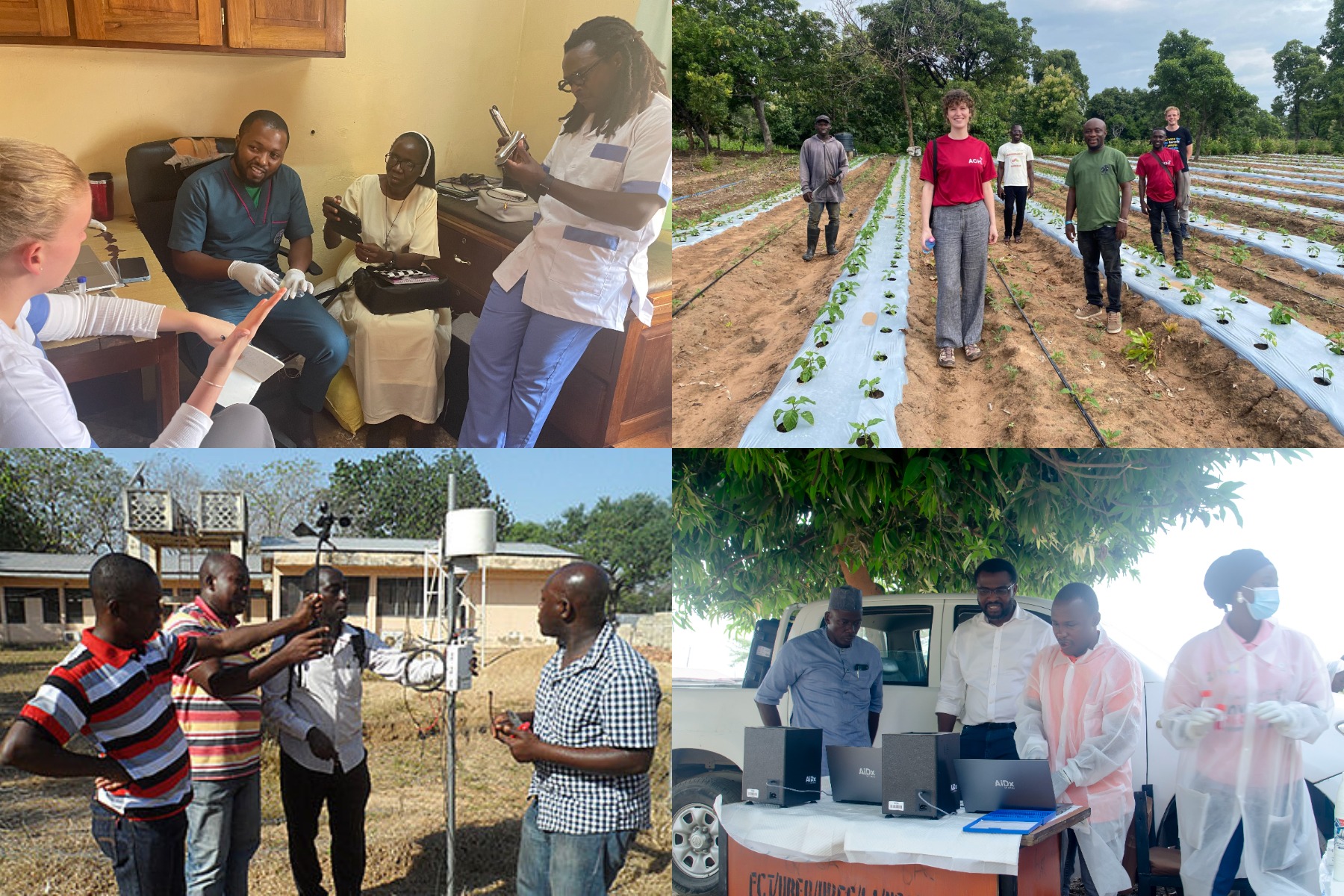
But Delft Global Initiative is more than just those doctoral dissertation places, emphasises Hallewas. The programme office has brought together research from different faculties in subjects such as ‘water for impact’ and ‘energy access for all’. The community comes together every month for lunch. TU Delft makes MOOCs available that can be followed by students in the Global South.
And the students? There are various grants available for international students. The Delft Global Initiative also works on the Frugal Innovation for Sustainable Futures minor that is made available by TU Delft, Leiden University, and Rotterdam University. Throughout the curricula are various subjects which promote contributing to the SDGs in the Global South.
Apart from research, why do you also choose to address education?
“We want as many students at TU Delft as possible to come into contact with these subjects early in their careers. We want to show that this is one way to put their knowledge and expertise to good use. It may be a route that they may never have thought about.
We see that students really enjoy it. They really want it! We see that they are very societally engaged. This is definitely a trait of this generation, and it’s amazing.
We have also created the Delft Global Student Club and will take more action for students in the years to come. If it were up to us, every engineer here leaves as a global engineer.”
It is still not certain how much money TU Delft will make available for the next few years. The 10 year programme budget ended at the end of 2024, and this year Delft Global Initiative only got money to keep the programme office up and running. Decisions on a new budget have been put on hold because of the cutbacks.
Are you concerned about the budget allocation?
“We are of course anxiously awaiting the decision. We are in any case grateful for the 10 years of support that we had from the Executive Board. We have had a lot of positive feedback. We heard from the Rector directly that as far as he is concerned, the added value that the Delft Global Initiative brings is obvious.
To my mind, you simply cannot work around the Global South, you have to collaborate. Academia is inherently internationally oriented so it would be strange to leave the Global South out.”
This is also the position of the AIV, that advises the Dutch Government on international policy. Investing in and cooperating with the Global South is essential to balance the impact of China and Russia in these countries, the Council recently wrote in a strongly worded report about international collaboration.
Despite the AIV’s advice, the Cabinet is dramatically reducing investments in development aid from 2026. Given the programmes of the parties in the potential coalition, it does not look as though the cutbacks proposed during the negotiations will completely disappear. What do you think about this?
“I think it’s very short-term thinking. Pandemics, the climate, the shortage of energy and so on do not stop at country borders. We need to find solutions together. You cannot do this alone. You need to exchange knowledge and learning with people who come to the Netherlands and vice versa.
If people come here to the Netherlands to share your knowledge and innovation system and then go back to their own country or elsewhere, they build a network which will also benefit you. I simply cannot imagine that we do not want to invest in that.”
That networks like that are also valuable for the Netherlands is not seen by everyone. Development aid is mostly seen as one-way traffic.
“This is a misconception that I often see, especially among people who have had little to do with intercultural work. Students in our research projects who go abroad for a while could also tell people how things work.
When they come back, their whole world view has taken a positive turn. They discover that everyone contributes something. This is real co-creation and it is how you progress further.”
Is it problematic that we still do not always look through this lens at collaborating with the Global South?
“I believe that it can sometimes be a problem for ourselves as you make no progress if you are not open to other perspectives. But apart from that, if you look at the extreme version of this, there is a certain misplaced arrogance. You are really underestimating the rest of the world.
But it is not easy. The nationalism that is blowing through the Netherlands at the moment is an emotional feeling. It is hard to counter with facts. We still always ask ourselves how we can better explain why international collaboration is also highly important nationally.”
So why is it important?
“I mentioned the network earlier. But knowledge exchange is also important. For example, there is a lot more knowledge about drought or floods in a lot of countries that we work with than here. We can learn a lot from them. This also goes for energy. The whole energy system has to be built in some areas. This brings huge learning opportunities and can really help us.
But that national relevance is not visible in just one political term of office. Societal problems are not solved in that timeframe. It needs patience. And of course, this is a hard sell in politics.”
Do you have a question or comment about this article?
k.bakker@tudelft.nl


Comments are closed.