

Since Saturday, large demonstrations have been taking place again at universities in Iran. “The mood has changed,” says Iran expert Peyman Jafari: “Students do not want to go back to square one.”
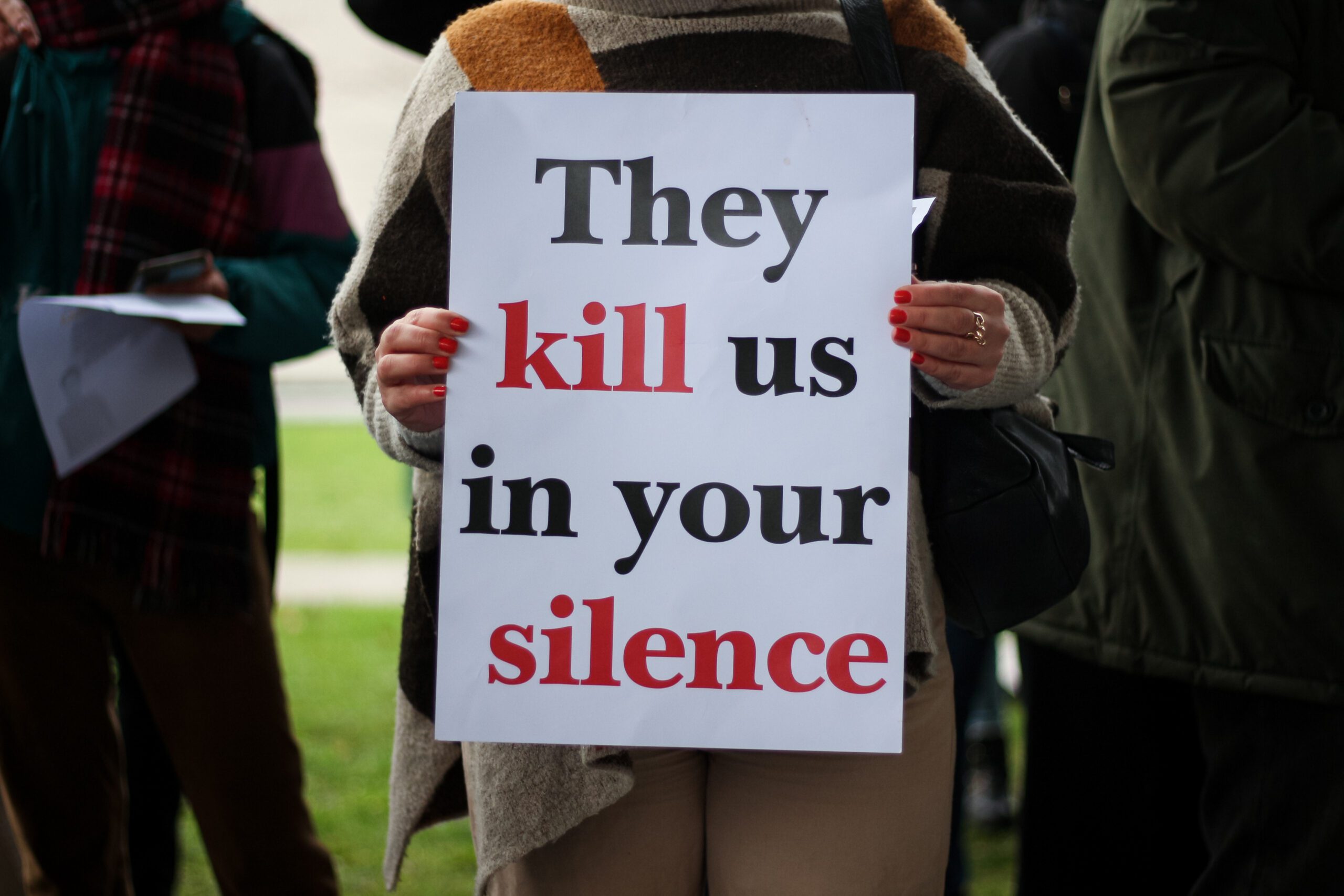
Demonstration on the TU campus in 2022, when there were also large-scale protests in Iran. (Photo: Justyna Botor)
The protests in Iran began last December on the streets and were then brutally suppressed. According to the Iranian-American human rights organisation HRANA, the death toll has risen to over seven thousand. Other sources even speak of more than thirty thousand deaths.
Last Saturday, universities in Iran reopened after more than a month. Large demonstrations immediately broke out at various universities in Iran, particularly in the capital Tehran. At Amirkabir Technical University, Sharif Technical University and Al-Zahra University, among others, slogans such as ‘Down with the dictator’ were heard. The students wore black clothing as a sign of mourning for the students who had died.
TU students and staff from Iran:

“When the protests began on the streets at the end of December, protests immediately broke out on campus as well,” says Peyman Jafari, who himself came to the Netherlands as a refugee from Iran. He is an assistant professor of history and international relations at William & Mary University in the United States and affiliated with the International Institute of Social History in Amsterdam.
The authorities immediately closed the universities and all teaching had to take place online. Three days ago, they were allowed to reopen their doors. Students immediately seized this moment to protest.”
Why are we seeing a wave of protests at universities in particular?
“This has to do with a long tradition. It started back in 1953, when students in Tehran protested against the visit of Richard Nixon, then Vice President of the United States, shortly after the coup d’état by Shah Mohammed Reza Pahlavi. Three students were killed. From that moment on, universities have become a kind of bastion of freedom. Whenever there are demonstrations on the streets, they also take place at universities.”
‘Dozens of students and schoolchildren have been killed in the national protests’
Why now?
“There are two important reasons. First, the situation in Iran also directly affects students. Their freedom is being restricted at universities. In addition, Iranian students have always been involved in the country’s politics. They have often declared their solidarity with other protests. We are seeing that again now.
Dozens of students and schoolchildren have been killed in the national protests. We don’t know the exact numbers. For example, Raha Bohloulipour, a student of Italian language and literature at the University of Tehran, was killed in early January during a protest in Tehran, where security forces fired on the demonstrators. Her fellow students have now hung a large photo of her at the university and sung for her.”
The text continues under the photo.
What drives these students to take to the streets again and again despite extreme violence?
“Courage and determination. It starts with a small group, which gives other students the courage to join in. The mood has changed, among everyone and certainly among students: we don’t want to go back to square one. There must be fundamental change in Iran.”
‘Now that the US are threatening with war, many people are waiting to see what happens’
“The slogans are often the same as those heard on the streets: down with the dictator. However, students also consider broader issues and are concerned about matters such as social inequality in the country. Furthermore, they have a strong network. They know each other, sometimes attend the same classes or belong to the same clubs. This makes it easier for them to mobilise.”
Could the student protests at universities give new impetus to the national protests in Iran?
“It’s possible. But there has also been a lot of repression; more than seven thousand deaths have been documented. People are very afraid to protest. But the anger is still there. It could certainly spread to other groups. But now that the United States is threatening the country with war, many people are waiting to see what happens.
On campuses, skirmishes are breaking out between supporters of the regime, a relatively small group that often enjoys more privileges, and opponents. Tensions are running high. One or two universities have since closed their doors again.”
‘It is important that we do not remain silent’
“That is precisely why it is important that we do not remain silent. As university lecturers, we can declare our solidarity with our colleagues in Iran. Student unions can speak out publicly in support of the protesting students in Iran. And in the Netherlands, we can offer a safe place to Iranian students who are studying here. Even something as small as this is an important act of solidarity.”
HOP, Naomi Bergshoeff

Do you have a question or comment about this article?
[email protected]


Comments are closed.