

For now, there will be no screening of researchers and master’s students in sensitive fields. “We’re still at the drawing board,” says Minister Letschert. “The current proposal was not feasible.”
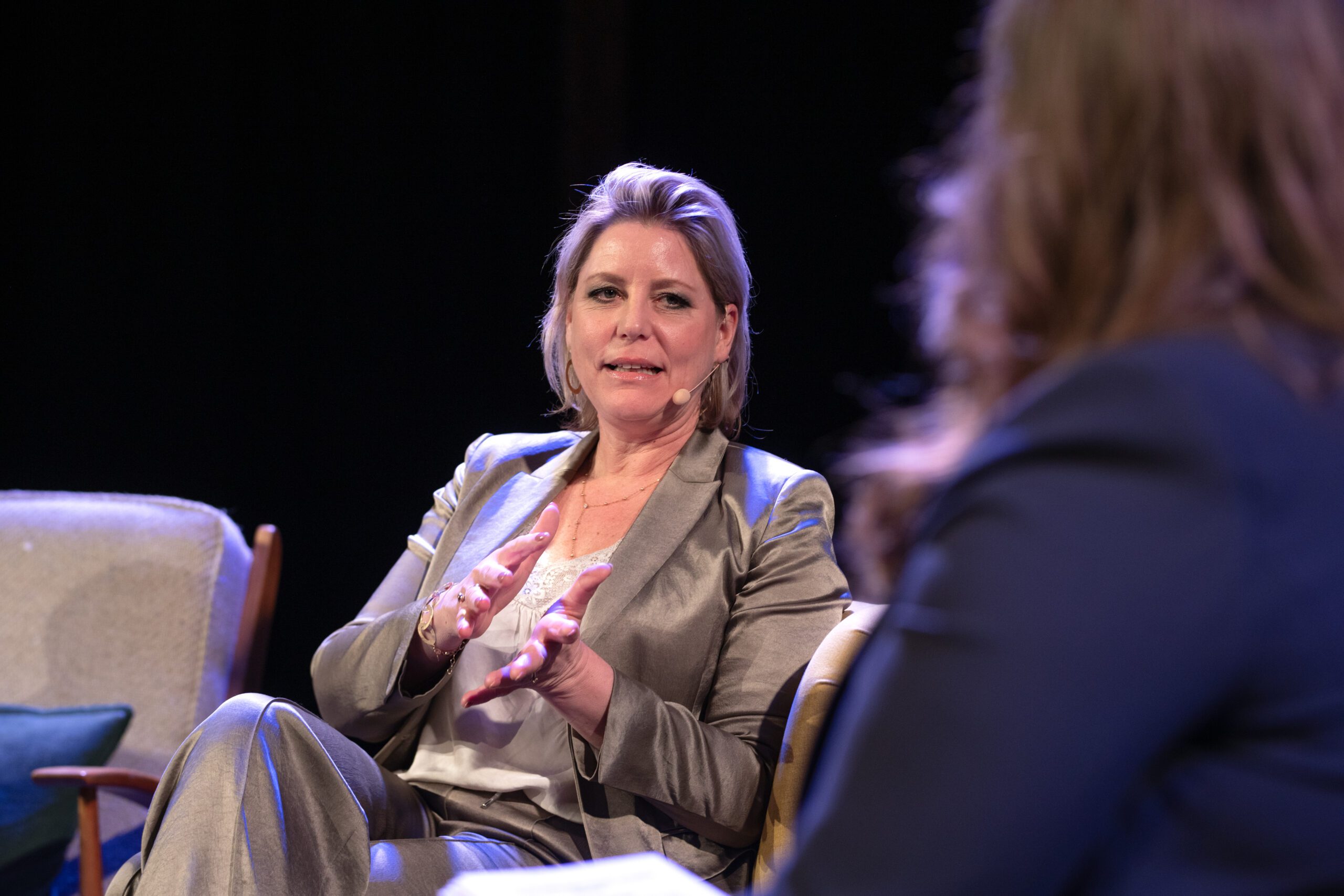
Minister Rianne Letschert: "We want to set out a positive agenda." (Photo: Trajectum, Kees Rutten)
Science thrives on international collaboration, but what do you do if researchers and students from countries such as China and Russia come here to steal sensitive knowledge to strengthen their regime’s position?
For about six years, “knowledge security” has been a hotly debated issue in higher education, especially at universities. Alarm bells have sounded on several occasions. For example, when Delta revealed that not only dozens of Chinese military personnel had obtained PhDs at TU Delft, but that the university, through academic collaborations, had also helped advance the People’s Liberation Army, which is affiliated with the Chinese Communist Party. Concerns were also raised when a human rights center at VU Amsterdam turned out to be funded by China.
Screening for 40 percent of scientists
“We’ve been somewhat naïve,” said then Minister of Education Robbert Dijkgraaf (D66) in 2022. He announced screening for researchers and master’s students in “sensitive” fields. The previous cabinet elaborated on this: the screening would affect about 40 percent of researchers getting jobs in science and engineering. On top of that, master’s students in those fields would also be screened.
There was a lot of criticism of the plans. “This legislative proposal leads to an unworkable number of screenings and makes the Netherlands unattractive for international talent,” said Caspar van den Berg, chair of the university association UNL, “while it is uncertain whether the law will actually contribute to greater security.”
Minister Rianne Letschert now writes in a letter to the House of Representatives that the screening will not happen for the time being. The question is: who exactly should be screened? Defining “sensitive” disciplines turns out to be very difficult. Moreover, a lot is already being done to improve knowledge security, she states in another letter.
So is a screening easier said than done?
“We’re still at the drawing board. There’s a reason we asked various stakeholders for their opinions on the draft bill. We looked at effectiveness, proportionality, and feasibility and had to conclude that the current proposal does not meet the requirements. A broad screening is not feasible. I discussed this with my colleagues in the cabinet, and everyone agreed.”
You are now going to work on a limited screening. How ‘limited’ will that be?
“That’s not yet possible to say. I will examine this together with my colleague from Economic Affairs. We want a level playing field: the measures for knowledge security in the innovative private sector cannot differ too much from those in public knowledge institutions. We need to align this carefully.” (For the private sector, there will be no knowledge-security screening, the cabinet recently decided; editor’s note.)
You compliment educational institutions for the steps they have already taken.
“Awareness has increased significantly. You no longer have to convince anyone of the importance of knowledge security. The research community had to get used to it, but it has now made major progress.”
The scientific community strongly opposed the screening law. Did the threat of screening also contribute to that awareness?
“I think so. The plan for screening made it clear that they had to take the issue very seriously. And the security services are still warning about the risks.”
You are giving institutions a total of 80 million euros over the next five years for knowledge security. What will they do with it?
“They need to do all kinds of things, such as establishing their own frameworks for knowledge security, running awareness campaigns, engaging with new staff members, and providing support.”
HOP, Bas Belleman

HOP
Hoger Onderwijs Persbureau
Do you have a question or comment about this article?
[email protected]


Comments are closed.