
Graduates in engineering, education and healthcare will have little trouble finding a job in the coming years, predicts research centre ROA. But in the fields of economics and social sciences, it will be more difficult.
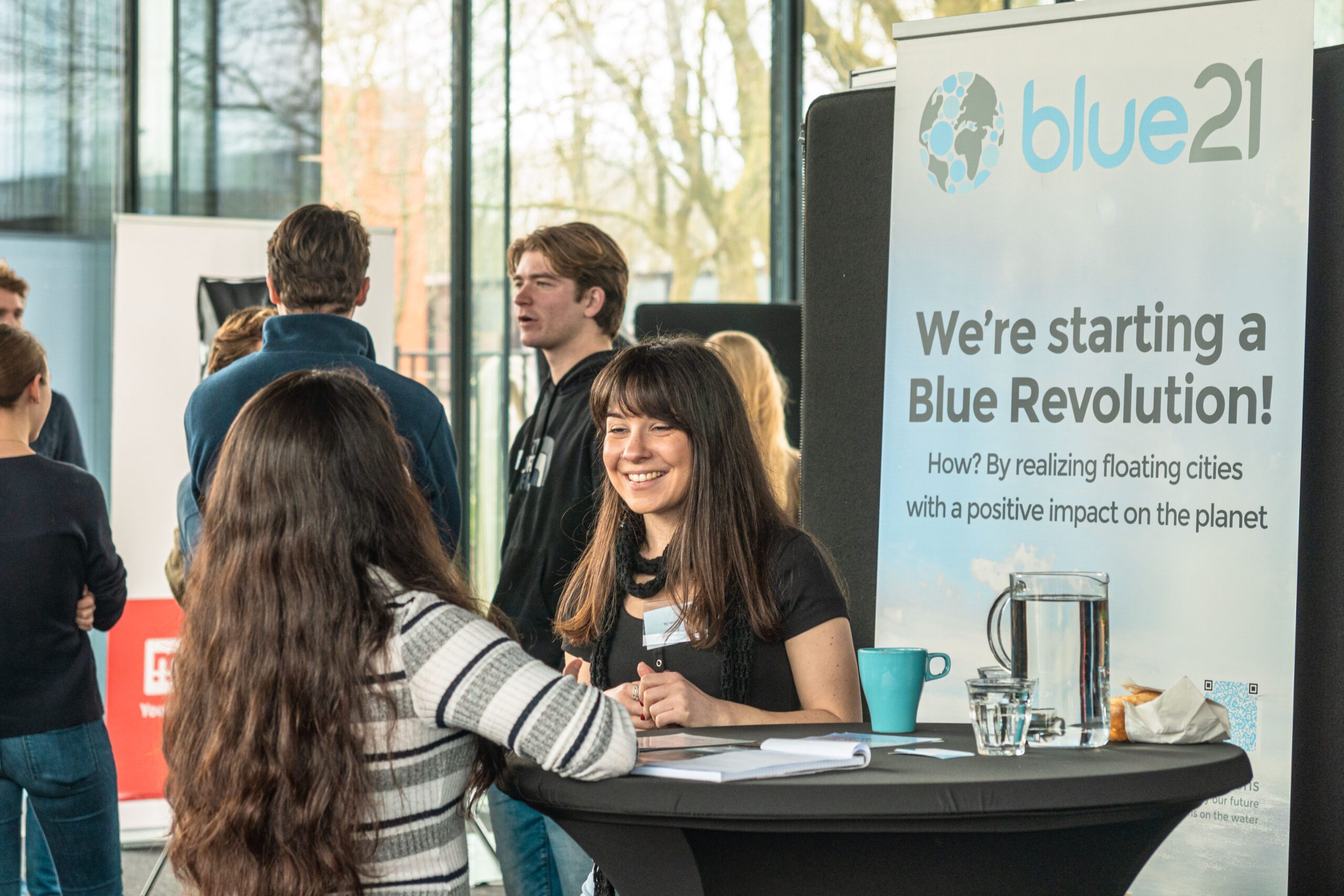
The Green Career Days at TU Delft in March 2024. (Photo: Thijs van Reeuwijk)
Some 1.6 million graduates will leave education between 2025 and 2030. How easy will it be for them to find a job? The Maastricht Research Centre for Education and the Labour Market (ROA) has mapped this out (in Dutch).
The ROA expects the Dutch economy to grow less rapidly than in previous years, which means that the number of jobs will also increase at a slightly slower pace. Unemployment will rise slightly, particularly among young people. Nevertheless, the situation is relatively favourable: after Switzerland and Germany, the Netherlands has the lowest unemployment rate among 18 to 25-year-olds in Europe.
Because people are also retiring, many new jobs are still expected to become available. In addition, new positions are being created. Graduates therefore have a reasonable chance of finding a job. But not all fields are the same.
Major shortages
Graduates of technical studies or teacher training programmes will probably be able to find work quickly, as will those in healthcare. There will continue to be major shortages in these sectors for the time being.
‘We need to get more young people interested in studying technology, education and healthcare’
“This means that we need to find ways to get more Dutch young people interested in studying engineering, education and healthcare,” says Jessie Bakens, research leader at the ROA. Earlier this month, it became apparent that engineering and ICT programmes are not very popular among students at universities of applied sciences. On the other hand, TU Delft has a reasonably stable intake of first-year students.
Graduates with a degree in economics or social studies will find it more difficult to find work. They will more often work outside their specialisation or earn a lower salary.
The report distinguishes between vocational education graduates, bachelor’s degree holders (both higher professional education and university education) and master’s degree holders (also higher professional education and university education). The ROA expects that those with a bachelor’s degree will have less chance of finding a job than vocational education graduates or people with a master’s degree.
Artificial intelligence
The report also points to the rise of artificial intelligence, which is creating ‘new opportunities to automate certain work tasks’. According to the ROA, the impact of AI on the current labour market is limited for the time being, but ‘the potential is considerable’. According to the research centre, it is difficult to determine what the exact effect on the job market will be.
HOP, Naomi Bergshoeff

HOP
Hoger Onderwijs Persbureau
Do you have a question or comment about this article?
[email protected]


Comments are closed.