When I worked at Leiden Observatory as a student and later as a PhD candidate, it was always a treat whenever someone, pressed for space, placed surplus books and journals outside their office against the wall. In those days, such offerings would delight others. I would eagerly sift through these often towering piles in search of something to my liking. I was less interested in specialist literature like The Astrophysical Journal than in old dissertations and magazines such as Scientific American.
There was no internet then, and digital versions (PDFs) did not exist. It was in that paper era that my great love for print media was born: real books and real magazines, crafted with skill and care. Content, of course, comes first, but for me the way that content is presented is at least as important. That is why I prefer to read physical books, newspapers, and magazines. I do read many digital publications as well, but only in PDF format that preserves the original layout of the printed edition. Although I occasionally resort to an e-reader – given current baggage restrictions, it is not very practical to lug around 10 physical books – nothing compares to a beautifully designed page.
 After decades of collecting, however, the moment inevitably arrives when you need to free up space. After all, not everyone can rival Umberto Eco, who is said to have owned some 40,000 books. Throwing them away is, of course, out of the question, and in the digital age you can no longer make anyone happy with your old paper books and magazines.
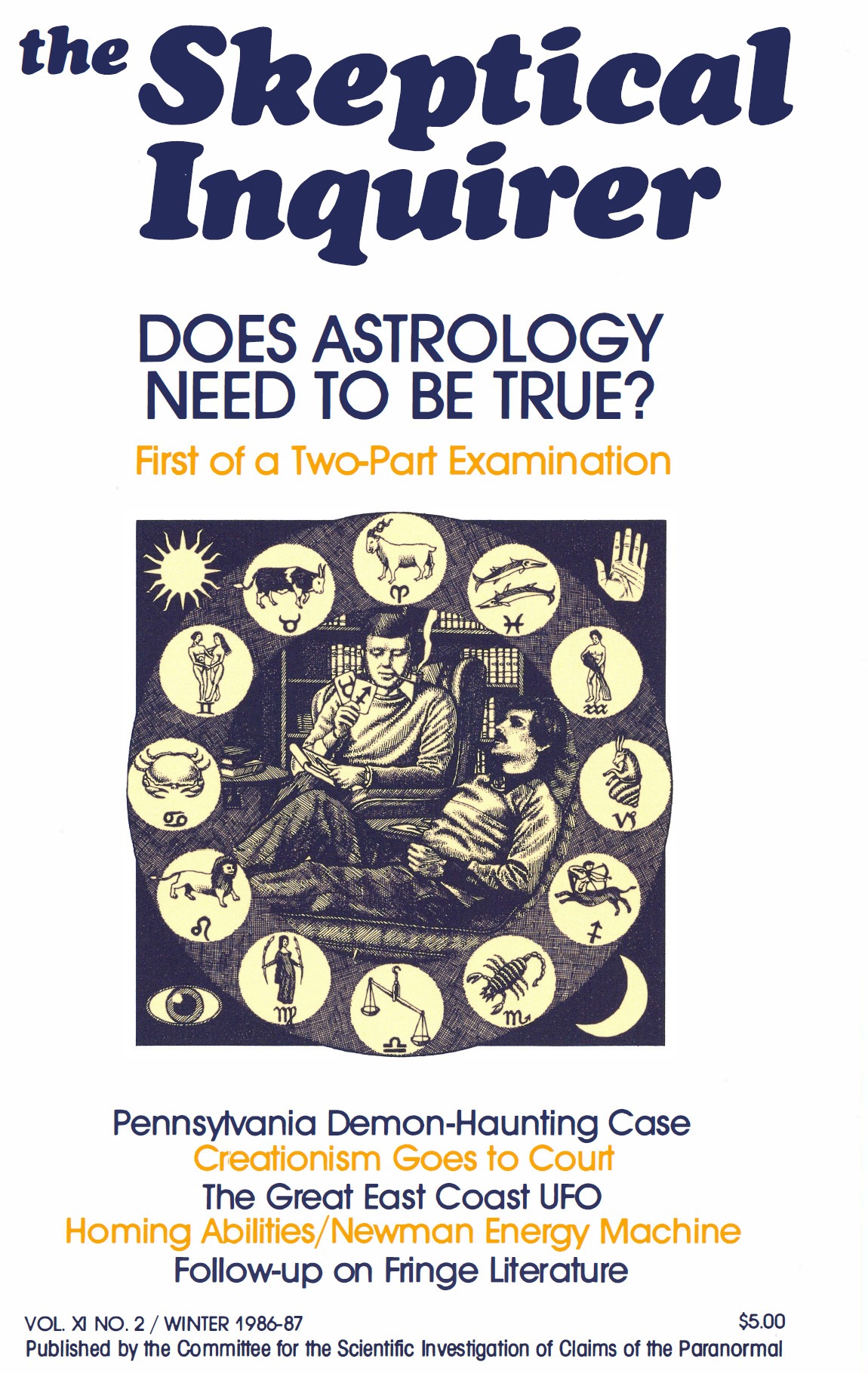
More than 30 years ago, eight years’ worth of Skeptical Inquirer magazines were passed on to me by my then office mate who needed shelf space. Subtitled The Magazine for Science and Reason, to date it has been published by the Committee for Skeptical Inquiry (CSI), which has investigated and invariably debunked paranormal and pseudoscientific claims for 50 years. Many of my scientific heroes contributed to it, including Carl Sagan, Douglas Hofstadter, James Randi, Martin Gardner, and Isaac Asimov. Sadly, all of them have all since passed away, except for Douglas Hofstadter, who is now 81. Martin Gardner’s contributions have been collected in two delightful books which I wholeheartedly recommend: The New Age: Notes of a Fringe Watcher and Weird Water and Fuzzy Logic. You should of course buy the hardcover editions.
And so I found myself with a stack of magazines totalling more than 3,500 pages. Discarding them was out of the question, as that would negate the fact that I have preserved them for more than 30 years. But I could not pass them on to anyone else either. So I ran them through a scanner and created neat PDFs. Now I can part with the physical copies with a clean conscience, because both their content and their design have been preserved and immortalised in digital form.
The same fate awaits old dissertations and books whose physical form holds little aesthetic or emotional value. For a few thousand books, however, that value is very real, and these I will cherish for the rest of my life. All that remains is to find the time to read them all.






Comments are closed.