Japan joined Horizon in January, the European research programme that distributes billions of euros in funding. It is the latest non-European country to have joined in recent years. “Science is being used as soft power.”
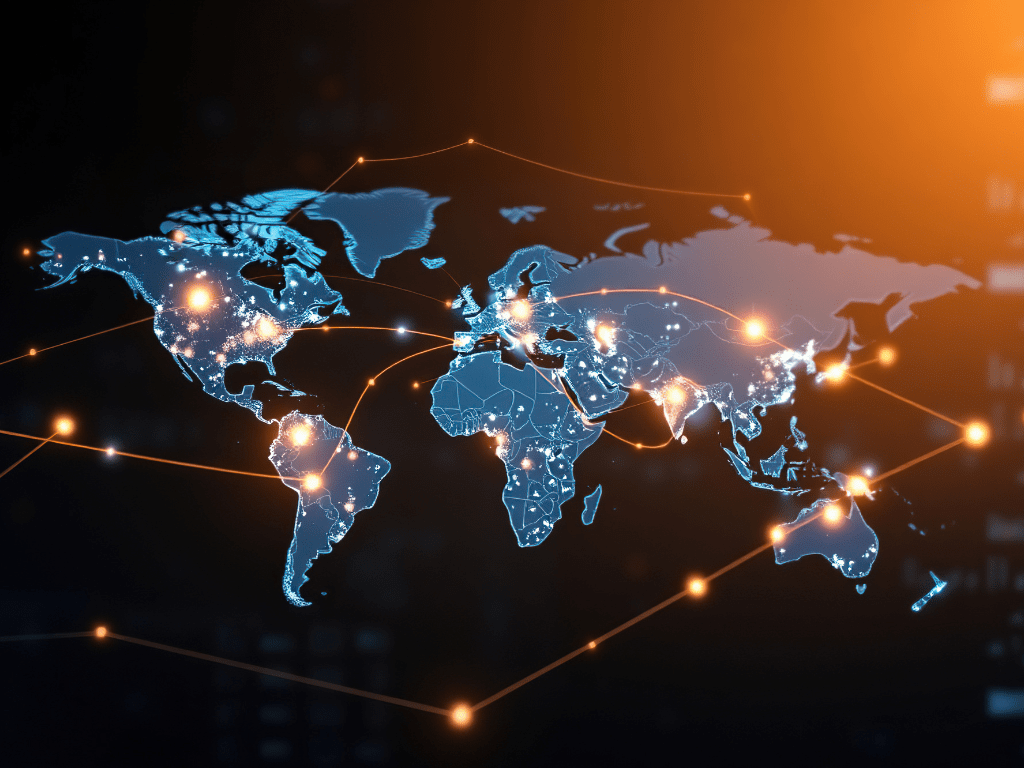
(Photo: Andiiwan / Canva)
Horizon Europe now extends to the other side of the world. In five years, fourteen non-EU countries have joined, including South Korea, Egypt and New Zealand. Last year, talks began with Australia, and negotiations with Japan have just been completed.
The European Horizon programme, which spends more than €13 billion annually on scientific research, now has 23 “associated” countries, in addition to the 27 EU Member States.
International brand
Japan will formally sign the agreement later this year, but Japanese scientists can already benefit from it. They no longer need to join a European research group in order to be eligible for European funding. They can now submit applications for Japanese research conducted on Japanese soil.
The country does pay for this, however. The details of the deal will not be announced until later, but partner countries often spend more on Horizon than their scientists receive back from the programme.
Nevertheless, countries are keen to participate, says Annabel Hoven. She recently changed jobs, but at the time of the interview she was a policy advisor at Neth-ER, the interest group representing Dutch knowledge institutions in Brussels. “Horizon has become a kind of international brand. It only funds excellent research and it is a competitive system. Scientists like to put a Horizon grant on their CV.”
Geopolitical tool
This allows the EU to use the programme as a diplomatic tool, says Hoven. Science is used as a means of strengthening ties with other countries. Europe has something to offer in this regard. Only China and the United States can compete with the EU in the field of science. And the EU is aware of this.
‘Today, more than ever, science, technology and innovation translate more than ever into power and geopolitical influence’
The responsible European Commissioner, Ekaterina Zaharieva, refers to science and innovation as nothing less than a geopolitical currency: an international medium of exchange or payment. “Today, more than ever, science, technology and innovation translate into power and geopolitical influence.”
For the EU, ‘science diplomacy’ has by now become part of its diplomatic toolkit. In 2024, for instance, Egypt pledged to curb migration flows to Europe. A year later, the country joined Horizon.
Security and stability
Meri Georgievska-Van de Laar, Director of European Affairs at Erasmus University Rotterdam, is not cynical about science as a tool for international cooperation. She has seen first-hand how European cooperation has driven progress in North Macedonia, where she was born and raised, and in Turkey, where she worked for many years. Both countries are EU candidate states and were therefore granted early access to Horizon.
In her view, more countries south of Europe should be involved in Horizon. “These countries have expertise in areas where Europe is vulnerable: water security, drought management, infectious diseases, sustainable agriculture… we can learn a great deal from them.” Tunisia has been participating for some time; with Jordan, the EU announced new talks in early January.
‘In effect we gain strategic partners who also pay to participate and share their talent and expertise with us’
Safe and stable countries in Europe’s neighbourhood also enhance Europe’s security, Georgievska-Van de Laar believes. “In effect, by bringing in countries such as Egypt, we gain strategic partners who also pay to participate and share their talent and expertise with us.”
One billion ‘inhabitants’
Switzerland joined the predecessor to Horizon back in 1987, followed by Iceland, Norway and Israel in the 1990s. More countries joined later, but growth has been particularly rapid since 2021, simply because countries from all over the world have been eligible to join since then. Fourteen new partner countries have joined, including New Zealand, South Korea and Canada.
Thanks to the 124 million Japanese who are now joining, the 23 partner countries together have a population of 593 million, compared to 450 million for the EU Member States themselves. Added together, the Horizon countries have a combined population of more than one billion. Will it now be more difficult for scientists from the small country of the Netherlands to obtain funding?
Competition?
Annabel Hoven of Neth-ER believes that many grant applications can be expected, particularly from countries such as Japan, South Korea, New Zealand and Canada. The scientific infrastructure in those countries is more advanced.
But at the same time, the expansion means that the pot of money is getting bigger. “And the EU retains control over that money. The associated countries play a role in the implementation, but have no say in strategic choices, such as what type of research receives funding.”
Perhaps Dutch scientists will not necessarily be worse off if more countries participate. When the United Kingdom, a scientific superpower, rejoined Horizon after Brexit, it had no impact on the number of grants awarded to the Netherlands.
World power
Cooperation with non-European countries came under scrutiny due to the genocidal violence in Gaza. Last year, the European Commission considered removing Israel from Horizon, but Germany in particular prevented this from happening. In the Netherlands, the KNAW is still advocating for the country’s suspension from Horizon.

What about Egypt, for example? That country not only struggles with corruption, but is also not very democratic and has little academic freedom. The KNAW has not yet taken a position on Egypt’s membership. This has been confirmed by a spokesperson.
‘Only by working together can we make Europe a leading scientific world power’
The values of the EU and those of scientists will clash more often. We should not be naive about this, says Georgievska-Van de Laar of Erasmus University. Of course, we must keep an eye on knowledge safety, as the EU does. ‘We must collaborate where it is safe and useful and protect what is sensitive and strategic. But only by working together can we make Europe a leading scientific world power.’
HOP, Olmo Linthorst
Do you have a question or comment about this article?
redactie@hogeronderwijspersbureau.nl


Comments are closed.