
Will the Works Council and the Student Council have enough of a say in the austerity plans? The representation bodies fear not. This is why, at a public meeting with the Executive Board last Thursday, the Works Council Chair, Ronald Kuil, pushed for sufficient time and opportunity to express their views.
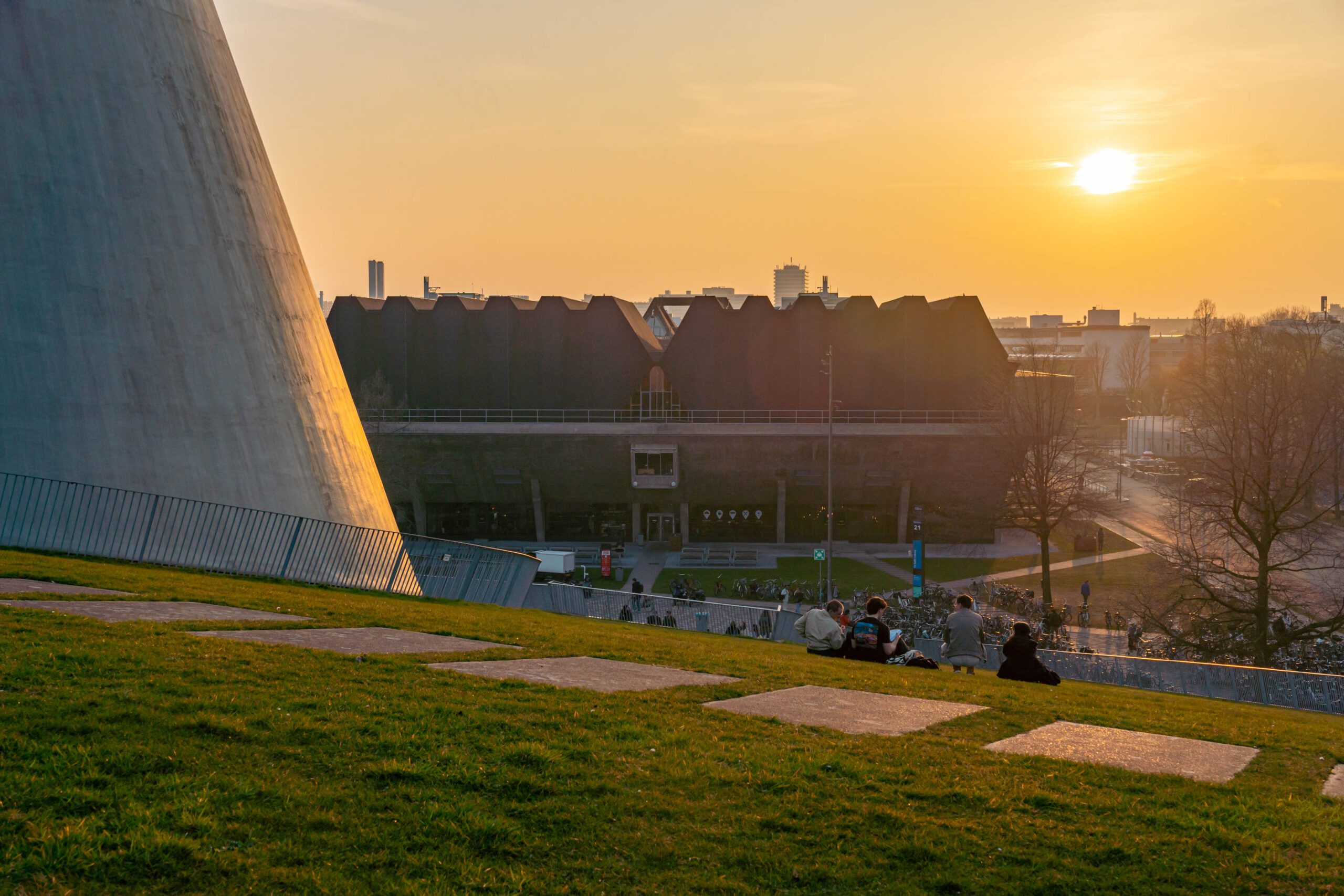
All faculties must cut costs by 10 percent. (Photo: Thijs van Reeuwijk).
TU Delft is facing major cutbacks: from 2028, it will have EUR 79 million less to spend every year. This is the reason why all the faculties and managements have made plans to cut back on spending by 10%. These ‘outline sketches’ as they are called have all been submitted to the Executive Board.
The Executive Board will take a decision on these on Tuesday 23 September. On Thursday, at its monthly meeting with the Works Council and Student Council, Executive Board Chair Tim van der Hagen said that this will be a “decision about a policy proposal. This means that we say ‘start working on the change (the cutbacks, Eds.) as you had thought in the given time period’.” The Executive Board will ‘broadly communicate’ the plans after Tuesday.
No voice as yet
That statement did not go down well with the representation bodies. Neither the central Works Council nor the Student Council members have seen a single plan on paper. Chair Ronald Kuil: “We consider a 10% cost reduction as a major change. And the law expressly states that in cases of important changes, the Works Council has to be involved before a decision like this is taken, and that it must have the time to submit any comments.” He continues. “The act of first taking decisions and then approaching the Works Council is not permitted. This really must be done differently.”
‘We consider a 10% cost reduction as a major change’
Van der Hagen replied that in this case, participation takes place through the local representative bodies, the departmental committees for staff (odc) and the faculty student councils for students (fsr). He also argues that the representative bodies can influence the cuts through participation in the 2026 budget and the multi-year budget. According to the Executive Board Chair, there is therefore sufficient opportunity for participation. Kuil disagrees.
The or chair estimates that the representative bodies will need a few weeks to draw up a recommendation. The extent of participation varies between the various subcommittees. Some have seen 60 per cent versions of the plans, others 80 per cent versions. At least one subcommittee, that of the universiteitsdienst, did not receive the plans at all.
An extra meeting on Tuesday
Given Kuil’s comments, there will be an extra meeting between the representation bodies and the Secretary General, on Tuesday. Whether the Executive Board delays its decision or the communications in the light of this meeting is as yet unknown. It is not the first time that the representation bodies raise the alarm about the lack of consultation. At the end of 2024, the launch of a point of contact for social safety had to be postponed because the trade unions and representation bodies did not have enough time to be part of the process.

News editor
Annebelle de Bruijn
Do you have a question or comment about this article?
a.m.debruijn@tudelft.nl


Comments are closed.