

The ‘lab-on-a-chip’ concept is already being widely used in fields such as healthcare. But do these kinds of chips also work in space? Niels Ligterink (assistant professor Aerospace Engineering) is investigating this question. He is receiving a EUR 700,000 subsidy to turn his dream into reality: finding chemical traces of life beyond Earth.
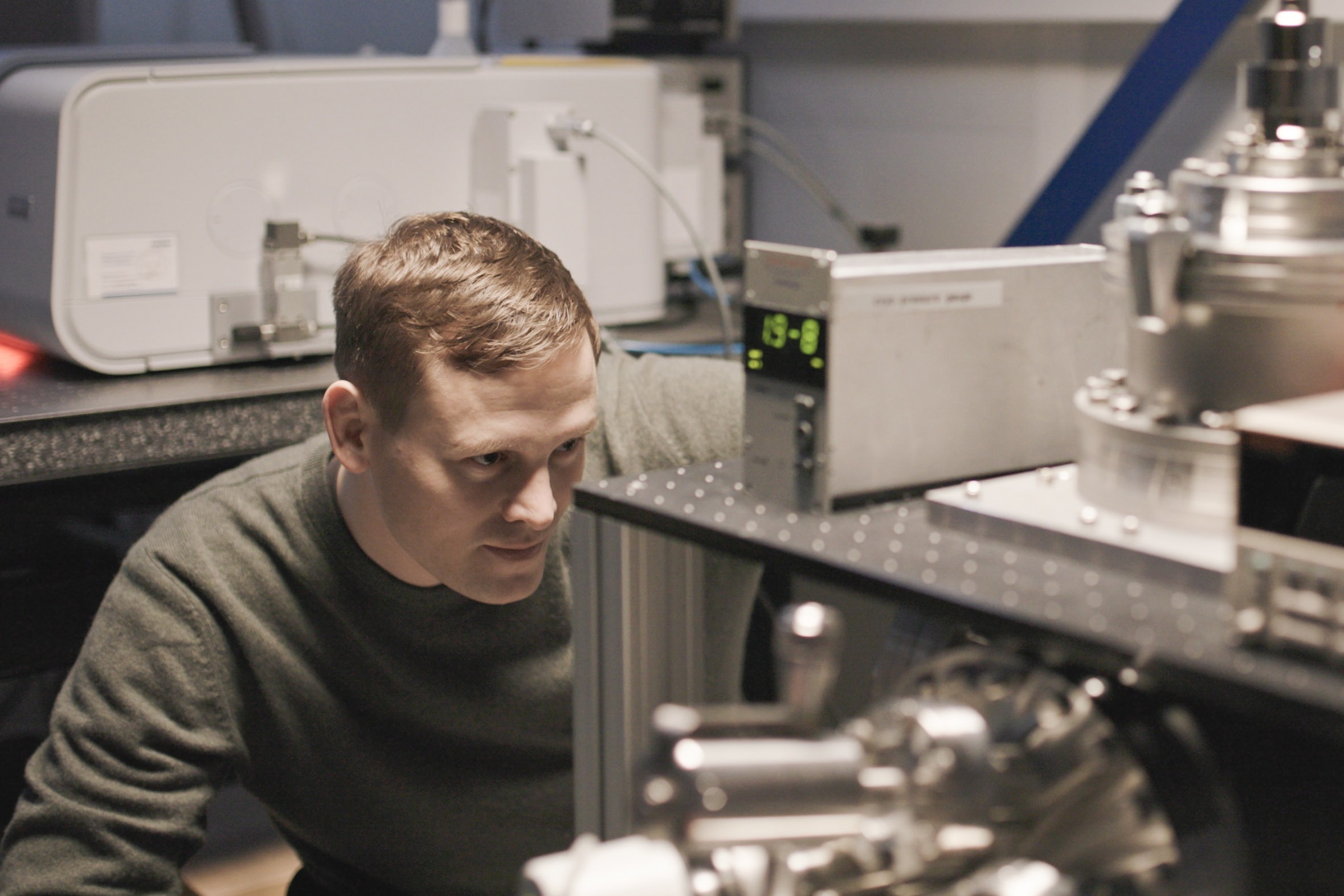
Niels Ligterink in the lab. (Photo: Marije Gordijn)
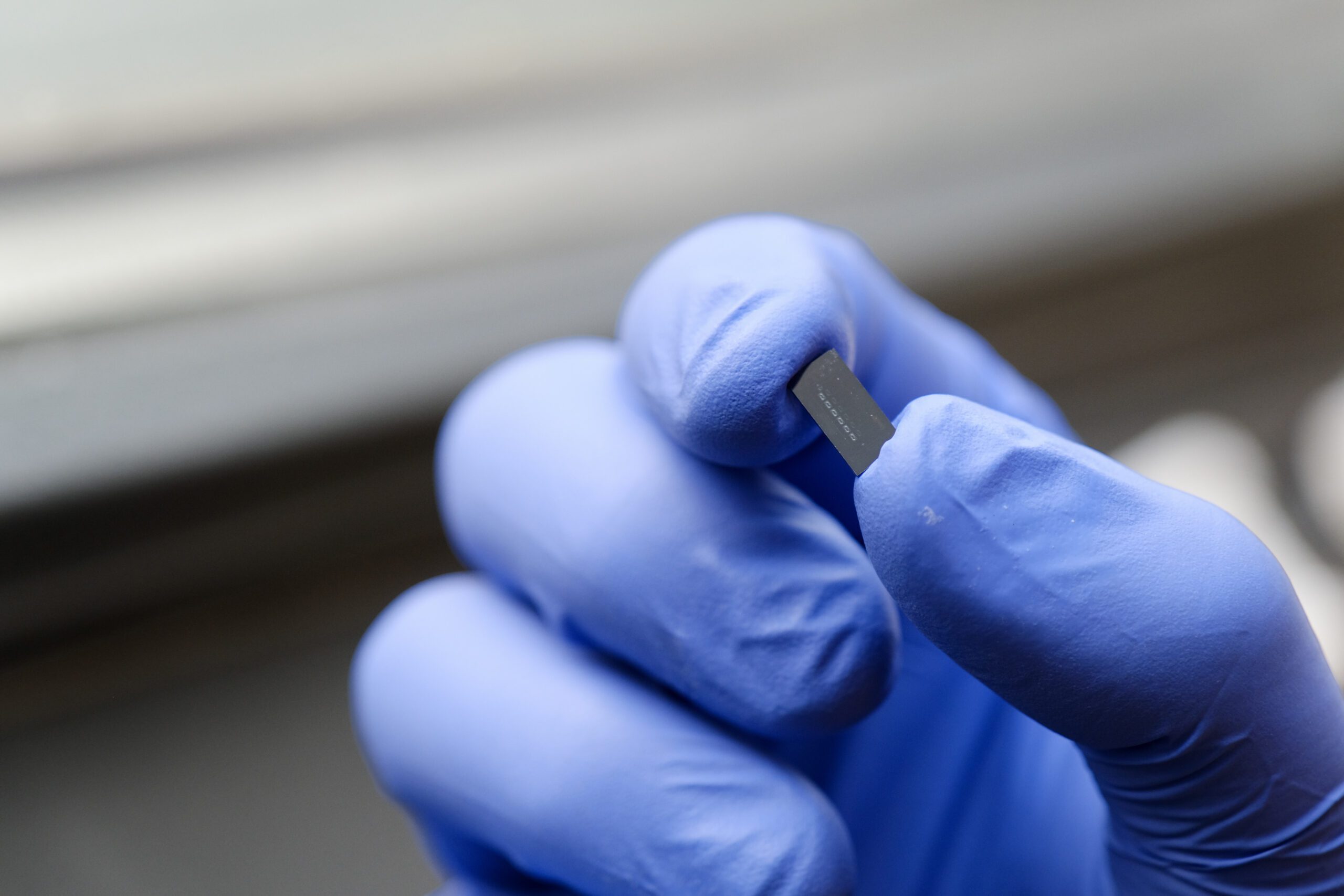
How does a lab-on-a-chip work in general? A lab-on-a-chip contains miniature channels where liquid can flow. Along the way, the liquid passes various stations where something can be measured, mixed or separated. Just like in a big lab, but then at microscale. In Niels Ligterink’s Life Marker Chip, the liquid flows past sensors that respond to the presence of particular molecules such as amino acids, the building blocks of life. Ligterink explains: “It can be compared to a keyhole. The molecule that we are looking for is the key and as soon as it enters the keyhole, we detect it.”
Small, smaller, smallest
It costs about EUR 100,000 to send one kilo of material into deep space. So the smaller and lighter an instrument is, the better. Sending a standalone chip into space is not enough. Equipment is needed to power the chip and pass on the measurements. Ligterink expects that the instrument will weigh about 700 grammes and not be bigger than a can of Coke.
Ligterink is not working alone on this project. He is carrying out his research with a consortium of institutions and companies. They recently received EUR 700,000 in subsidies from the Netherlands Space Office. The consortium has already developed a version of the chip. The chemical biological part of the chip is currently being tested at the University of Twente.
The measurements needed to make the chip suitable for the extreme conditions in space will be done at TU Delft at the beginning of next year. These conditions include the vibrations of the rocket launch, travelling through a vacuum, the effect of radiation on the materials and liquids in the chip, and the extreme temperatures in space.
Efficient melting
If all goes well, and they do manage to send the chip into the solar system; how will it be able to trace aliens? Laughing, Ligterink explains that it is not necessary for aliens to drool into the window of the chip. The plan is to land somewhere, like Enceladus, the frozen moon of Saturn that is thought to perhaps have extraterrestrial life. Once there, the instrument will have to melt a bit of the surface of the ice.
The ‘melt water’, which may contain chemical indicators of extraterrestrial life, must then flow into the chip. “A student will investigate how the ice can be melted as efficiently as possible. In a time of climate change and melting ice-caps, this may seem like strange research, but it is needed to make sure that this space tool works.”
Ligterink hopes that the first tests can be done in an orbit around the earth before 2030. “This instrument can then do small experiments, for example for medical research or how biological systems respond to circumstances in space.” The trip to Enceladus and the search for extraterrestrial life will have to wait. “It will take at least 30 years before we obtain real scientific data. But we are going for it!”

Do you have a question or comment about this article?
[email protected]


Comments are closed.