Column: Britte Bouchaut
Confetti in my beer
Freedom is not an individual right, but something that you share, states Britte Bouchaut. And carnival clearly shows how that works in practice.


Freedom is not an individual right, but something that you share, states Britte Bouchaut. And carnival clearly shows how that works in practice.

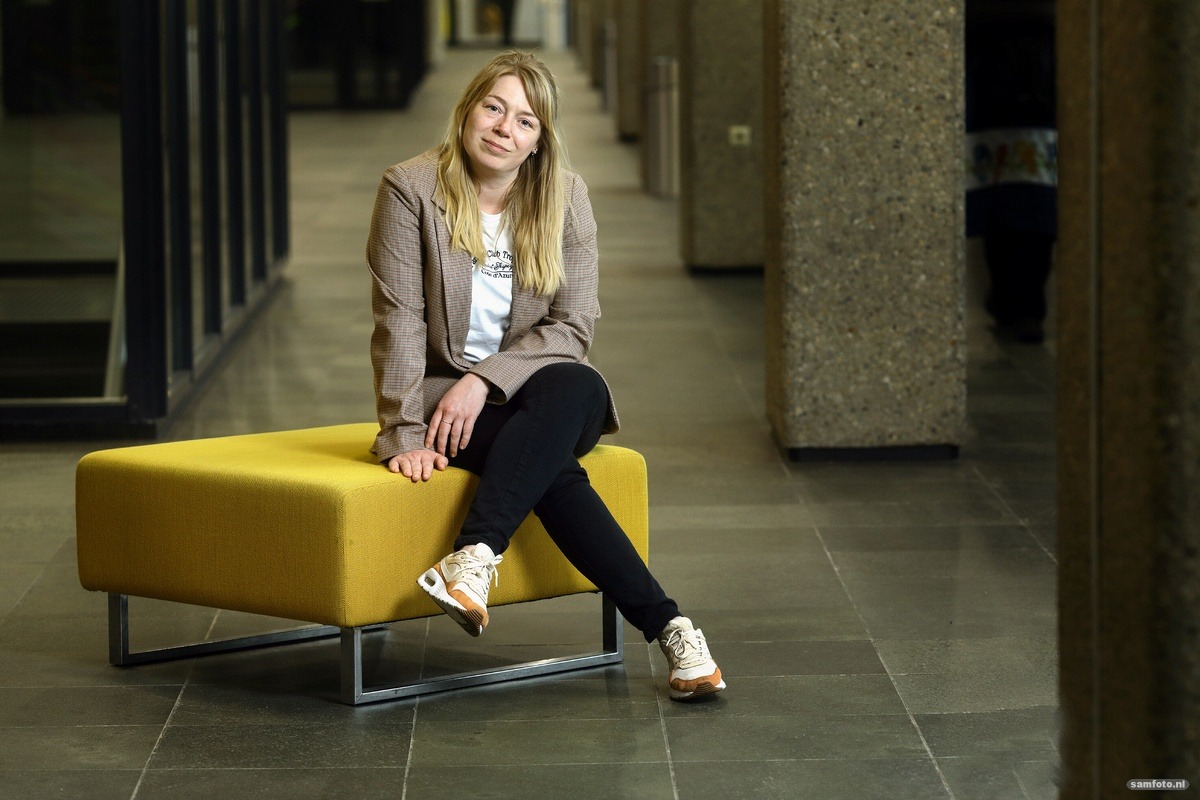
(Photo: Sam Rentmeester)
I actually wanted to dedicate this column to the De Vrijmoedige Studentenpartij (in Dutch, the bold student party). To their efforts ‘for academic freedom’, or whatever they believe this means. But with carnival around the corner, this does not seem to me to be a very pleasant start (in Dutch) of the festival. I will keep this for the time that everyone is serious again and ‘freedom’ does not have an asterisk that says more about exclusion than about freedom. But carnaval is also about freedom. Only not as a slogan or ideal. Carnival shows how freedom works in practice, and especially where it ends.
I come from the east of Zeeuws Flanders and grew up with carnival. From when I was young I went to the parade, the carnival ball and cafés. And my carnival association, CV de Zuipcilinders, is still there. If you grow up with carnival you also learn that it is not a carte blanche. It is not an excuse to do things that are usually forbidden. It is a joint agreement in which a lot is possible, but not everything.
Freedom during carnival only works because there are boundaries. Unwritten, but known by all. You can be exuberant, but not bother anyone. You can be wild, but not at the cost of others. Anyone thinking that everything is permitted at carival has not understood it, and will usually hear so quickly.
Give each other freedom and take action when someone jeopardises that freedom
But boundaries are not always strictly defined. And certainly during carnival people sometimes forget them because of alcohol, crowds, enthusiasm. This does not need to be a problem as long as we continually watch out for and listen to each other. Freedom does not always need to lead to clashes, sometimes it just slightly rubs you up the wrong way. Someone may stand just a bit too close to you, spray out when talking, or … throw confetti, which is fine until it lands in your beer (in Dutch)! No fights, but a sign: two freedoms come up against each other here.
And sometimes someone goes too far. They are too tired, drunk or preoccupied. At that point you see what carnival is really about. It’s not about pushing boundaries, but about helping each other. Helping someone outside, getting water, sharing a coat. Not because you have to, but because it’s part of the festival. As long as these two aspect coincide, carnival will be pleasant. Give each other freedom and take action when someone jeopardises that freedom, even if that means that you stop partying for a while.
This makes carnival more interesting and have greater depth than at first impression. Carnival shows that freedom is not an individual right, but something you share. Something that only works if you take each other into account. If not, freedom quickly changes into disorderly behaviour and being together into everyone for themselves. That may be a reason that the word ‘freedom’ is hijacked so easily. It sounds big, but is often used from just one side: “I can say this, I can do that, and you just have to accept it”. Carnival shows how empty that idea is.
In the next few days I will not be an assistant professor, I will not hold office and I will take no position on things. I will be a disco dancer, a carrot, an explosion of feathers and glitter. But for this carrot too, my enjoyment will not only be my own enjoyment. This is not a limitation of freedom, it is freedom. Without the asterisk.
Britte Bouchaut is an assistant professor at Safety and Security Science, Faculty of Technology, Policy and Management. Britte commutes from Eindhoven to Delft on a daily base and is often angry, justifiably or not, at the world and vents her anger by writing.
Do you have a question or comment about this article?
B.F.H.J.Bouchaut@tudelft.nl


Comments are closed.